
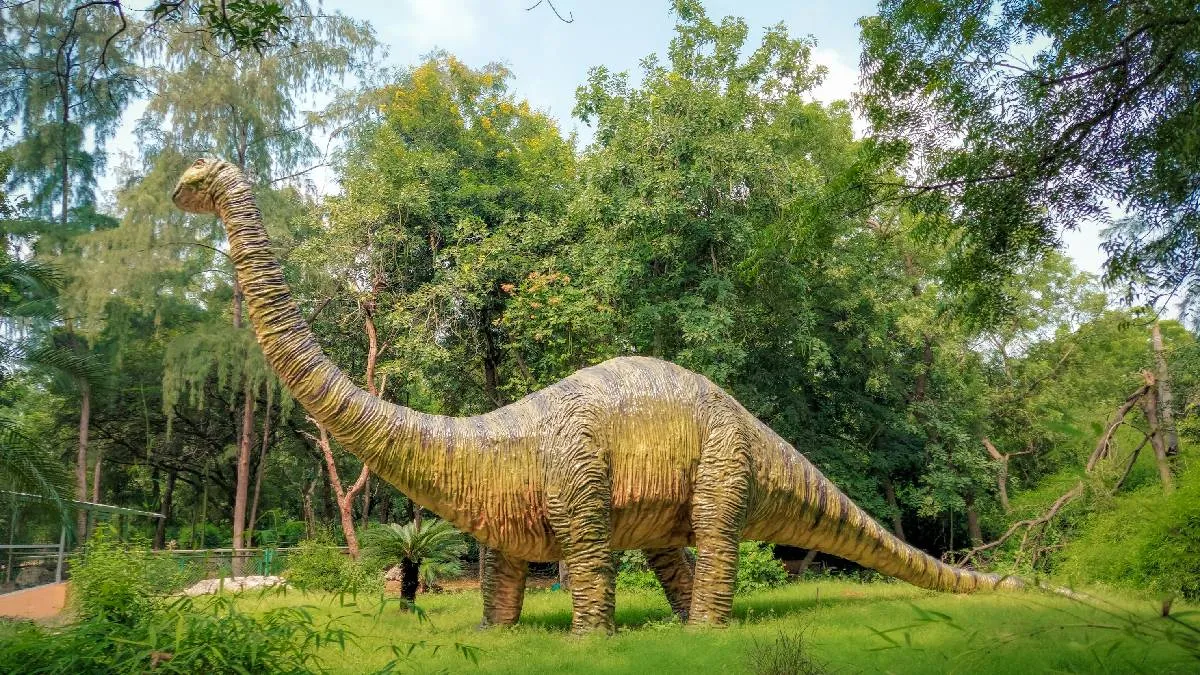
Scientists have long debated whether dinosaur populations were already declining before an asteroid struck Earth 66 million years ago, causing a mass extinction. New research suggests that dinosaur populations were still thriving in North America just prior to the impact, although independent experts caution that this finding represents only one piece of the global picture.
"Dinosaurs were quite diverse, and now we know there were quite distinct communities roaming around before being abruptly wiped out," said Daniel Peppe, a study co-author and paleontologist at Baylor University.
Dating fossils from the cretaceous end
The latest evidence comes from analysing a portion of the Kirtland Formation in northern New Mexico—a site known for its interesting dinosaur fossils for about 100 years.
Scientists now estimate those fossils and the surrounding rocks date from only 4,00,000 years before the asteroid strike, considered a short interval in geologic time. The age was precisely determined by analysing small particles of volcanic glass within sandstone and by studying the direction of magnetic minerals within the formation's mudstone.
The results show that "the animals deposited here must have been living close to the end of the Cretaceous," the last dinosaur era, Peppe noted. The findings were published Thursday in the journal Science.
The site's previously discovered fossils include Tyrannosaurus rex, a huge, long-necked dinosaur, and a Triceratops-like horned herbivore. Peppe pointed out that differences between the dinosaur species found in New Mexico and those found at a site in Montana, which were previously dated to the same time frame, "run counter to the idea that dinosaurs were in decline".
Experts urge caution on global scope
Scientists who weren't involved in the study cautioned that evidence found at a single location might not point to a broader trend.
"This new evidence about these very late-surviving dinosaurs in New Mexico is very exciting," said University of Bristol paleontologist Mike Benton, who was not involved in the study. He added, however, that "This is just one location, not a representation of the complexity of dinosaur faunas at the time all over North America or all over the world”.
Dating dinosaur fossils accurately is a challenge because easily datable material, such as carbon, doesn't survive in the fossils themselves, explained paleontologist and study co-author Andrew Flynn of New Mexico State University. Scientists must instead look for surrounding rocks with precise characteristics to determine the ages. Flynn believes further research might help complete the picture of what range of dinosaur species was alive globally on the eve of the asteroid crash.
ALSO READ: ISRO outlines major missions, including two LVM-3 launches in November and Gaganyaan progress
