
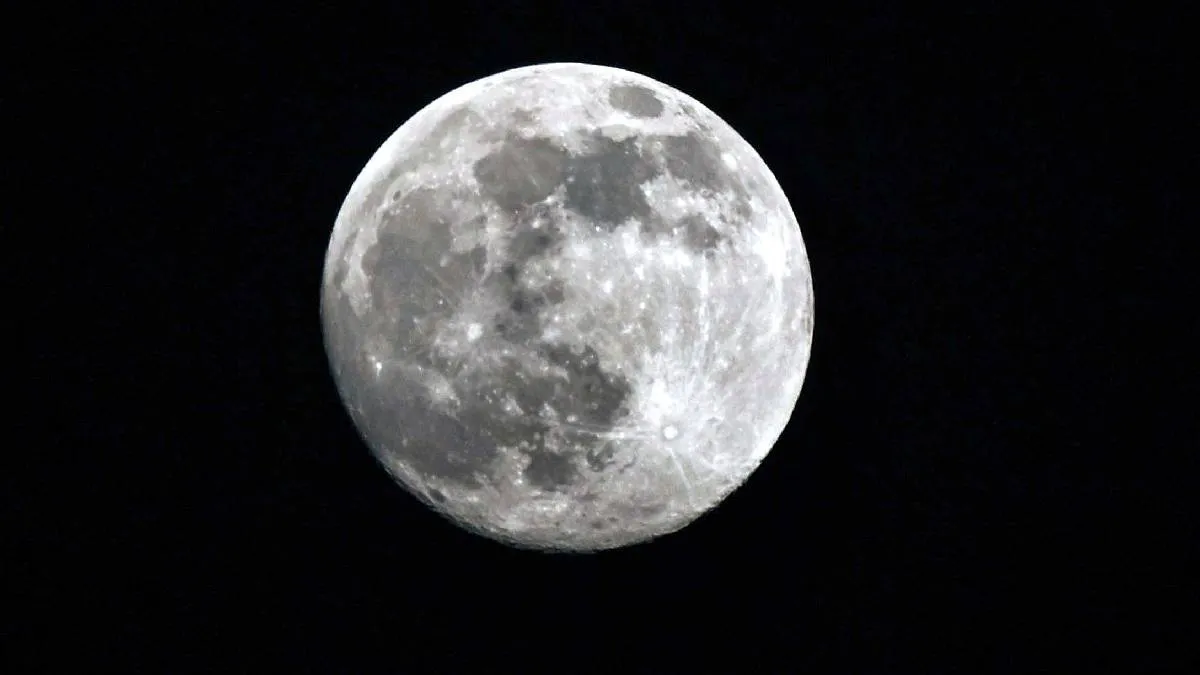
Today, skywatchers in India and around the world can view the Moon in all its glory, as it is the largest and brightest full moon of the year. This event is popularly known as the Beaver Supermoon.
What is a Supermoon?
A supermoon is an astronomical phenomenon that occurs when a full moon coincides with the Moon's perigee—its closest point to Earth in its elliptical orbit.
- The Moon's path around the Earth is elliptical, meaning its distance constantly changes. Its closest point is called the perigee (and its farthest is the apogee).
- During this event, the Moon appears up to 14 per cent bigger and 30 per cent brighter compared to a distant full moon (often called a "micromoon").
- The Moon today will look brighter than any full moon since 2019, and the next one of comparable brightness is predicted for December 2026.
Supermoon pics:

Proximity and records
At today's supermoon, the Moon is only 356,980 kilometres away.
This proximity hasn't been matched since the Supermoon of February 2019, when the Moon came within 356,846 kilometres. However, this record distance will be surpassed in just over a year, with an even closer supermoon expected to rise on December 24, 2026.
For context, the average distance at perigee is around 363,396 kilometres, while at its farthest point (apogee), it stretches to 405,504 kilometres. The term "supermoon" is applied only when a full (or new) Moon coincides with the perigee.
Meanwhile, India has set an ambitious goal for 2047: to establish a significant presence on the Moon by building a crew station, extracting minerals and resources, deploying crewed lunar terrain vehicles, and creating propellant depots.
ALSO READ: China achieves culinary feat in space: Astronauts cook full meal on Tiangong | Watch video
ISRO-NASA's NISAR satellite to be declared operational on November 7, says ISRO chief