
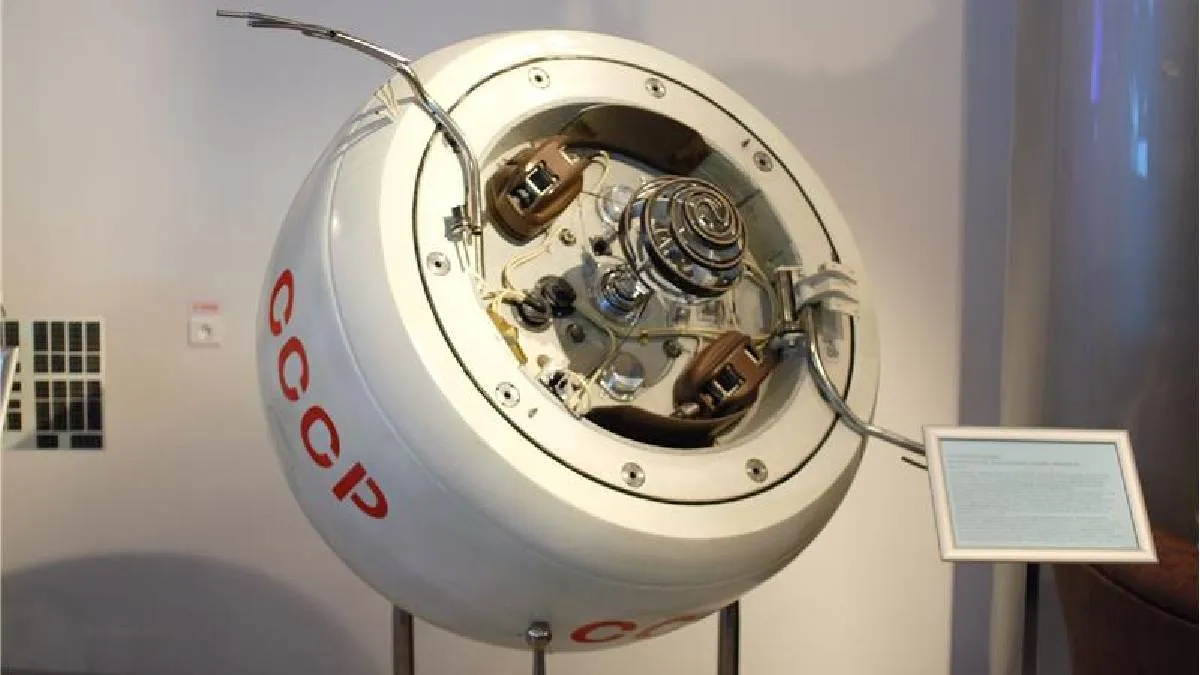
A Soviet-era spacecraft made a dramatic reentry into Earth’s atmosphere on Saturday, more than fifty years after its ill-fated launch toward Venus. The European Union Space Surveillance and Tracking confirmed the spacecraft's uncontrolled reentry, based on orbital analyses and its absence from radar readings. The European Space Agency's space debris office noted that the spacecraft lost contact after failing to appear on a German radar screen. At this time, it’s unclear where exactly the spacecraft came down or if any remnants of the half-ton vehicle survived the fiery descent through the atmosphere.
Experts had cautioned in advance that portions of it could potentially crash to Earth, given that it was designed to survive a landing on Venus, the hottest planet in our solar system. Fortunately, scientists stated that the likelihood of someone being hit by any debris was extremely low.
Originally launched in 1972 by the Soviet Union, the spacecraft, named Kosmos 482, was part of a series of missions aimed at Venus. Unfortunately, this mission never broke free from Earth’s orbit due to a malfunction in its rocket.
Most of the spacecraft's structure fell back to Earth within a decade following its unsuccessful launch. The spherical lander—measuring an estimated three feet across—was the last remnant to reenter as it succumbed to gravity’s pull.
According to experts, the lander was encased in titanium and weighed over 495 kilograms. As scientists and military personnel tracked its descent, they were unable to predict exactly when or where it would land. Factors like solar activity and the spacecraft's deteriorating condition after many years in space contributed to the uncertainty.
By Saturday morning, the US Space Command had yet to officially confirm the spacecraft's demise while it continued to gather and analyze orbital data.
The US Space Command regularly monitors dozens of reentries every month. What distinguished Kosmos 482 – and garnered extra attention from both government and private space observers – was its increased likelihood of surviving reentry. It was also reentering in an uncontrolled manner, without the usual guidance from flight controllers, who typically aim to direct old satellites and space debris toward expansive areas like the Pacific Ocean.
ALSO READ: ISRO ensures Indian dishes for astronaut Shukla on space station
Inputs from PTI
