
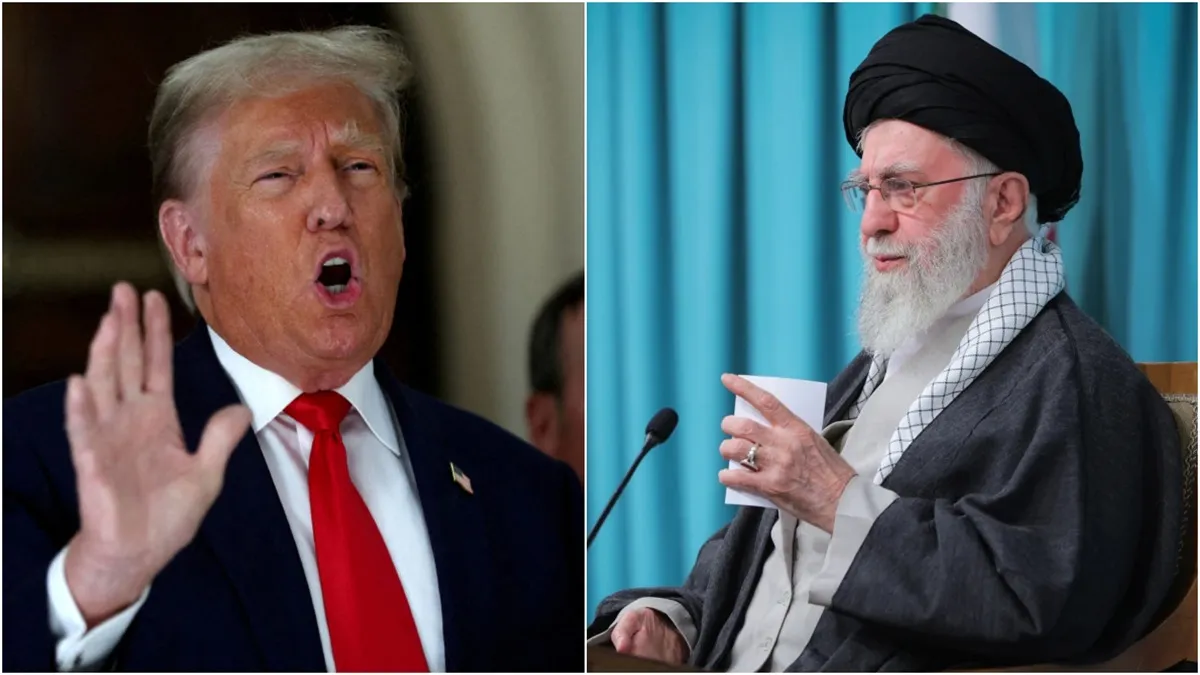
Nuclear negotiations between Iran and the United States are set to take place on Friday (February 6) in Oman, according to Iranian Foreign Minister Abbas Araghchi. The announcement comes amid heightened tensions following Iran's violent crackdown on nationwide protests last month. The talks faced uncertainty earlier after disagreements over their scope and format, before Oman emerged as the new venue. US President Donald Trump struck a tough note ahead of the discussions, issuing a blunt warning to Iran's Supreme Leader. "I would say he should be very worried," Trump said in an interview with NBC News.
Format dispute and venue change
Earlier on Wednesday, a regional official revealed that Iran was pushing for a different format than the one proposed in Turkey. Tehran reportedly wanted discussions limited strictly to its nuclear programme, with only Iranian and US officials at the table. The official spoke on condition of anonymity, citing lack of authorisation to brief the media.
The White House later confirmed that Washington agreed to shift the talks to Oman. A US official said several Arab and Muslim leaders urged the Trump administration not to abandon diplomacy, even as Iran sought to narrow the agenda and relocate the meeting.
US skepticism, regional pressure
Despite agreeing to the changes, the White House remains cautious. The official noted that the administration is "very skeptical" about the prospects of success but decided to proceed out of respect for regional allies. Tensions had recently escalated after Trump suggested the possible use of force in response to Iran’s handling of protests.
At the same time, Trump has continued to push Tehran towards a deal that would restrict its nuclear ambitions, a long-standing concern for Washington and its partners.
Signals from Tehran's leadership
In a notable shift, Iran's reformist President Masoud Pezeshkian said on Tuesday that he had directed the foreign minister to pursue "fair and equitable negotiations" with the US. This statement was widely seen as carrying the backing of Supreme Leader Ayatollah Ali Khamenei, who holds ultimate authority and had earlier dismissed the idea of talks.
Washington wants broader talks
US Secretary of State Marco Rubio made it clear that Washington hopes the discussions will go beyond nuclear issues. He said the US wants to raise concerns over Iran's ballistic missile programme, its support for proxy groups and the "treatment of their own people." "The leadership of Iran at the clerical level does not reflect the people of Iran. I know of no other country where there's a bigger difference between the people who lead the country and the people who live there," Rubio told reporters.
Vance flags diplomatic challenges
Vice President JD Vance echoed similar concerns, calling Iran a difficult partner for diplomacy due to its power structure. "It's a very weird country to conduct diplomacy with when you can't even talk to the person who's in charge of the country. That makes all of this much more complicated, and it makes the whole situation much more absurd," he said on "The Megyn Kelly Show." Vance stressed that Trump’s core position remains unchanged. Iran must not be allowed to develop a nuclear weapon, warning that such a move could trigger a regional arms race.
Military tensions simmer in background
The talks are moving forward despite recent military incidents. On Tuesday, a US Navy fighter jet shot down an Iranian drone near an American aircraft carrier. Iranian fast boats also attempted to stop a US-flagged vessel in the Strait of Hormuz, according to the US Navy. Iran has not acknowledged either incident. Adding to the show of force, Iranian military leaders visited a missile base on Wednesday to demonstrate readiness following a 12-day conflict with Israel in June that damaged Iran’s air defences. The base houses the Khorramshahr missile, with a reported range of over 2,000 kilometres, which was launched towards Israel during last year’s war.
