
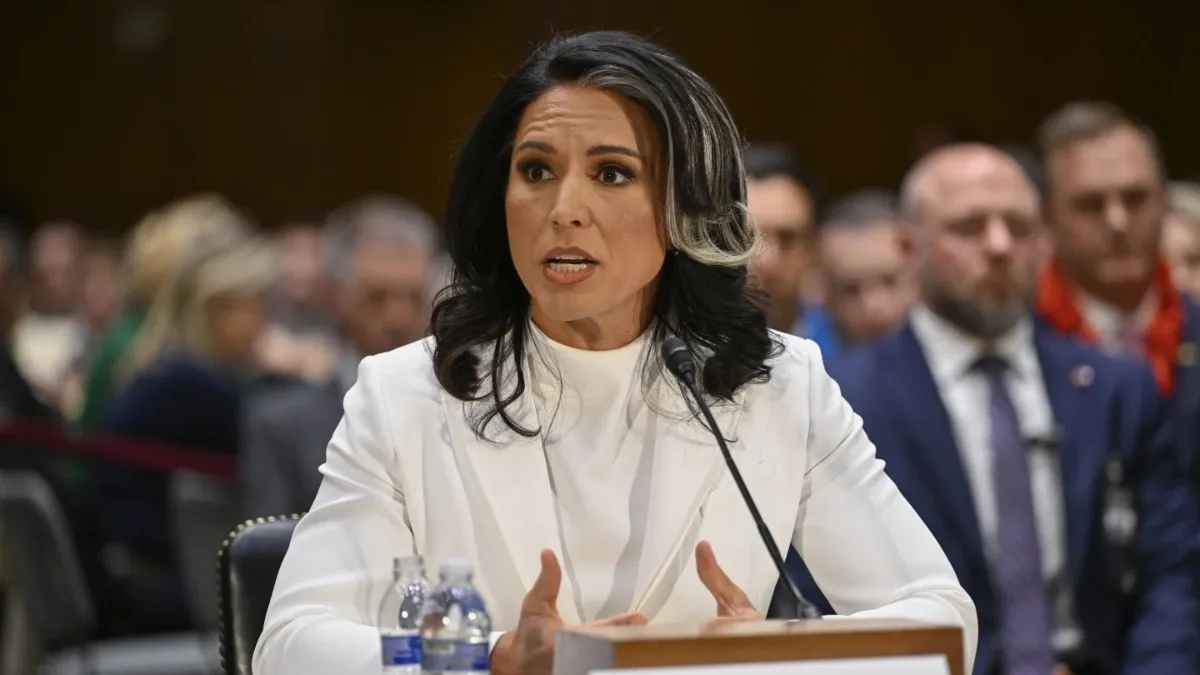
Tulsi Gabbard, US National Intelligence Director, who is on a three-day visit to India, on Monday slammed Bangladesh over the incidents of 'minority persecution' in the country. She emphasised that the "unfortunate persecution, killing, and abuse of religious minorities like Hindus, Buddhists, Christians, and others" remain a major area of concern for the US government and President Trump and his administration.
Gabbard highlighted the issue of "persecution and killing" of religious minorities in Bangladesh, adding that "the threat of Islamic terrorists" in the country was "rooted" in the "ideology and objective" to "rule and govern with an Islamist caliphate."
She also underscored that President Trump's administration has begun talks with Bangladesh’s interim government on the issue. She added, “The talks are just beginning between President Trump's new cabinet coming in and the Government of Bangladesh, but this continues to remain a central focus area of concern."
Gabbard's comments drew a reaction from Bangladesh, with the interim government of Professor Muhammad Yunus refuting her remarks over alleged persecution of minorities, saying her comments were “not based on any evidence or specific allegations.”
"They (Gabbard’s comments) paint an entire nation with a broad and unjustified brush," the chief adviser’s office said in a verified Facebook post at around midnight Monday.
It said Gabbard’s statement on an Indian TV channel was "misleading and damaging to the image and reputation of Bangladesh, a nation whose traditional practice of Islam has been famously inclusive and peaceful and that has made remarkable strides in its fight against extremism and terrorism."
The Chief Adviser’s office, however, said Bangladesh, like many countries around the world, faced challenges of extremism, “but it has continuously worked in partnership with the international community, including the US, to address these issues through law enforcement, social reforms, and other counterterrorism efforts."
Gabbard, who arrived in New Delhi on Sunday, spoke about the ideology of an "Islamic Caliphate" and how extremist elements and terror groups globally aim for such an outcome.
