
South Korea has revised its martial law regulations to prevent military or police interference in the National Assembly, in a direct response to the extraordinary political crisis that erupted late last year under former president Yoon Suk Yeol.
The new law, passed on Thursday by a strong majority, bans the deployment of military or police forces to the Assembly without the prior consent of the Speaker. It also criminalises any attempt to block lawmakers from accessing Parliament closing the legal gaps that allowed Yoon’s brief martial law order in December 2024 to play out.
The reforms come seven months after a dramatic night in Seoul saw armed troops surrounding the Assembly, forcing opposition lawmakers to scale fences in order to hold an emergency session and vote down the presidential decree.
December siege shocked South Korea’s democracy
On the night of December 3, 2024, President Yoon declared martial law without prior consultation, citing alleged threats from “anti-state” elements that he claimed were undermining national security and aligning with North Korean interests. No credible evidence was presented to support the claim.
Military units were rapidly deployed across the capital, and police barricades sealed off the National Assembly. Opposition lawmakers scrambled over the gates to enter the chamber and convene an emergency sitting. By dawn, 190 members of Parliament had voted to overturn the decree.
The martial law order was revoked just six hours after it was issued. But the damage to Yoon’s presidency and to public confidence in democratic stability was irreversible.
Within days, Yoon was impeached by the Assembly for abuse of power and violating the constitutional separation of powers. In April 2025, the Constitutional Court upheld the impeachment, citing the unlawful mobilisation of military force against the legislature. It marked the second time in South Korea’s history that a sitting president was removed from office by legal process.
Yoon defiant as trial begins; political fallout deepens
Yoon is now facing trial on multiple charges, including insurrection and abuse of authority. A special prosecutor has summoned him twice in the past month. Yoon has refused to appear, calling the investigation “a political vendetta”.
The fallout fractured Yoon’s conservative People Power Party, which has been leaderless since the impeachment and is now the main opposition. Former prime minister Han Duck-soo, who briefly served as acting president, was also suspended by Parliament amid scrutiny over his role in the December events.
The constitutional vacuum led to a snap election on June 3, 2025. Opposition leader Lee Jae Myung, from the Democratic Party, won with just under 50 per cent of the national vote, defeating a divided conservative field. It was a dramatic political comeback for Lee, who had narrowly lost to Yoon in the 2022 presidential race and was previously targeted in several politically charged probes.
A sharp break from the past
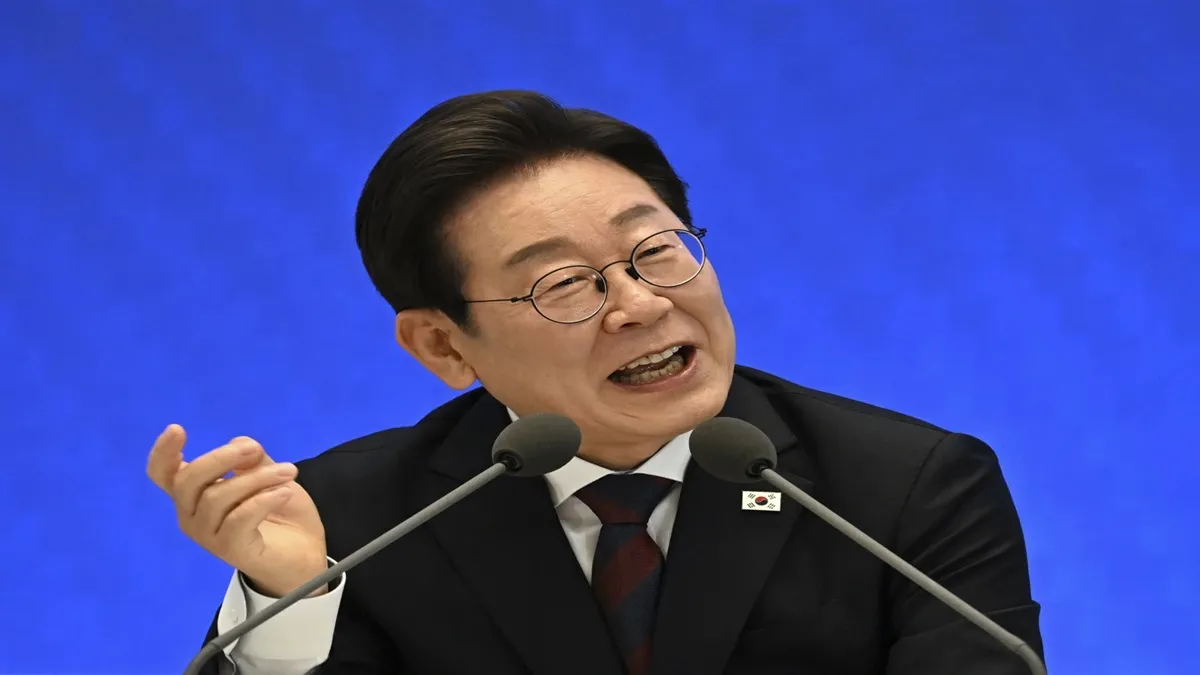
At a press briefing in Seoul on Thursday, President Lee marked 30 days in office by declaring that the new martial law provisions were “a line that must never again be crossed”. He said his government would continue to prioritise democratic reform and constitutional clarity.
The revised legislation does not eliminate martial law provisions entirely. Under Article 77 of the South Korean Constitution, the president retains emergency powers in cases of war or rebellion. But the amended law makes clear that these powers cannot be used to override Parliament or prevent lawmakers from carrying out their duties.
Speaker Woo Won-shik, who presided over the emergency session that revoked Yoon’s order, said the law sets out “a guardrail for democracy” to prevent political actors from misusing the military for partisan gain.
Legal scholars have welcomed the changes as long overdue. Several warned last year that South Korea’s emergency laws had not been meaningfully updated since the end of military dictatorship in the 1980s.
Public backs reforms, but deep divisions remain
Polling by Gallup Korea in May found that over 70 per cent of respondents supported strengthening legal limits on martial law and backed efforts to protect Parliament from interference. The December crisis, though brief, appears to have shifted public sentiment decisively in favour of democratic safeguards.
Still, South Korean politics remains sharply polarised. On Thursday, lawmakers from Yoon’s party boycotted the Assembly vote to confirm Lee’s nominee for prime minister, Kim Min-seok. Several senior conservative MPs continue to insist that Yoon’s actions were justified, deepening the standoff.
Lee has pledged to govern inclusively but faces resistance from a hostile opposition bloc. His early policy priorities include economic stimulus, youth employment and a softer diplomatic approach to North Korea reversing Yoon’s hawkish foreign policy.
The December martial law crisis lasted just a few hours, but it laid bare how quickly democratic norms can unravel without strong institutional boundaries. Many in South Korea were reminded of darker periods in national history, when emergency powers were used to suppress dissent and consolidate military rule. The new martial law rules aim to ensure that no president no matter how embattled can use the military to block democracy.
