
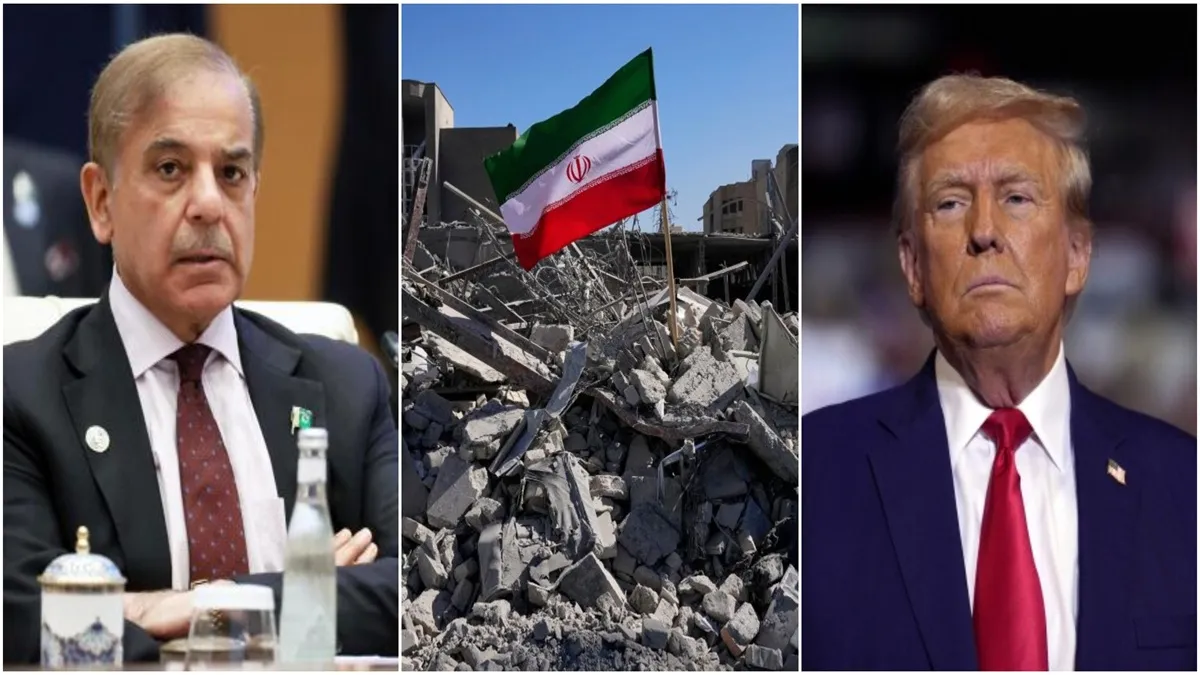
Pakistan on Sunday declared that it is preparing to host a dialogue between the United States and Iran as the month-long conflict continues to intensify across the region. Foreign Minister Ishaq Dar said Islamabad was "very happy that both Iran and the US have expressed their confidence" in its ability to facilitate discussions, The Associated Press (AP) reported. Although diplomats from Turkey, Egypt and Saudi Arabia attended meetings in Islamabad, they left the country later in the day, and there was no immediate confirmation from Washington or Tehran on whether the talks would be direct or indirect.
Despite the planned continuation of talks into Monday, Pakistan's foreign ministry refrained from offering additional details, while Iran's mission to the United Nations also declined comment. Officials in Islamabad maintain that the country has gradually emerged as a mediator due to its relatively balanced ties with both capitals.
Iran's sharp warning as US troops move into region
Hours before Pakistan's announcement, Iranian parliament speaker Mohammad Bagher Qalibaf dismissed the Islamabad talks, calling them a distraction. His remarks followed reports that around 2,500 US Marines trained in amphibious operations had landed in the Middle East. Qalibaf warned that Iranian forces were "waiting for the arrival of American troops on the ground to set them on fire and punish their regional partners forever," according to state media.
Meanwhile, Iran issued fresh threats targeting the homes of US and Israeli "commanders and political officials" in the region. Military spokesperson Ebrahim Zolfaghari said these warnings stemmed from "targeting of residential homes of the Iranian people in various cities" and other "malicious actions". The anxiety on the ground remains palpable, with residents like 71-year-old Razzak Saghir al-Mousawi saying, "We don't know at what moment our homes could be targeted."
Conflict expands as Israel signals wider operation
Amid rising tensions, Israeli Prime Minister Benjamin Netanyahu said the country's military will expand its ongoing operation in Lebanon, aiming to increase the "existing security strip" in the south while targeting Hezbollah positions. Although no operational specifics were released, the impact is already stark, with more than one million Lebanese displaced. Among them, displaced resident Mohammad Doghman accused Israel of being "an expansionist state." The conflict has significantly strained global energy and trade networks, as Iran’s hold on the Strait of Hormuz continues to rattle markets. The recent entry of Houthi rebels into the war has added a new layer of threat to the Bab el Mandeb strait, a vital gateway to the Red Sea.
Drone intercepts and intensified strikes escalate crisis
Israel said on Monday that its air force intercepted two drones launched from Yemen. On Sunday evening, Israeli jets dropped over 120 munitions across Tehran, striking infrastructure believed to be linked to weapons development. Iran confirmed that power was restored in areas affected by earlier hits on electricity facilities. The Houthis claimed their first attack of the current conflict on Saturday morning, firing a missile at Israel that was subsequently intercepted.
It is to be noted here that more than 3,000 people have been killed since the conflict began following US and Israeli strikes on Iran that triggered retaliatory assaults on American assets, Israeli targets and other sites across Gulf states on February 28.
