
The voting for the high-stakes German elections closed with exit polls showing opposition leader Friedrich Merz's conservatives leading in a national election. They indicate that Alternative for Germany is heading for the strongest showing for a far-right party since World War II. The exit polls for ARD and ZDF public television show Chancellor Olaf Scholz's center-left Social Democrats on track for their worst postwar result in a national parliamentary election, and expected to be in third place.
What necessitated early polls?
The elections are happening seven months ahead of schedule as the coalition government of Chancellor Olaf Scholz collapsed after he lost a confidence vote on December 16, 2024. The Parliament was dissolved by President Frank-Walter Steinmeier on December 27. The government collapsed after Scholz fired Finance Minister Christian Lindner in early November. The move proved the pinnacle of change as the ruling three-party coalition relied on Lindner’s pro-business party.
What happens on election day?
The voting starts after polling stations open from 8 am to 6 pm (0700 GMT-1700 GMT). German voters can also exercise their franchise by postal ballot, but their ballot must arrive by the time polling stations close on election day to be counted.
When winner will be revealed?
The vote counting will begin immediately after voting ends. The general picture of the outcome is likely to become clear very quickly due to exit polls. However, a final official result is expected early Monday.
Who are the main contenders?
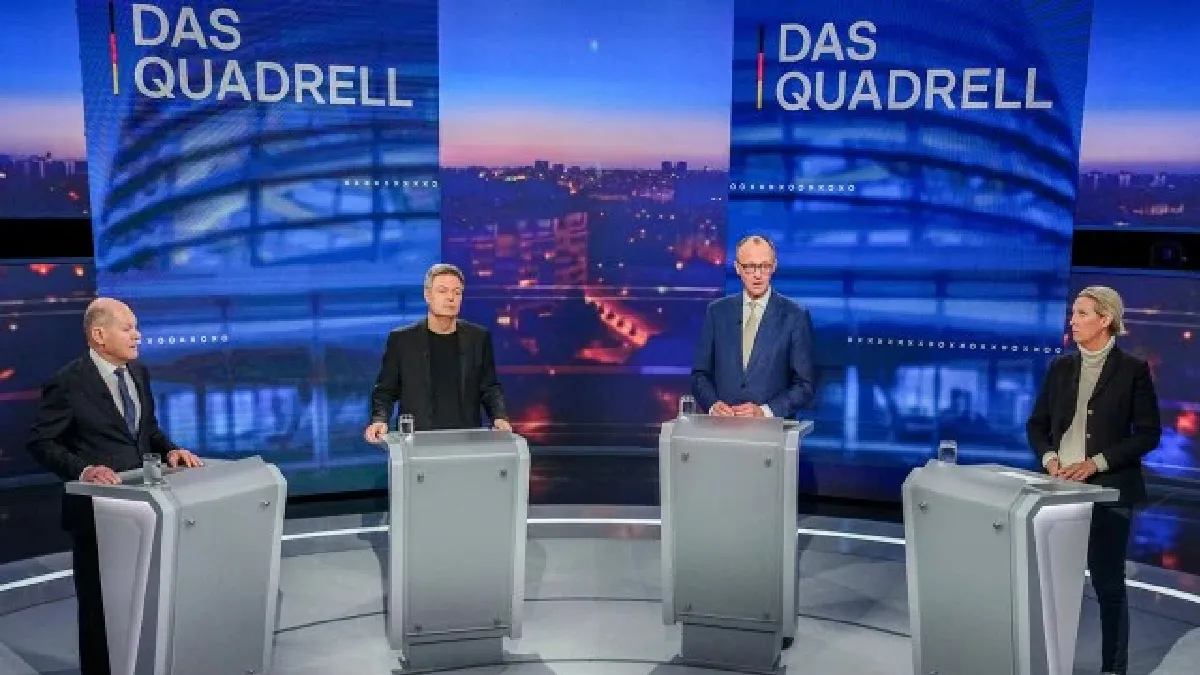
In the ongoing elections, four candidates are running to be Germany’s next leader: incumbent Chancellor Olaf Scholz of the centre-left Social Democrats; Friedrich Merz of the mainstream conservative Christian Democratic Union party, current Vice Chancellor Robert Habeck of the environmentalist Greens, and Alice Weidel of the far-right, anti-immigration Alternative for Germany, or AfD.
What are the pre-poll predictions?
The polls suggest the centre-right opposition Union bloc — the Christian Democratic Union and the Christian Social Union — are supposed to win the most seats in the Bundestag, still falling well short of a majority to govern alone. If the poll yields the same, they would need to form a coalition with at least one other party to govern.
The far-right, anti-immigration Alternative for Germany party, or AfD, is polling strongly. However, it is unlikely that it would become part of the government as other parties have said that they won’t work with it.
(With inputs from AP)
