
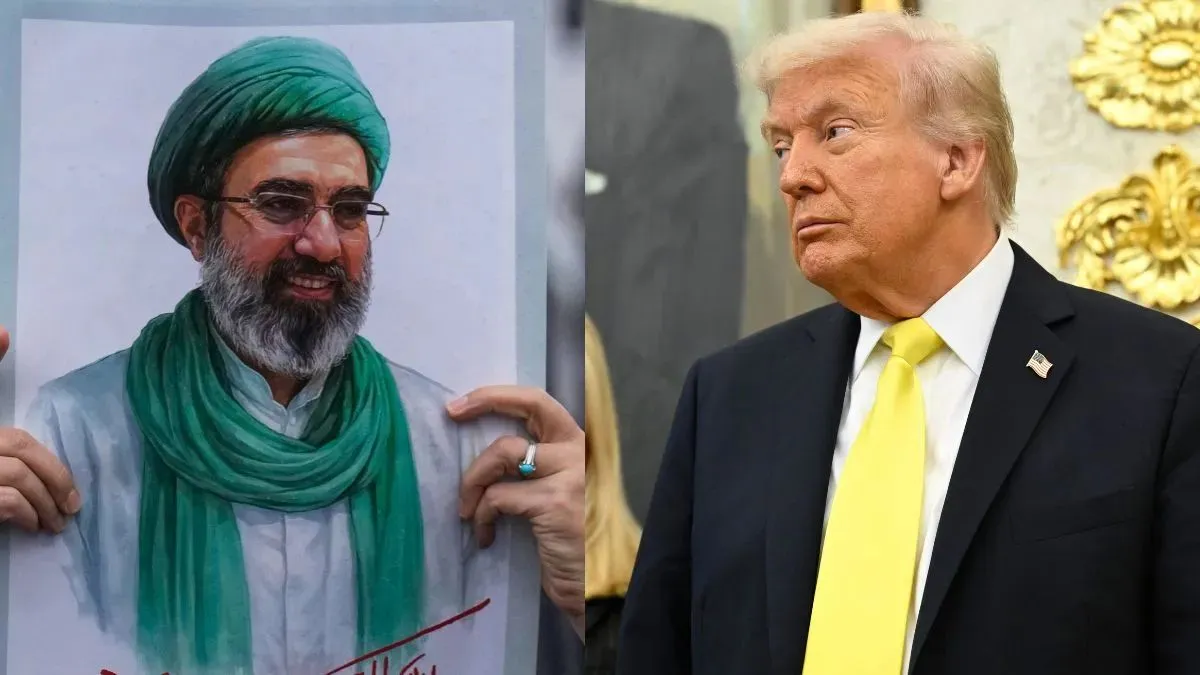
Iran has sharply rejected US President Donald Trump’s warning to destroy its key infrastructure, calling the ultimatum “helpless, nervous, unbalanced and stupid.” In a strongly worded response, Iranian military leadership warned Washington against any further escalation, signalling that tensions have reached a dangerous new level. General Ali Abdollahi Aliabadi, representing Iran’s Khatam al-Anbiya Central Headquarters, echoed Trump’s own rhetoric and issued a chilling counter-threat, saying that “the gates of hell will open” if the United States proceeds with its plans.
The latest exchange comes after Trump warned that “all hell will rain down” on Iran if it fails to reach a peace agreement and reopen the strategically crucial Strait of Hormuz within 48 hours. Iran, however, has refused to bow to pressure.
Aliabadi said any US or Israeli attack on Iran’s infrastructure would trigger “devastating and continuous” retaliation targeting American military assets across the Middle East as well as Israeli infrastructure. He added that Iran’s armed forces would not hesitate “for a moment” to defend the country’s sovereignty and respond forcefully to aggression.
Strait of Hormuz at the centre of tensions
The standoff has placed the Strait of Hormuz at the heart of the conflict. The vital shipping route, through which nearly 20 percent of the world’s oil supply passes, remains a major point of contention. Iran has allowed limited passage for humanitarian shipments, but broader access remains uncertain.
The conflict, which began on February 28 with US and Israeli strikes on Iran, has now entered its sixth week with mounting casualties across the region. Thousands have been killed in Iran alone, while deaths have also been reported in Iraq, the Gulf region, Israel, and the United States.
The situation has been further complicated by ongoing military developments, including Iran’s claim of downing US aircraft and continued search operations for a missing American airman.
Fears rise after strike near nuclear facility
Concerns escalated further after a strike near Iran’s Bushehr Nuclear Plant forced the evacuation of nearly 200 workers. Iranian Foreign Minister Abbas Araghchi warned that repeated attacks on the facility could trigger radioactive fallout, potentially impacting several Gulf countries.
