
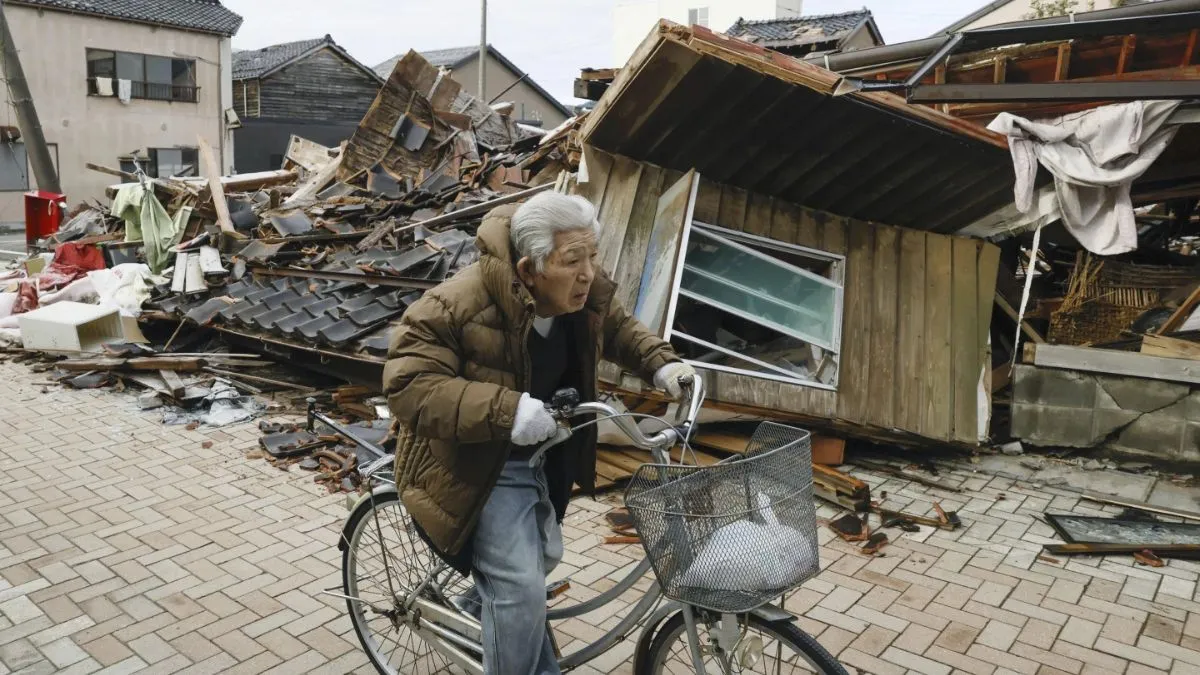
A powerful earthquake of magnitude 7.4 struck Japan’s Tohoku region on Monday at around 4:53 pm local time. The epicenter was reported near the Sanriku Coast. The tremor was strong enough to be felt across several parts of northeastern Japan. According to the Japan Meteorological Agency, tsunami waves could hit coastal areas within 30 minutes of the earthquake. Coastal regions are at high risk.
Tsunami warning issued
Following the earthquake, authorities issued a tsunami warning for parts of northeast Japan. People living in coastal areas were advised to move to safer locations immediately. Japan’s public broadcaster, NHK, reported that emergency alerts were sent out soon after the quake.
Areas on high alert
Authorities have warned that the following areas could be the worst affected:
- Central Pacific coast of Hokkaido
- Coast of Aomori Prefecture
- Coast of Iwate Prefecture
Earthquake in Japan
Japan is among the most earthquake-prone countries in the world. It sits on top of four major tectonic plates, which constantly push and move against each other. This makes the country a key part of the Pacific “Ring of Fire”, a zone known for frequent earthquakes and volcanic activity.
The country reportedly experiences around 1,500 earthquakes every year. This means almost daily seismic activity is recorded somewhere in the country. Japan alone accounts for about 18% of all earthquakes worldwide, making it one of the most active regions on the planet.
The 2011 earthquake
One of the most devastating events in Japan’s history was the 2011 earthquake and tsunami. A powerful magnitude 9.0 quake triggered massive tsunami waves. Around 18,500 people were killed or went missing The disaster also led to a severe nuclear accident at the Fukushima power plant.
