
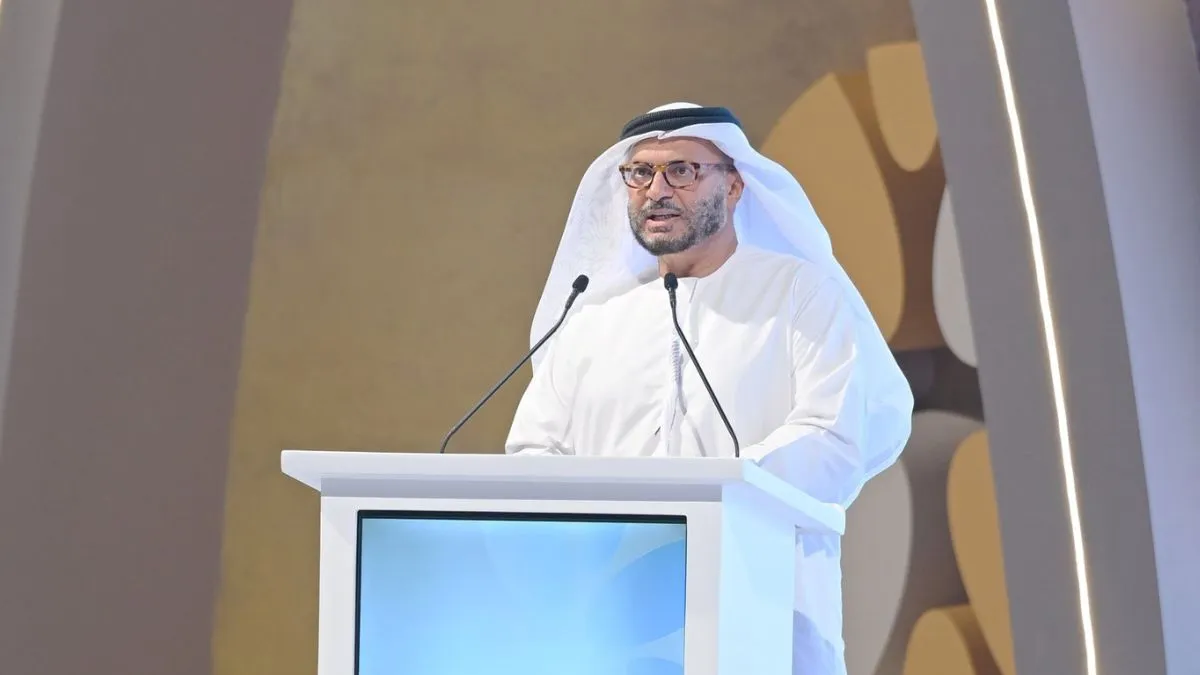
UAE Presidential Diplomatic Adviser Anwar Gargash strongly criticised Iran’s recent actions in the Gulf, warning that escalating attacks against neighbouring countries risk deepening regional instability and isolating Tehran further. In a post on X, Gargash said Iran’s aggression had “missed its target” while reinforcing concerns among regional powers that its missile programme remains a continuing source of insecurity. Urging restraint, he called on Tehran to “return to reason and responsibility” in dealing with its neighbours, cautioning that continued escalation could widen diplomatic isolation at a critical moment for the region.
Anwar shared, "Iran's aggression against the Gulf states missed its target and isolated Iran at its critical moment. Your war is not with your neighbours, and through this escalation, you confirm the narrative of those who see Iran as the region's primary source of danger, and its missile program as a perpetual threat to stability. Return to your senses, to your surroundings, and deal with your neighbours with reason and responsibility before the circle of isolation and escalation widens."
How tensions between the UAE and Iran escalated
In the latest round of Middle East hostilities, the United Arab Emirates, historically a relatively neutral Gulf state, has found itself in the crosshairs of Iran’s widening retaliation after a major US-Israel offensive on Tehran. Iranian missiles and drones were intercepted over UAE territory, with debris causing explosions and minor damage in Dubai and Abu Dhabi, including at critical infrastructure such as Dubai International Airport and iconic landmarks like Burj Al Arab. The UAE’s advanced air-defence systems successfully shot down many projectiles, but falling fragments still triggered alerts, injuries and disruptions, prompting authorities to raise security measures and close airspace as the regional crisis deepens.
Why the UAE is now central to the widening Middle East crisis
The United Arab Emirates has found itself at the heart of the escalating regional confrontation not because it initiated hostilities, but because of its strategic positioning in the Gulf. As a key economic hub and host to US military infrastructure, the UAE sits at the intersection of regional security and global commerce. Any strike, interception or security alert on its soil carries outsized symbolic and economic impact, from aviation disruptions to market tremors. In a conflict increasingly shaped by deterrence and signalling, the UAE’s stability has become both a strategic pressure point and a powerful message board in the unfolding Middle East crisis.
