
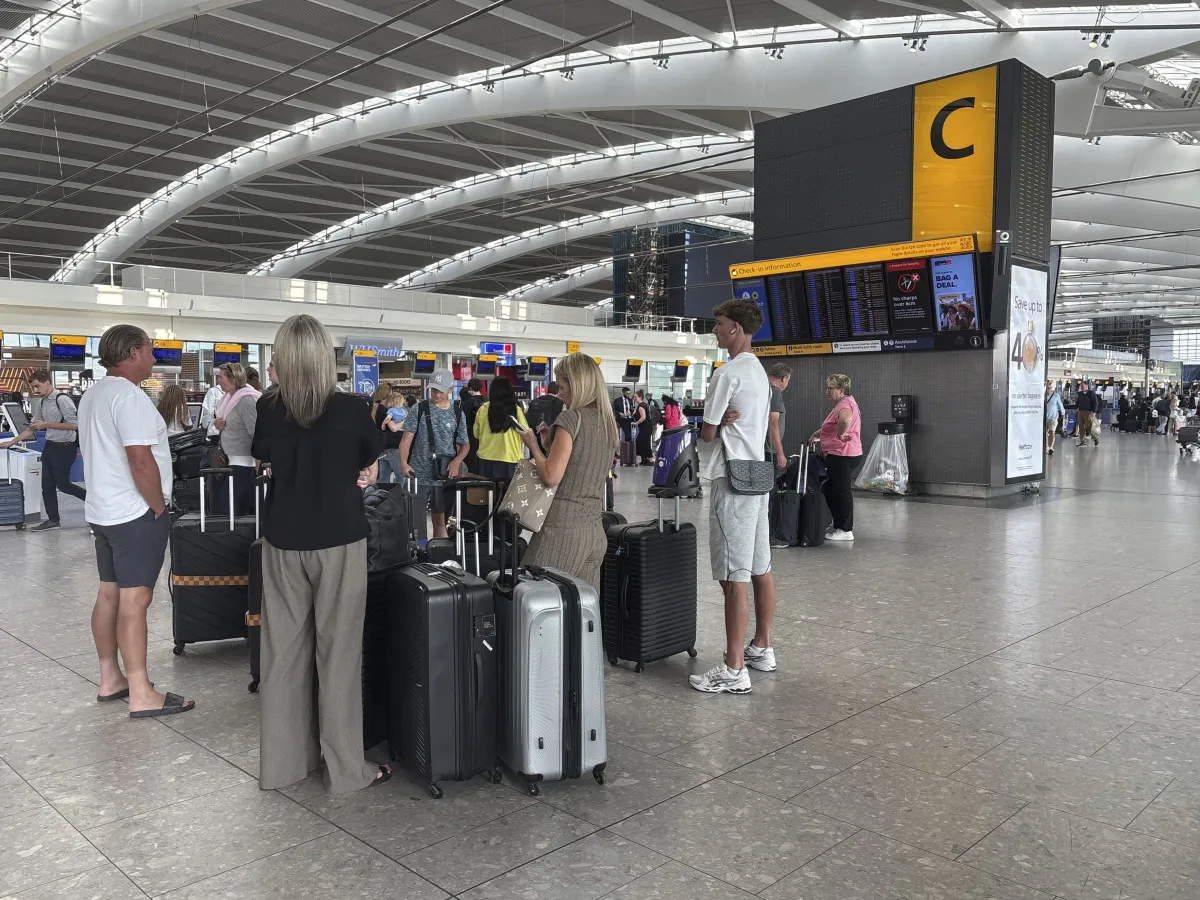
Several airports in the United Kingdom faced disruptions with flights to and from London witnessing major delays on Wednesday due to a technical glitch at the NATS Swanwick air traffic control centre, leading to the chaos. Airports in Birmingham and Edinburgh were among the worst-affected till the time the issue lasted.
Local media reported that operations at airports in the UK and flights were resuming gradually only hours after, when engineers were able to pinpoint and resolve the issue with the air traffic control (ATC).
Issue resolved, but delays continue
The National Air Traffic Services (NATS) later confirmed that the system issue had been resolved. However, delays continued to affect operations across the country, according to a report by the BBC.
In an earlier statement, air traffic controllers said they were limiting the number of aircraft permitted to fly over London "in order to ensure safety."
What was the glitch with Swanwick ATC?
The issue, identified at the Swanwick ATC centre, impacted all outbound flights from the UK, leading to delays at airports including Gatwick, Manchester, Edinburgh and Birmingham.
Initially, NATS said engineers were “working hard to resolve” the technical fault. Once resolved, they cautioned that delays would persist as operations gradually returned to normal. “We continue to work closely with airline and airport customers to minimise disruption,” NATS said in their latest update.
Heathrow Airport had earlier announced a pause on all departures, though flights later resumed. Gatwick Airport also confirmed that flight operations were back underway, but warned of potential ongoing delays.
UK Transport Secretary Heidi Alexander confirmed that a technical issue had impacted the operations of the National Air Traffic Services (NATS), leading to widespread travel disruption on Wednesday afternoon. "I am aware of a technical issue which impacted NATS’ operations causing travel disruption this afternoon," Alexander said in a statement.
Previous disruptions
The NATS system has experienced multiple software-related issues since it became operational in 2002. One notable incident occurred in August 2023, when a major glitch forced air traffic controllers to process flight plans manually rather than through the automated system.
The fault caused hundreds of delays and cancellations during the peak summer travel period, affecting an estimated 700,000 passengers.
