
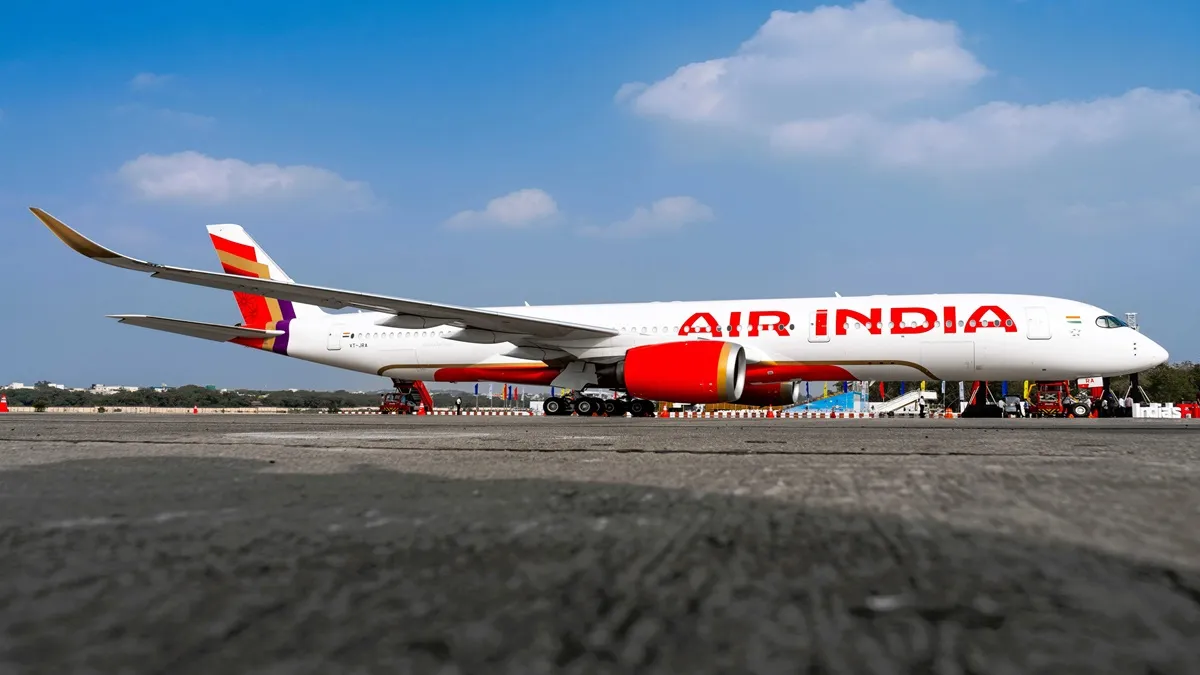
An Air India flight operating between Amritsar and Birmingham encountered a mid-air technical issue involving the deployment of its emergency turbine system, known as the Ram Air Turbine (RAT), during its final approach on October 4 (Saturday). The aircraft, operating as flight AI117, landed safely at Birmingham Airport despite the unexpected activation.
Crew detects emergency turbine deployment
According to Air India, the operating crew of flight AI117 detected the deployment of the RAT- a crucial safety component designed to supply emergency power to aircraft systems in the event of dual engine failure or loss of primary power. However, in this case, all electrical and hydraulic parameters were functioning normally, indicating no immediate system failure. Despite the alert, the crew maintained control throughout the descent and executed a smooth and safe landing.
Grounding and technical inspections initiated
After landing, the aircraft was immediately grounded for thorough inspection and maintenance checks. Engineering teams have been tasked with determining the cause of the turbine deployment and ensuring that all flight systems meet safety standards before the aircraft is cleared for further operations.
Return flight cancelled, passenger support arranged
As a result of the aircraft’s grounding, Air India’s return service- flight AI114 from Birmingham to Delhi- was cancelled. The airline has assured passengers that alternative travel arrangements are being made and that affected guests will be accommodated on subsequent flights.

Airline statement emphasises safety assurance
In an official statement, an Air India spokesperson emphasized that passenger safety remained uncompromised throughout the incident. The spokesperson added that Air India is prioritising a comprehensive technical review to prevent similar occurrences in the future, noting that the grounding of the aircraft is a standard precautionary measure in line with safety protocols.
The Ram Air Turbine is a small, fold-out windmill-like device that deploys in emergencies when the plane loses main electrical or hydraulic power. It generates emergency power to maintain control of key flight systems, including basic flight instruments and hydraulic pressure for control surfaces.