
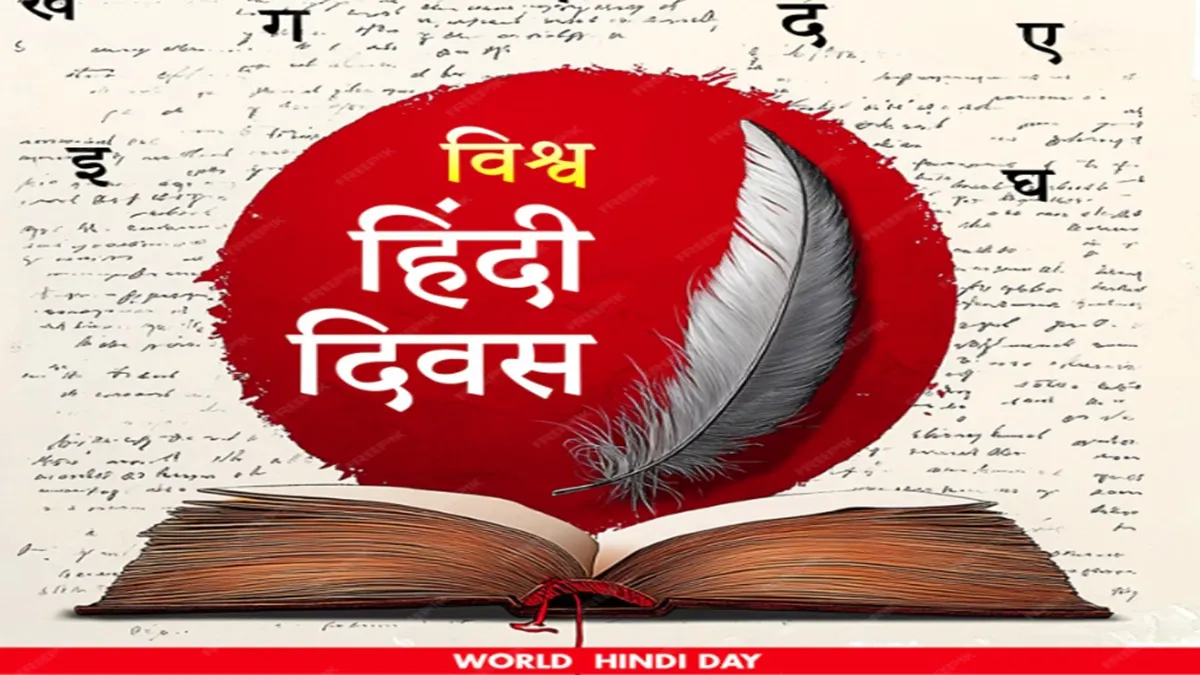
World Hindi Day honours the global reach of Hindi, and few embody this better than four distinguished South Indian writers who transcended regional languages to excel in Hindi. Bala Shauri Reddy, Dr N Chandrasekharan Nair, Dr Moturi Satyanarayana, and Dr MN Singaramma Sridevi hail from Andhra Pradesh, Kerala, and Telangana, blending their native linguistic roots with Hindi proficiency. Their works enrich Hindi literature with fresh perspectives from the South, showcasing cultural synthesis and literary innovation.
World Hindi Day is celebrated annually on January 10 which marks the anniversary of the first World Hindi Conference held in Nagpur in 1975 that aimed to promote Hindi globally. It differs from 'Hindi Diwas', observed on September 14 in India to commemorate Hindi's adoption as an official language in 1949.
Bala Shauri Reddy: The multilingual storyteller from Andhra
Bala Shauri Reddy, born on July 1, 1928, in Kadapa district of Andhra Pradesh, emerged as a prominent Hindi author despite his Telugu origins. He pursued higher education in Allahabad and Varanasi, hubs of Hindi scholarship, which shaped his literary career. Reddy authored notable Hindi books like Adarsh Jivanian (Ideal Biographies) and Pauranik Kathayen (Legendary Stories), drawing from mythological and biographical themes to captivate readers.
His contributions extended to Hindi Prachar Sabha in Madras, where he promoted the language in non-Hindi speaking regions. Reddy's translations from Telugu to Hindi further bridged linguistic divides, earning him recognition for making Southern narratives accessible nationwide. His enduring legacy lies in fostering Hindi's growth in South India through accessible, value-driven prose.
Dr N Chandrasekharan Nair: Kerala's scholarly voice in Hindi
Dr N Chandrasekharan Nair from Kerala stands out for his scholarly Hindi writings rooted in Malayalam traditions. A dedicated academic and litterateur, Nair contributed essays, poetry, and critical works that infused Hindi with Kerala's philosophical depth and coastal ethos. His proficiency in Hindi positioned him as a key figure in inter-state literary exchanges.
Nair's works often explored themes of humanism, nature, and cultural harmony, reflecting Kerala's syncretic heritage. He actively participated in Hindi promotion initiatives across South India, advocating for its adoption in education and literature. Through his efforts, Nair helped elevate Hindi's stature in Kerala, inspiring a new generation of bilingual writers.
Dr Moturi Satyanarayana: Andhra's poet and patriot in Hindi
Dr Moturi Satyanarayana, another luminary from Andhra Pradesh, distinguished himself as a Hindi poet, essayist, and patriot. His verses in Hindi resonated with nationalist fervor and social reform, echoing the spirit of India's freedom struggle while incorporating Telugu poetic forms. Satyanarayana's academic pursuits fueled his deep engagement with Hindi sahitya (literature).
Renowned for his eloquence, he delivered lectures and published collections that celebrated unity in diversity. His writings addressed contemporary issues like education and ethics, making Hindi a vehicle for progressive thought from the South. Satyanarayana's patriotic undertones solidified his role as a cultural ambassador, linking regional pride with national literature.
Dr MN Singaramma Sridevi: Telangana's versatile Hindi prodigy
Dr MN Singaramma Sridevi from Telangana rounds out this quartet with her versatile Hindi oeuvre, spanning novels, stories, and plays alongside her Telugu base. A pioneering woman writer, she tackled themes of women's empowerment, family dynamics, and rural life, bringing Telangana's vibrant folklore into Hindi realms. Her doctorate underscored her rigorous scholarly approach to bilingual creativity.
Sridevi's active involvement in literary forums amplified Hindi's presence in Telangana's cultural scene. Her narrative style, rich with emotional depth and social commentary, garnered awards and widespread acclaim. By mastering Hindi, she exemplified how South Indian women could claim space in a North-dominated literary canon.
Bridging South and North: Their lasting impact
These four writers exemplify Hindi's pan-Indian appeal, proving language knows no regional bounds. On World Hindi Day, their stories inspire unity, encouraging more South Indians to embrace Hindi creativity. Their legacy endures in books, translations and the hearts of readers who value linguistic harmony.
