
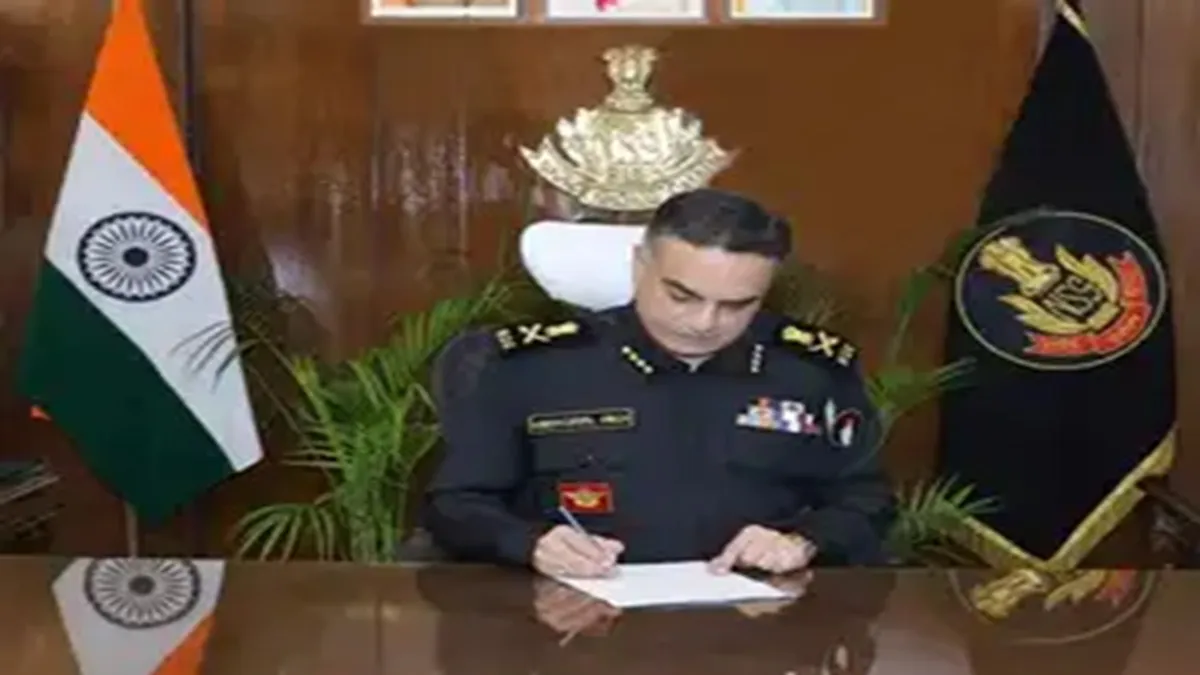
Former CRPF Director General and senior IPS officer Anish Dayal Singh was appointed as the Deputy National Security Advisor (NSA), officials confirmed on August 24. Singh will play a key role in handling internal security matters such as Jammu and Kashmir, Left-Wing Extremism, and insurgency in the Northeast, according to sources. He joins a team that includes former RAW chief Rajinder Khanna, and two other Deputy NSAs retired IPS officer T.V. Ravichandran and former diplomat Pawan Kapoor working under National Security Advisor Ajit Doval.
Everything you need to know about Anish Dayal
Anish Dayal Singh is a 1988-batch Indian Police Service officer from the Manipur cadre. He retired in December 2024, ending a service of over 35 years that spanned field intelligence, policing, paramilitary leadership, and policy reform. Before heading India’s two major paramilitary forces the Central Reserve Police Force (CRPF) and the Indo-Tibetan Border Police (ITBP) Singh spent almost three decades in the Intelligence Bureau (IB).
His time in the IB helped him develop deep knowledge in counter-insurgency and internal security operations, especially in regions like Jammu and Kashmir and the Northeast. As Director General of CRPF, Singh led the force during a crucial phase. He played a major role in increasing the force's reach in Maoist-affected areas by setting up over 36 forward operating bases and adding four new battalions to boost capacity on the ground.
He also managed large-scale security deployments during the 2024 Lok Sabha elections and the first Assembly elections in Jammu and Kashmir after its reorganisation. One of Singh's key structural reforms was the realignment of 130 CRPF battalions, reducing the average distance between battalion headquarters and their home centres from 1,200 km to 500 km. This change improved operational readiness and gave personnel more time with their families.
He introduced "Samvaad" sessions, which allowed direct communication with company commanders across the country. These sessions helped bring local feedback to the top leadership and were well-received within the force.
Singh also worked on policies to improve the morale of paramilitary personnel. During his tenure, he proposed honorary ranks for retiring personnel of the Central Armed Police Forces (CAPFs), to address the issue of slow promotions. Some constables had to wait nearly 20 years for a rank upgrade. The policy, first introduced by Singh, was eventually cleared by the Union government and is now seen as a positive step toward recognising the contribution of long-serving personnel.
