
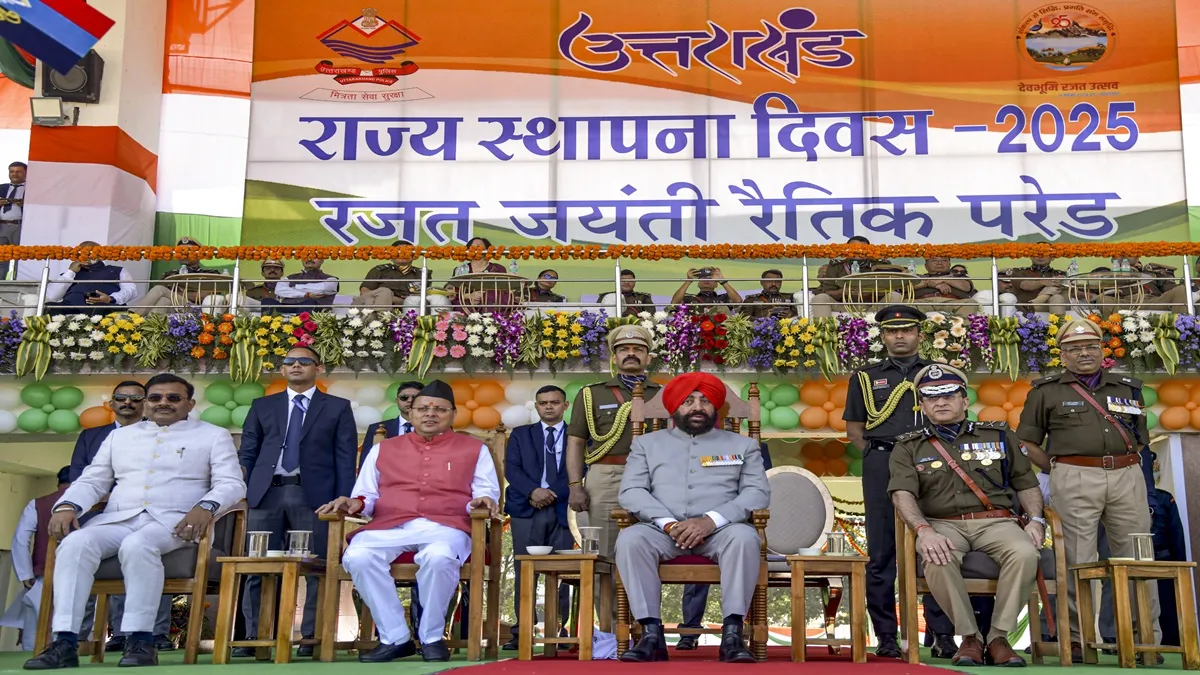
Prime Minister Narendra Modi extended his warm greetings to the people of Uttarakhand on the occasion of the 25th anniversary of the state's formation. He praised Uttarakhand's remarkable progress across various sectors since its carving out from Uttar Pradesh. Modi highlighted the state's emergence as an important center for tourism, education, and industrial development, while also preserving its rich cultural heritage and natural beauty. This milestone not only celebrates the state's journey of development but also honors its unique identity as the "Land of the Gods" for its spiritual and scenic significance.
The state now known as Uttarakhand was officially formed on November 9, 2000, becoming the 27th state of the Republic of India. At the time of its creation, the state was named 'Uttaranchal', carved out from the hilly regions of Uttar Pradesh, comprising the Garhwal and Kumaon divisions.
Historical and cultural significance of the name Uttarakhand
The name "Uttarakhand" is derived from the Sanskrit words uttara meaning "north" and khand meaning "part" or "section," thus translating to "northern land" or "northern region". This name has deep historical roots, referenced in ancient Hindu scriptures and Puranas as describing the central Indian Himalayas, including the spiritual and cultural regions of Kedarkhand (Garhwal) and Manaskhand (Kumaon). The region is also known as "Devbhumi," meaning "Land of the Gods," due to its numerous Hindu pilgrimage sites.
Why the name change?
Despite being officially named Uttaranchal at its inception, there was widespread public and political demand to restore the traditional name "Uttarakhand" to better reflect the area's historic and cultural identity. The name Uttaranchal was perceived by many as a politically motivated label introduced by the Bharatiya Janata Party (BJP)-led central and Uttar Pradesh governments in the late 1990s during the state formation process.
Activists, political leaders, and the people of the region advocated for the change to honor their shared heritage and history. This movement culminated with the Union Cabinet approving the renaming in 2006, following legislative procedures. The official renaming from Uttaranchal to Uttarakhand took effect on January 1, 2007.

Unity across Garhwal and Kumaon
The unified identity as Uttarakhand also symbolized the coming together of the historically distinct but interrelated Garhwal and Kumaon regions. Despite their cultural and linguistic diversity, the two areas share geography, economy, traditions, and a common demand for statehood.
- Formation date: November 9, 2000 (as Uttaranchal)
- Renamed: January 1, 2007, to Uttarakhand
- Reason for name change: To reflect the region’s ancient heritage and identity, and respond to public demand
- Significance: Uttarakhand means “Northern Land” and is deeply rooted in ancient Indian scriptures and the cultural identity of the state’s people
This name change marked a significant milestone in the consolidation of Uttarakhand’s unique Himalayan identity within the Indian Union.