
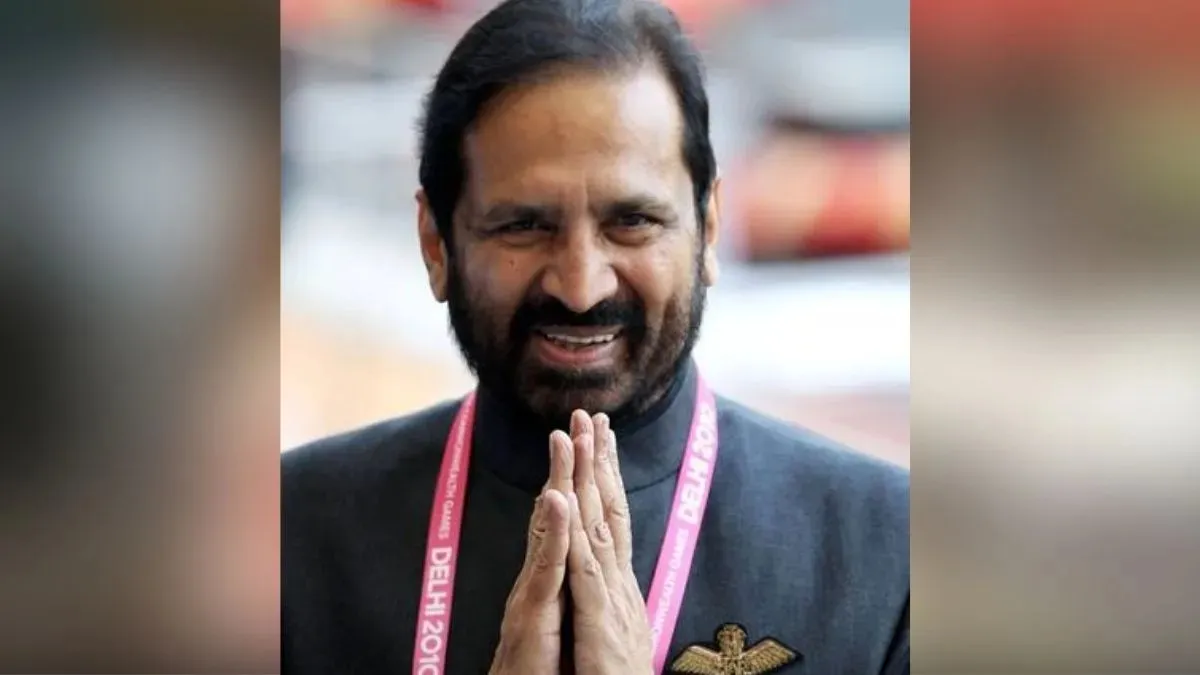
Senior Congress leader and former Union Minister Suresh Kalmadi passed away early Tuesday morning at his residence in Pune after a prolonged illness. He was 81. Kalmadi breathed his last at around 3:30 am. The former Indian Olympic Association (IOA) president is survived by his wife, son, and daughter-in-law, two married daughters and sons-in-law, and grandchildren.
According to the family, Kalmadi's mortal remains will be kept for public viewing at Kalmadi House in Erandwane until 2 pm on Tuesday. His last rites will be performed later in the day at 3:30 pm at the Vaikunth Crematorium in Navi Peth, Pune.
Leaders cutting across party lines expressed grief over his demise and paid tribute to his contribution to public life.
Who was Suresh Kalmadi?
Suresh Kalmadi was a towering personality who carved a distinct identity for himself, spanning the worlds of Indian sports and national politics. A former Union Minister of State for Railways and ex-president of the Indian Olympic Association (IOA), Kalmadi, remained a prominent and influential figure for decades.
A key political leader from Pune, Kalmadi, represented the city multiple times in the Lok Sabha and held several important positions during his long political career. He was widely regarded as one of Pune's most powerful leaders, often described as a "kingmaker" in the city's politics.
From Pilot to Politician
Kalmadi's journey was as remarkable as it was unconventional. He began his professional life as a pilot in the Indian Air Force before making the transition to politics. Over the years, he went on to serve multiple terms as a MP and also held ministerial responsibility at the Centre. His role in shaping Pune's infrastructure and development earned him lasting recognition in the city.
Kalmadi's deep interest in sports defined another major chapter of his life. As president of the Indian Olympic Association, he headed Indian sports administration for many years. The 2010 Commonwealth Games in Delhi marked the most high-profile phase of his sporting career. While the event was later overshadowed by controversies that impacted his political standing, he was also credited with elevating Indian sports on a global platform and bringing unprecedented attention to sporting infrastructure.
