
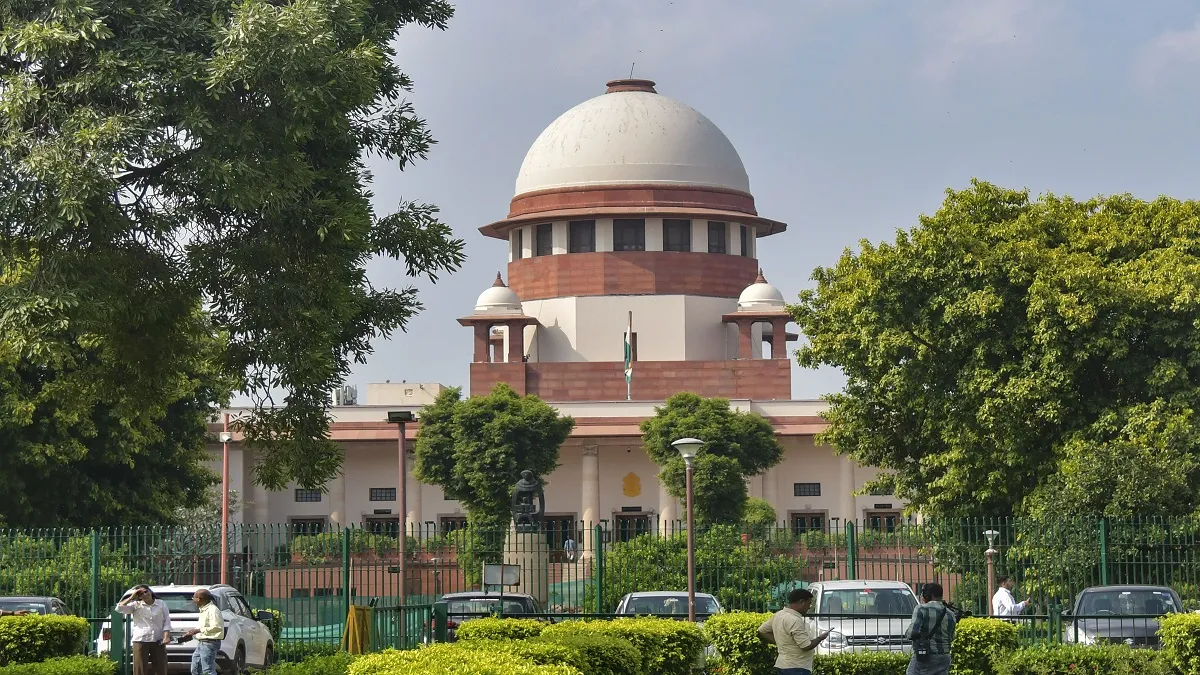
The Supreme Court of India (SC) stepped in to resolve a standoff between the Election Commission of India (ECI) and the Government of West Bengal over the deputation and rank of officers for the Special Intensive Revision (SIR) of electoral rolls in the state. The Court on Friday (February 20) observed that it was 'nearly impossible' for it to determine the prescribed rank of officials to be deployed by either side, given the extraordinary nature of the circumstances surrounding the proceedings.
Acknowledging the exceptional situation, a bench led by the Chief Justice of India (CJI) requested the Chief Justice of the Calcutta High Court to appoint serving and former judicial officers with the rank of District Judges or Additional District Judges to adjudicate pending claims and objections related to inclusion and exclusion in the voter list. The emphasis was on cases involving “logical discrepancies,” where the accuracy and fairness of the voter rolls are most sensitive.
In a bid to expedite resolution, the Court directed the Chief Secretary and the Director General of Police (DGP) of the State, along with the State Election Commissioner, to meet the Chief Justice of the Calcutta High Court. This meeting was to occur in the presence of the Advocate General and the Solicitor General, with the goal of evolving modalities to complete the SIR exercise as expeditiously as possible, preferably by February 28 (Saturday). The Court also clarified that the publication of the draft or final list on February 21 would not be considered conclusive; a supplementary list could subsequently be issued by the ECI to reflect any adjustments or findings arising from ongoing adjudication.
Context and implications
The intervention signals the Supreme Court’s willingness to take extraordinary steps in pursuit of electoral integrity and confidence in the revision process, particularly when state-government and constitutional bodies appear to be at odds. By appointing district-level judges to hear disputes on logical discrepancies in the voter list, the Court aimed to ensure a fair, timely, and legally grounded resolution of objections, while maintaining the credibility of the SIR process.
The order underscores the importance the judiciary places on transparent adjudication mechanisms in electoral matters, especially in a politically sensitive state like West Bengal.

Here are some additional details
The Court’s directive was explicit about appointing serving and former judicial officers at the rank of District Judge or Additional District Judge to adjudicate inclusion and exclusion claims arising during the SIR. The extraordinary order reflects a recognition that standard procedures for deputing officers and resolving disputes could not adequately address the current impasse between the Government of West Bengal and the ECI.
The emphasis on expediting the process by February 28, indicates a time-bound effort to bring finality to the revision exercise while safeguarding the integrity of the electoral rolls.
Note on publication timelines
The Court clarified that the draft or final publication date of February 21 would not be automatically deemed conclusive. The ECI retains the ability to issue a supplementary list if adjudication outcomes necessitate revisions, ensuring that the voter list remains accurate and up-to-date in light of ongoing rulings.