
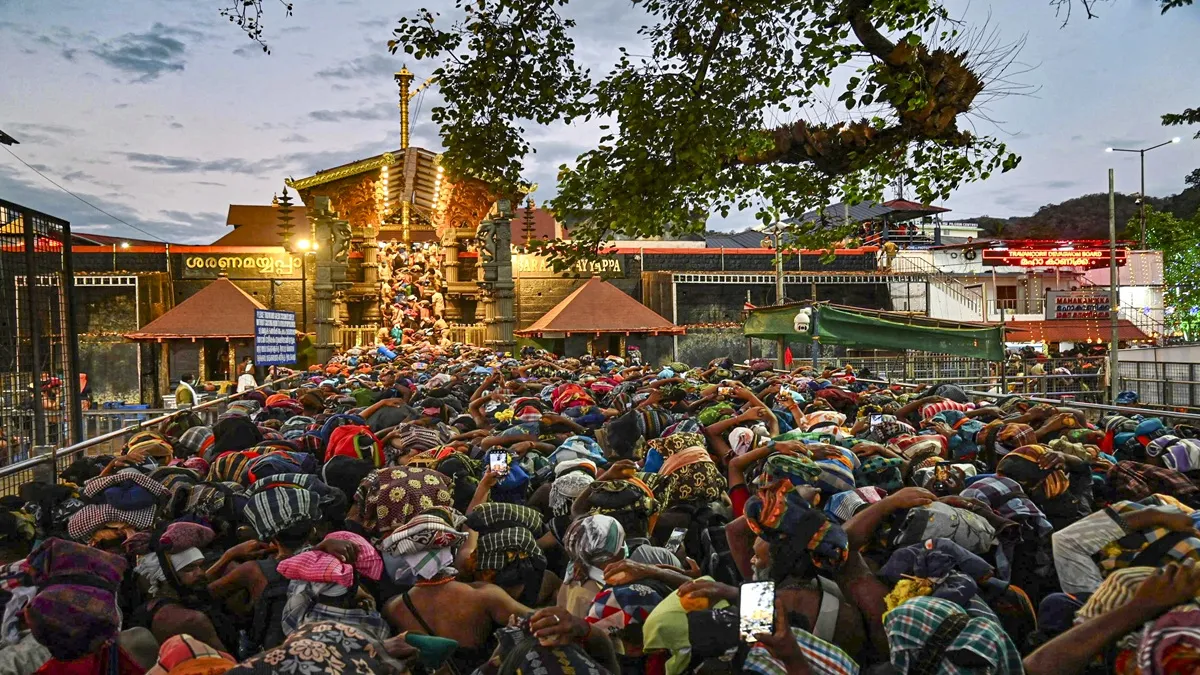
During a significant hearing on gender-based restrictions at religious sites, Supreme Court judge BV Nagarathna observed that a woman cannot be considered "untouchable" for three days in a month and then suddenly not be so on the fourth day. Her remark came as the top court's nine-judge constitution bench examined petitions involving discrimination against women at places of worship, including the Sabarimala Temple.
The constitution bench, led by Surya Kant, along with Justices MM Sundresh, Ahsanuddin Amanullah, Aravind Kumar, Augustine George Masih, Prasanna B Varale, R Mahadevan and Joymalya Bagchi, is hearing a set of cases that explore religious freedoms and gender equality across faiths.
Centre objects to 2018 judgment reference
Solicitor General Tushar Mehta strongly opposed the 2018 observation made by then Justice DY Chandrachud, who had held that exclusion of certain women from the temple amounted to "untouchability" under Article 17. "India is not that patriarchal or gender stereotyped in the way that the West understands," Mehta submitted as per the PTI.
'Restrictions not based on menstruation'
Clarifying the government's stance, Mehta insisted that the Sabarimala restriction was based solely on age and not menstruation. He told the bench that only one specific temple imposed the restriction and said, "Let us be clear. Sabarimala concerns only a particular age group. There should be no confusion. Lord Ayyappa temples across the country and the world are open to women of all ages. It is only one temple which has this restriction. It is a sui generis case".
What is the case?
The court noted that the hearings will continue as the bench revisits previous rulings. In 2018, a five-judge bench had lifted the ban on women aged 10 to 50 from entering the Sabarimala temple. A year later, the issue was referred to a larger bench to examine broader concerns relating to discrimination against women at various places of worship.
ALSO READ: Ban on women at Sabarimala linked to Lord Ayyappa's celibate tradition, not bias: Centre tells SC
