
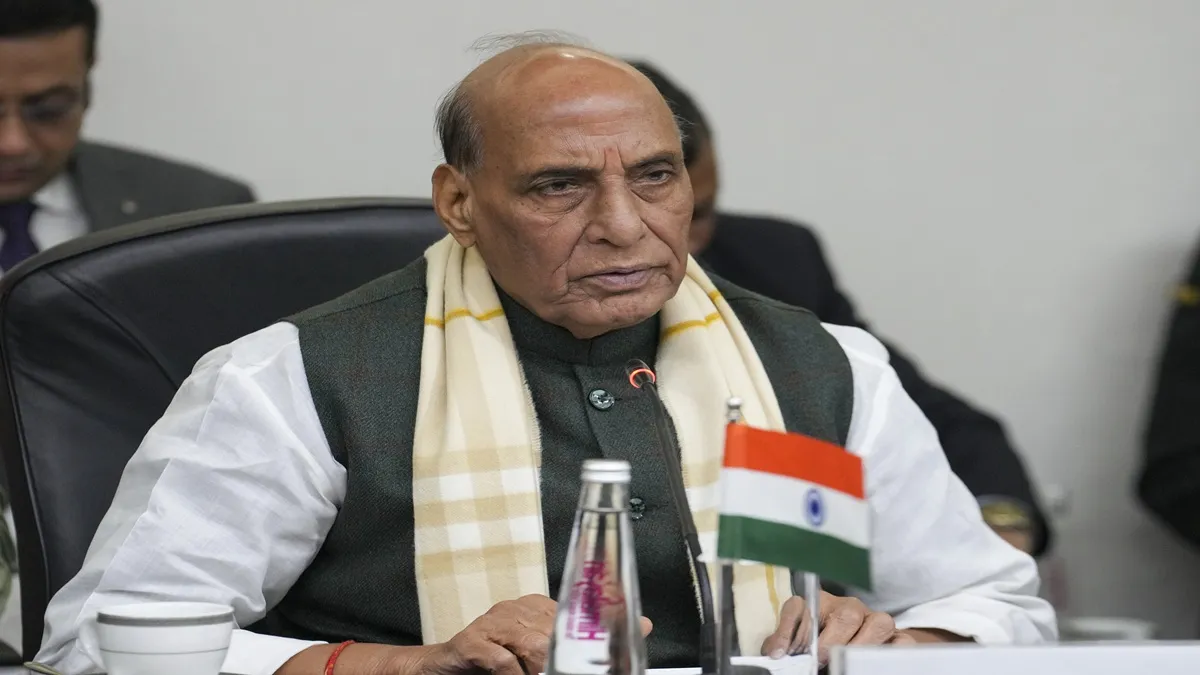
Rajnath Singh, Defence Minister of India, praised the Indian armed forces on Sunday (December 7) for their disciplined and measured conduct during 'Operation Sindoor', launched in May as a response to the deadly Pahalgam terror attack. Singh emphasised that while the forces had the capability to escalate, they chose restraint, showcasing both valour and strategic prudence.
Operation Sindoor: A calibrated response
Operation Sindoor was initiated on May 7 targeting terror infrastructure in Pakistan and Pakistan-occupied Kashmir (PoK) after the April 22 Pahalgam attack that killed 26 people, mostly tourists. Singh commended the armed forces’ effective execution of the operation, noting that although they “could have done much more,” the decision to apply a restrained and calibrated response reflected their discipline and professionalism. The military response neutralized terror threats without escalating tensions further.
Exemplary coordination among forces and civilians
Singh highlighted the remarkable coordination involved in Operation Sindoor among the armed forces, civil administration, and citizens in border regions, especially Ladakh. He expressed gratitude toward the local communities whose support played a crucial role, stating, “This coordination is what defines our identity.” This synergy, he added, creates a unique national bond that strengthens India’s resilience and unity against external challenges.
Connectivity as the backbone of security
A cornerstone of Operation Sindoor’s success, according to Singh, was the improved connectivity infrastructure in border areas, which enabled timely logistics support and seamless communication critical for operations in challenging terrains. He underlined that connectivity goes beyond physical infrastructure like roads and optical fiber – it encompasses communication systems, real-time surveillance, satellite support, and logistics networks that collectively form the backbone of national security.
“Every minute, every second of a soldier deployed on the border is extremely important,” Singh remarked, stressing that enhanced connectivity significantly boosts troop effectiveness and morale.
Holistic development of border regions
Singh also linked increased connectivity to broader goals of peace, harmony, and socio-economic development. The government’s sustained focus on strengthening communication networks in border regions, including Ladakh, supports not only military operations but also civilian life and economic growth.
He assured that the Central government, alongside organizations like the Border Roads Organisation (BRO), remains committed to the holistic development and security of border areas. “We just need to keep strengthening this bond so that our relationship is not affected by any external element,” Singh said, reinforcing the union between the government, armed forces, and citizens.
Driving economic growth through connectivity
Beyond security, improved communication and infrastructure have fueled economic expansion, Singh noted, citing India’s 8.2 percent GDP growth in the second quarter of 2025-26. He credited pro-growth policies, infrastructure reforms, and stronger connectivity networks as vital enablers driving this development.
Defence Minister Rajnath Singh’s remarks underline a balanced approach wherein India’s armed forces demonstrate strength and restraint, supported by robust infrastructure and citizen cooperation. Operation Sindoor exemplifies how strategic discipline and connectivity improvements together enhance both national security and regional progress.
