
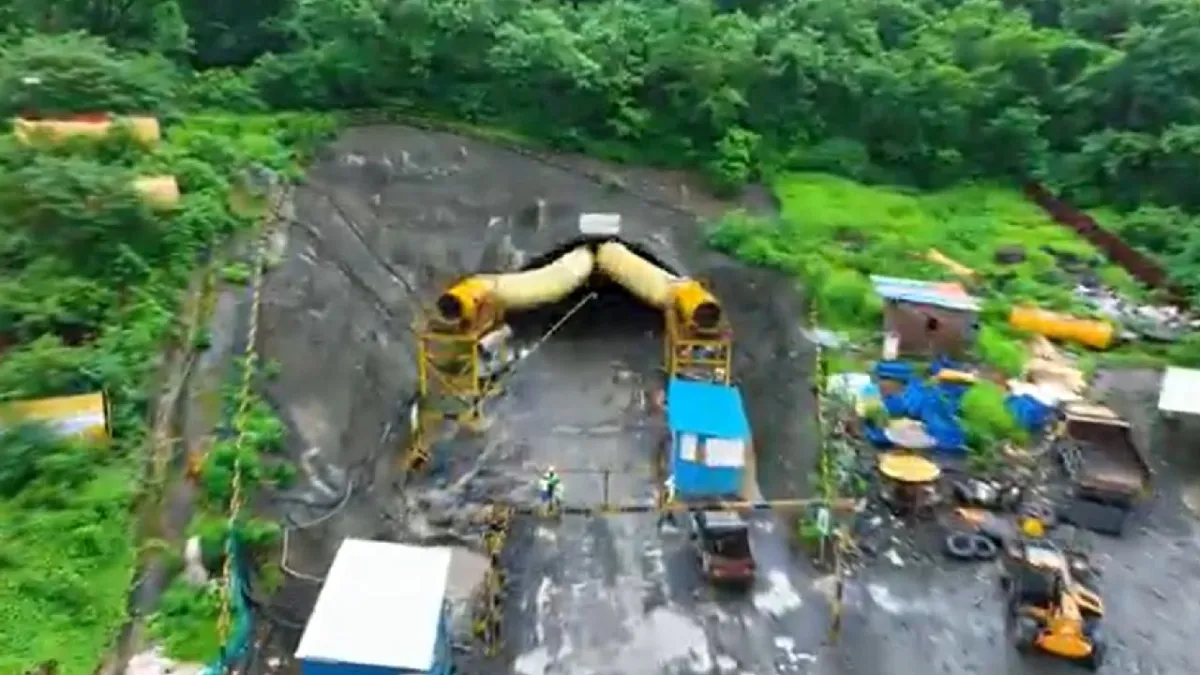
The first breakthrough in the 21-km tunnel being constructed between Bandra-Kurla Complex (BKC) in Mumbai and Shilphata in Thane for the Mumbai-Ahmedabad bullet train project has been achieved, the National High Speed Rail Corporation Limited (NHSRCL) announced on Thursday. This marks a major milestone in India’s first high-speed rail initiative, which aims to significantly cut travel time between the two major financial centres.
Milestone in NATM tunnelling completed
The breakthrough was recorded on Wednesday with the successful completion of a 2.7 km continuous tunnel section using the New Austrian Tunnelling Method (NATM). The 21-km tunnel forms a crucial component of the Mumbai-Ahmedabad high-speed rail corridor, with 16 km to be constructed using Tunnel Boring Machines (TBMs) and the remaining 5 km through NATM, particularly in the section between Shilphata and Ghansoli. Notably, the tunnel includes a 7-km undersea stretch beneath Thane Creek.
To expedite progress on the NATM section, an Additionally Driven Intermediate Tunnel (ADIT) was built, allowing excavation to proceed simultaneously from both Ghansoli and Shilphata. So far, approximately 1.62 km has been excavated from the Shilphata side, with the total NATM progress reaching 4.3 km.
Advanced safety systems in place
NHSRCL has implemented comprehensive safety protocols to ensure secure tunnelling operations without affecting surrounding infrastructure or ecosystems. These measures include the use of ground settlement markers, piezometers, inclinometers, strain gauges, and biometric access control systems. Such equipment is critical for monitoring ground stability and ensuring worker safety throughout the excavation process.
Awaiting TBMs and funding structure
Although shafts and other essential launch equipment for the TBMs are already in place, the machines themselves are yet to arrive from the manufacturers. These will be crucial for constructing the remaining 16 km of the tunnel. The Mumbai-Ahmedabad High Speed Rail Corridor project is estimated to cost Rs 1.08 lakh crore. According to the funding structure, the Union government will contribute Rs 10,000 crore, while the governments of Gujarat and Maharashtra will each provide Rs 5,000 crore. The majority of the funding will come from Japan through a low-interest loan at just 0.1 percent.
