
On safety issues, he said the KNPP reactors incorporate enhanced safety features ensuring highest level of safety, in line with current international standards.
“These are Generation III+ reactors incorporating a combination of active and passive safety systems like Passive Heat Removal System, Hydrogen Re-combiners, Core Catcher, Hydro Accumulators and Quick Boron Injection System. This combination of multi-layered safety features ensures safety of the plant, public and environment,” he said.
Till date, cumulative generation from Unit 1 of KNPP was around 1,900 million units, he said.
KNPP's unit 1 has been contributing to the power-starved Tamil Nadu since October 2013.
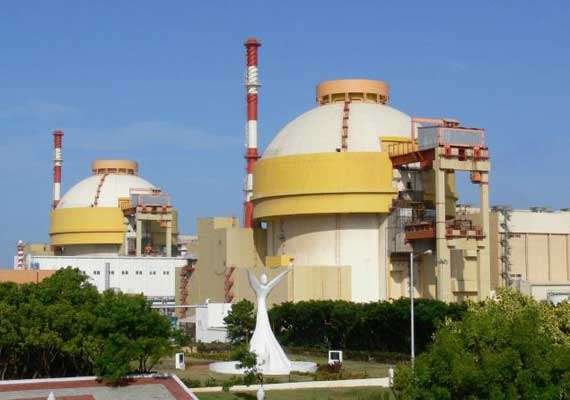
Nuclear Power Corporation of India Ltd (NPCIL) has collaborated with Russia to set up two 1,000 MWe reactors at Kudankulam in Tirunelveli district in Tamil Nadu.
Unit 1 attained criticality in July 2013. Power generated from this unit would add 1,000 MW to the southern grid.
Anti-nuclear activists and People's Movement Against Nuclear Energy (PMANE) have been spearheading more than a two year old protest against KNPP in Tirunelveli, demanding its closure, citing safety reasons.
KNPP unit I generates its full capacity of 1,000 MWe of power
Chennai: Kundankulam Nuclear Power Plant (KNPP) today attained its full generation capacity and became the first nuclear plant in the country to generate 1,000 MWe of power, its Site Director R S Sundar said.“At 13.20
Advertisement
Advertisement
Top News
-
Passports of those involved in violence amid CJP protest may be cancelled, say Delhi Police sources

-
CJP calls nationwide protest on July 24 despite Centre's assurance on paper leaks
-
Jantar Mantar Protest LIVE: Rahul calls Cong MPs meeting at residence; crowd swells at Jantar Mantar
-
'PM sensitive towards this issue,' Govt invites CJP for talks, assures action on NEET paper leak
Advertisement
Advertisement