
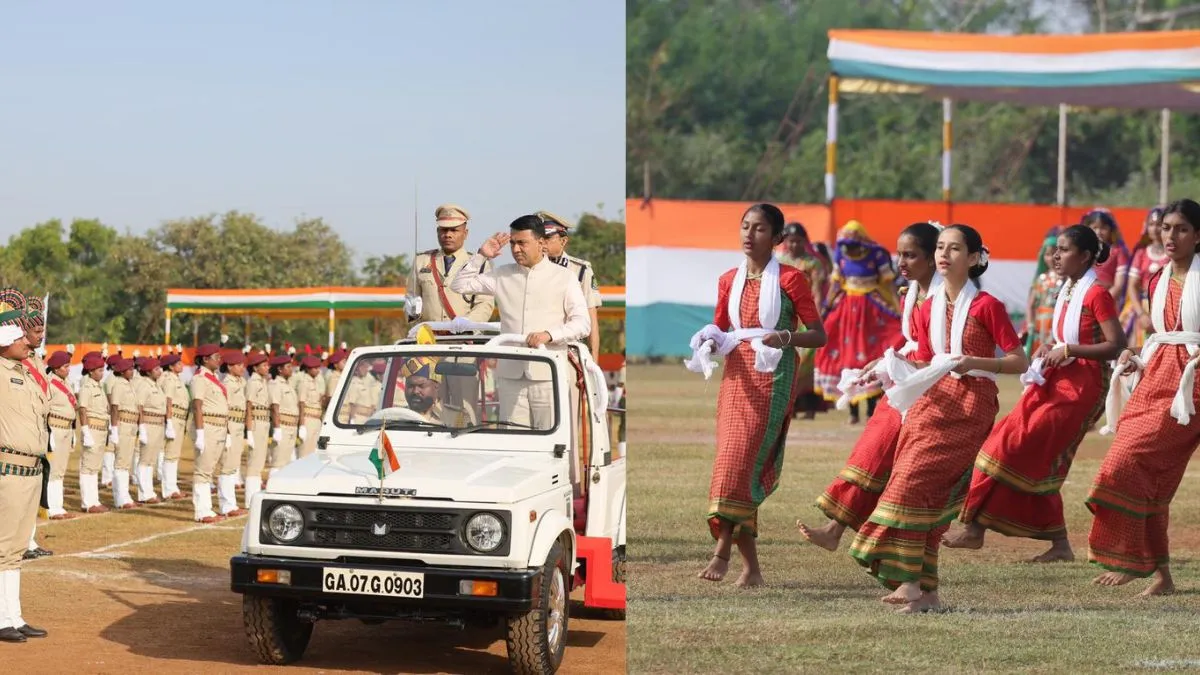
December 19 marks a significant milestone in Goan history, as Goa gained independence from Portuguese rule and eventually integrated with India on this day in 1961 marking the end of 451 years of Portuguese rule. Though India was freed from British rule in 1947, Portugal did not grant Goa independence or allow it to join India. Portugal contended that Goa was culturally and religiously different from the rest of India and that it was an integral part of Portugal rather than merely a colony.
Who led the Indian forces?
Operation Vijay under General Chaudhari was launched by the Indian Armed Forces to annex Goa and amalgamate it with the rest of India during Jawaharlal Nehru’s tenure as Prime Minister.
The operation lasted for over 36 hours and involved coordinated strikes by the Indian Armed Forces across air, sea, and land.
Several people contributed to liberate Goa from Portuguese rule. They held protests and launched several movements against colonial rule in Goa.
How the world reacted?
Portugal: The Portuguese government, led by António de Oliveira Salazar criticised the India's military action terming it as an act of aggression against its national territory and citizens. Following the military action, Portugal immediately cut all diplomatic relations with India and did not recognise Goa's sovereignty till 1974.
United States: The United States regretted India's military action saying a nation that championed non-violence, resorted to military action.
Soviet Union: The USSR supported India's military action against Goa stating that country's military actions were absolutely lawful and justified.
Key people behind Goa's liberation
Tristao de Braganca Cunha
TB Cunha is known as the “Father of Goan Nationalism” for launching the first movement to end Portuguese rule in Goa. During Mahatma Gandhi’s mass movement against imperial rule, Cunha returned to India after completing his education in France.
He believed that Goa should not remain isolated from the national freedom struggle. With this vision, he founded the Goa Congress Committee and succeeded in getting it affiliated with the Indian National Congress.
Cunha later moved to Mumbai, from where he continued to fight ardently for Goa’s liberation. He wrote several articles and books strongly denouncing Portuguese rule.
Juliao Menezes
Juliao Menezes was an Indian freedom fighter who played an important part in the movement to liberate Goa from Portuguese rule. He was actively involved in efforts to spread nationalist ideas among the people of Goa. Menezes set up the publication Gomantak Praja Mandal with the aim of promoting nationalism in the region. The initiative focused on building political awareness at a time when Goa was under Portuguese administration.
He was also linked to the Indian National Congress in Portuguese Goa. Menezes served as a member of the party’s provisional committee and attended its session held in 1948, reflecting his engagement with the wider national movement.
Along with socialist leader Ram Manohar Lohia, Menezes helped plan a civil disobedience movement against the regime of Portuguese ruler Antonio de Oliveira Salazar in Goa.
Libia Lobo Sardesai
A Goan lawyer, Sardesai played an important role in Goa’s freedom struggle. From 1955 to 1961, she operated an underground radio station called Voice of Freedom, which broadcast messages across Portuguese-ruled Goa and inspired support for the independence movement.
After Goa’s liberation, Lobo became the first Director of Tourism for Goa, Daman, and Diu, contributing to the development of the region’s tourism sector. She was awarded the Padma Shri in January 2025.
Vaman Sardesai
An Indian poet, freedom fighter and diplomat, Vaman Sardesai was also an important figure in Goa’s liberation movement. He was the husband of Libia Lobo Sardesai and was a key contributor in operations of radio station Voice of Freedom. After the liberation of Goa, he became the second editor of Goa Today magazine. He later became an IAS officer and served as the Indian Ambassador to Angola.
Like his wife, Vaman was also awarded the Padma Shri award.
Purushottam Kakodkar
Purushottam Kakodkar played a significant role in the movement for Goa’s liberation. Due to his active involvement, the Portuguese colonial authorities detained him and even deported him. After his return to Goa, he established an ashram in Margao, which became a discreet hub for the freedom struggle, providing shelter and support to many freedom fighters.
In June 1957, Kakodkar was among 11 Goans selected to participate in consultations with Prime Minister Jawaharlal Nehru.
