
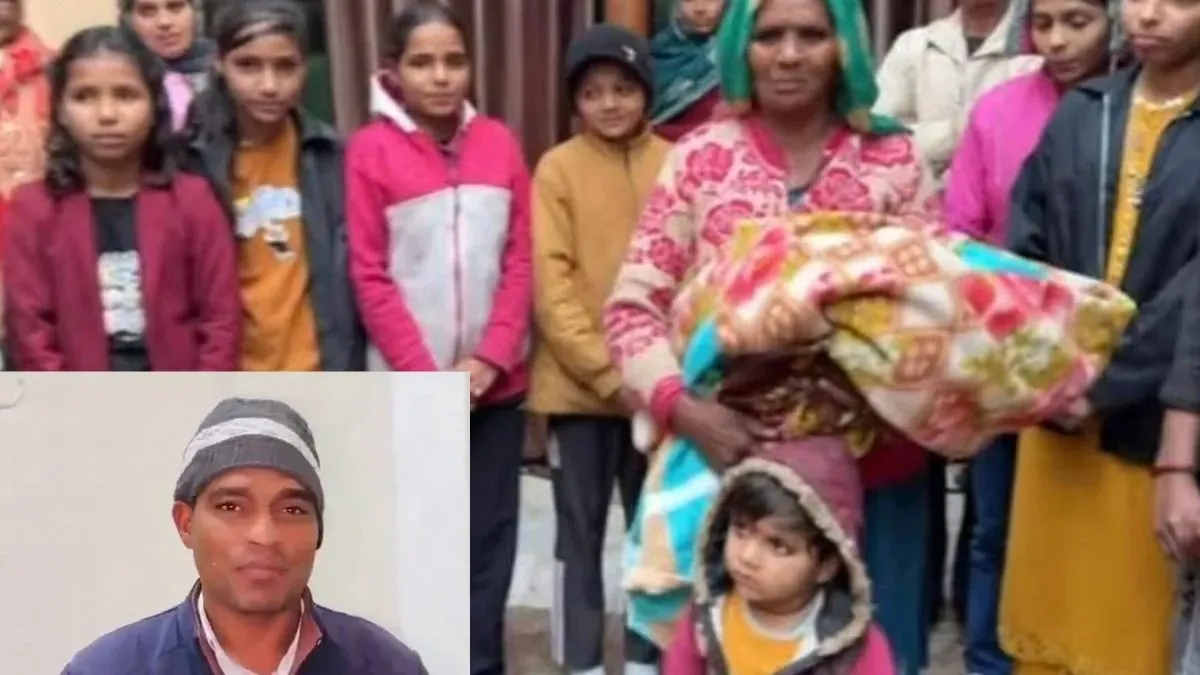
A woman in Haryana who has been married for 19 years delivered her eleventh child, a baby boy, after already being the mother of ten daughters. The birth took place earlier this week at a private hospital in Jind district and has reignited concerns about maternal health and the deep-rooted societal pressure for a male child in many parts of India. Doctors said that although the delivery was considered high risk, both mother and newborn are safe and recovering well.
High-risk delivery managed successfully
The 37-year-old woman was admitted to Ojas Hospital and Maternity Home in Uchana on January 3 and delivered the baby the next day. She was discharged and returned to her village in Fatehabad district within 24 hours. "It was a high-risk delivery but both mother and child are doing fine," Dr Narveer Sheoran, who supervised the case, told news agency PTI. He added that three units of blood were required during the process but it ultimately ended in a normal delivery.
Father says birth of a son was long-awaited
Speaking to PTI, the father Sanjay Kumar said the family had been hoping for a son. "We were keen that there should be a son and some of my elder daughters also wished to have a brother," he said. Sanjay, a 38-year-old labourer, added, "It is my eleventh child now. I have 10 daughters too." Despite his limited income, he said he tries to provide education to all his daughters, most of whom attend school. His eldest daughter is in Class 12.
Family responds to viral attention
A video has gone viral showing Sanjay attempting to recall the names of all his ten daughters, fumbling a few times. Responding to comments on patriarchal bias, he said, "It is not like that." He emphasised that girls today are achieving success across fields and making the country proud.
Sex ratio debate back in focus
The incident has drawn attention to Haryana's long-standing struggle with skewed sex ratios. The state recorded a ratio of 923 females per 1,000 males in 2025 -- an improvement from the previous year but still below the national average of 1,020. Experts say cases like this highlight deep-rooted social attitudes that remain unchanged despite awareness campaigns.
