
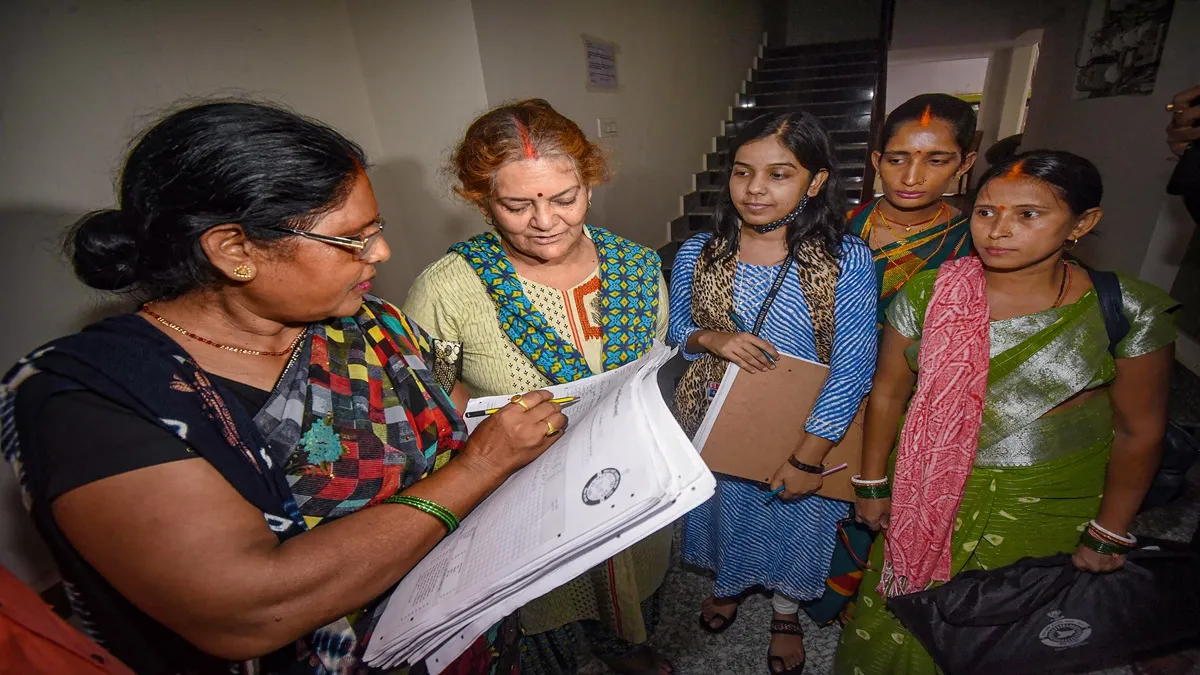
With less than three months left for the launch of the first phase of the Census of India 2027, the government has begun detailed groundwork for what officials describe as one of the world's largest administrative exercises. Extensive discussions have been held with stakeholders at sub-district, district and state levels to finalise the roadmap for the Houselisting and Housing Census, which begins in April 2026. The preparations gained momentum after the successful completion of the Pre-Test exercise for Phase I earlier this month. Registrar General and Census Commissioner of India Mritunjay Kumar Narayan appreciated all stakeholders for their efforts, noting that this was a crucial step in India’s first digital census.
The discussions covered the deployment of lakhs of field staff who will visit every household, the use of mobile applications for data collection and multiple security features needed for the massive digital operation, news agency ANI reported citing government officials. The plan also includes the layered deployment of census functionaries at sub-district, district and state levels for smooth execution of the first phase scheduled between April and September 2026.
Notably, Census 2027 will be carried out in two phases. The first phase, Houselisting and Housing Census, will run from April to September 2026. Population Enumeration, the second phase, will be held in February 2027. However, Ladakh, snow-bound regions of Jammu and Kashmir, Himachal Pradesh and Uttarakhand will undergo Population Enumeration in September 2026.
Stakeholder feedback shapes the next steps
"Issues and feedback received from all the stakeholders linked to the Pre-Test exercise were widely reviewed in the presence of all the Directors of Census Operations from all states and the Union Territories (UTs) on aspects of key Census activities, and further suggestions were taken up," ANI reported quoting an official. The review meeting, chaired by the RG and CCI last week, brought together Directors of Census Operations from all states and UTs along with officials from the Office of the Registrar General and Census Commissioner of India. Addressing the conference on December 16, the RG and CCI praised the smooth conduct of the Pre-Test and stressed the importance of strong training and precise field execution for reliable census data.
A high-cost, high-impact national effort
The Union Cabinet, chaired by Prime Minister Narendra Modi, approved the Census 2027 proposal on December 12 at a cost of Rs 11,718.24 crore. As decided earlier by the Cabinet Committee on Political Affairs, caste enumeration will also be part of the upcoming census. Census 2027 marks the 16th census of India and the eighth after Independence. It serves as the primary source of granular data on housing conditions, amenities, demography, religion, Scheduled Castes, Scheduled Tribes, languages, literacy, economic activity, migration and fertility. The exercise is governed by the Census Act, 1948 and Census Rules, 1990.
Massive workforce and digital transformation
The census will engage nearly 30 lakh field workers and generate over 1.02 crore man-days of employment. About 18,600 technical personnel will work for 550 days at the local level, supporting tasks related to digital data handling and monitoring. This large-scale technical involvement is expected to enhance future employment prospects for the personnel involved. Enumerators, mostly government school teachers, will conduct field visits in addition to their regular duties. Other functionaries will be appointed at sub-district, district and state levels to support the effort.
Faster data access with new digital tools
The government aims to make census results available at the earliest and provide data down to the smallest administrative units like villages and wards. A mobile app will be used for data collection and a Central portal will ensure real-time monitoring. According to a Cabinet note, "Use of a mobile app for data collection and the Central portal for monitoring purposes will ensure better quality data. Data dissemination will be much better and in a user-friendly way, so that all the queries on required parameters for policy making will be made available at the click of a button."
The Census-as-a-Service model will deliver machine-readable data to ministries. A dedicated platform, the Census Management and Monitoring System portal, will oversee the entire process. Another new tool, the HLB Creator web map application, will help charge officers create digital houselisting blocks. The government has also confirmed that an option for self-enumeration will be made available to the public.
ALSO READ: Census 2027: Dry run states, new features, and story behind six-year gap
