
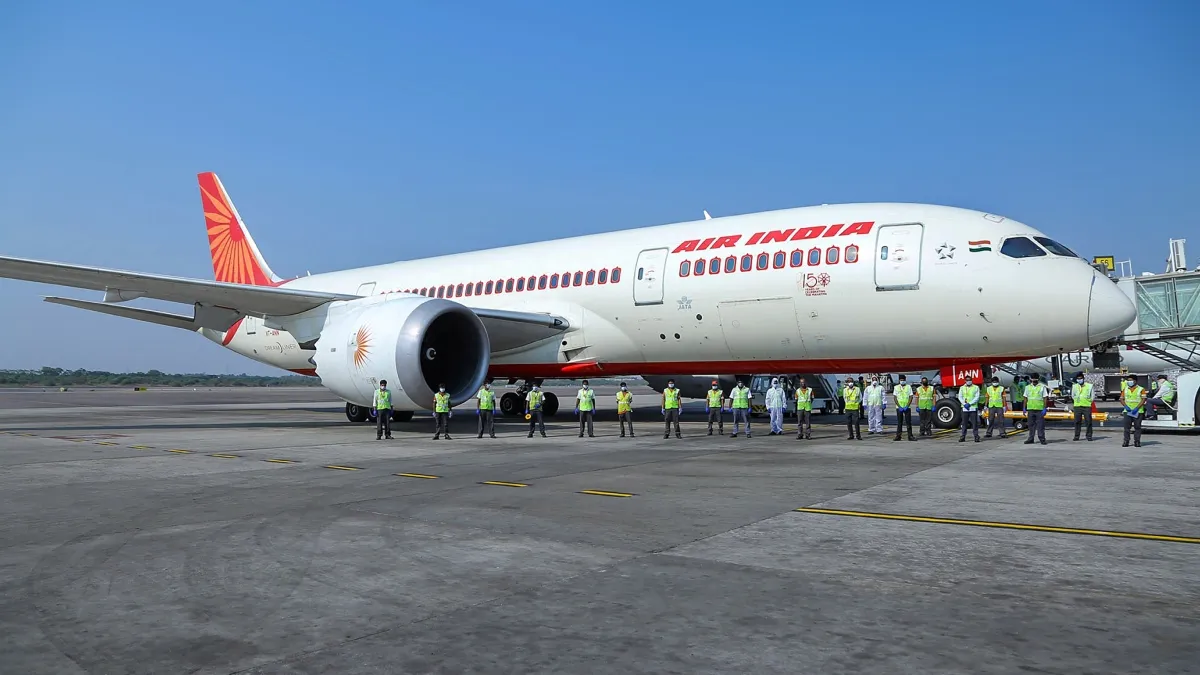
Air India on Tuesday confirmed that it has completed precautionary inspections of the Fuel Control Switch (FCS) locking mechanism on all Boeing 787 Dreamliner and Boeing 737 aircraft in its fleet, including those operated by its low-cost subsidiary, Air India Express. The move complies with a July 14 directive from the Directorate General of Civil Aviation (DGCA), following a deadly crash last month near Ahmedabad.
In an official statement, Air India said, “Air India has completed precautionary inspections on the locking mechanism of Fuel Control Switch (FCS) on all Boeing 787 and Boeing 737 aircraft in its fleet. With this, the two airlines have complied with the directives of the DGCA.” It further added that no issues were found during the inspections.
The airline had initiated these inspections voluntarily on July 12, two days before the DGCA directive, and completed them within the regulator’s prescribed timeline. The compliance status has also been officially communicated to the DGCA.
The inspections were triggered by a preliminary report from the Aircraft Accident Investigation Bureau (AAIB) into the June 12 crash of an Air India Boeing 787 aircraft. The report revealed that both engines lost power mid-flight after the fuel switches were manually cut off, causing the aircraft to crash shortly after takeoff from Ahmedabad airport. The crash claimed 260 lives, making it one of India’s deadliest aviation tragedies in over a decade.
The fuel control switch, a critical component regulating fuel flow into aircraft engines, has two positions — 'RUN' and 'CUT OFF'. Misuse or accidental activation can lead to engine failure, as seen in the Ahmedabad crash.
The DGCA directive referred to a Special Airworthiness Information Bulletin (SAIB) issued by the US Federal Aviation Administration (FAA) in December 2018, warning of a potential for disengagement of the FCS locking mechanism mid-flight.
Across India, over 150 Boeing 737 and 787 aircraft are operated by carriers including Air India, Air India Express, SpiceJet, Akasa Air, and IndiGo. While some of IndiGo’s aircraft are under wet leases and not Indian-registered, they too are subject to inspection mandates.
The inspections mark a significant step in reinforcing aircraft safety across India’s civil aviation sector in the wake of the recent tragedy.
