
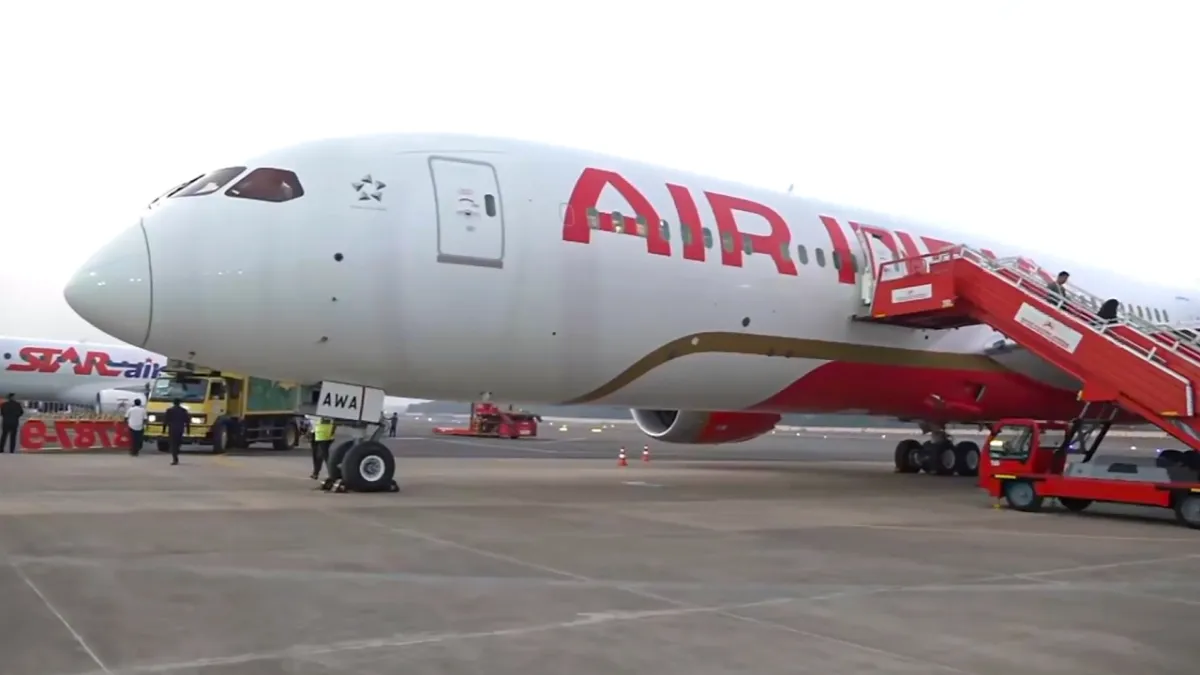
Air India has canceled around 2,500 flights to West Asia over the past three weeks due to the ongoing conflict in Iran, with operations currently running at just 30% of the airline’s usual schedule in the region. The disruption, which affects both airports and airspace, has created a highly volatile network, Chief Executive Officer Campbell Wilson said in an internal note to employees on Friday.
“The world, our region and our industry continue to contend with the impact of the ongoing conflict in the Middle East,” Wilson said. “The impact on Air India Group is significant given the usual scale of our operations to, and through, the Middle East.”
Financial strain and rising fuel costs
Wilson said that the disruptions are beginning to have a financial impact on the airline. Jet fuel prices have more than doubled, and the airline has introduced a fuel surcharge on new tickets to partly offset rising costs.
Flights to destinations such as the UK, Europe, and North America are also being rerouted, increasing both fuel consumption and flight times. “Most of the financial impact will only hit us from next month,” Wilson noted.
Despite rising costs, Air India is facing the challenge of weakening travel demand. Wilson cautioned that not all customers are willing to pay higher airfares, and there is a limit to how much prices can increase before demand drops.
At the same time, he said the airline is seeing “pockets of new demand” in Europe and North America, where additional flights are being deployed, even as other global carriers cut capacity due to fuel costs.
Wilson acknowledged the operational difficulties faced by staff, particularly those in the affected Middle East, and praised teams across operations, airports, contact centers, and flight crews for managing the disruptions.
“Safety remains the overriding priority,” he said.
