
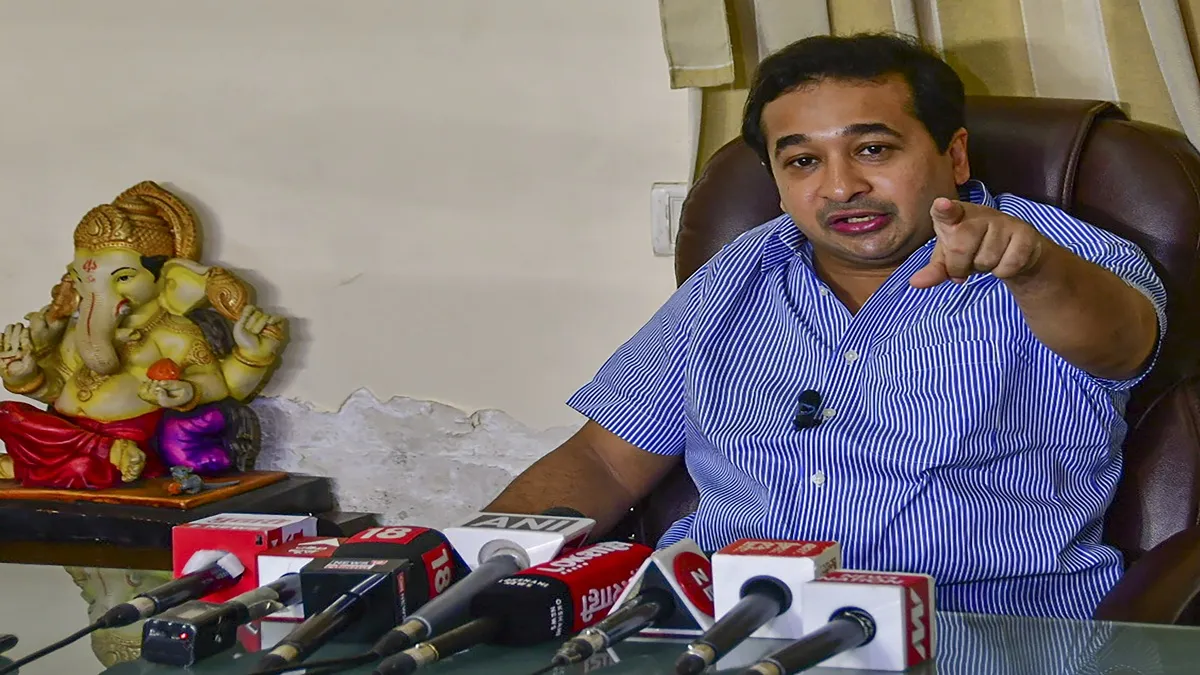
Maharashtra Fisheries and Ports Development Minister Nitesh Rane has stirred fresh controversy by urging that Marathi be taught in madrasas instead of Urdu and suggesting that the Islamic call to prayer ('Azaan') be given in Marathi. His statements have ignited sharp criticism from opposition parties, who accuse him of promoting communal and linguistic discord.
'All one gets from there is a gun': Rane targets madrasas
Rane was responding to reports that the Congress is starting Marathi schools (pathshalas) in some parts of Mumbai. Criticising the move, he said, "Why does Congress need to run Marathi schools? The opposition should ask Muslims to give the Azaan in Marathi. Instead of Urdu, teach Marathi in madrasas. Otherwise, all one gets from there is a gun."
He also commented on businesses near temples, saying, "Outside our temples, there are 'Jai Shri Ram' slogans, but inside the shops, it's Abdul sitting there."
Opposition slams remarks as divisive
Rane’s comments triggered a wave of backlash from several opposition leaders, who condemned his rhetoric as inflammatory and dangerous. AIMIM leader Waris Pathan accused Rane and the BJP of "spreading hatred in the name of religion and language", and called on the Chief Minister to take action.
Congress leader Amin Patel countered Rane's claims, stating, "Madrasas already teach English and Hindi, and in some cases, Marathi as well. Azaan is a religious practice conducted in Arabic, not a linguistic matter."

Congress reiterates support for Marathi without coercion
Amid the ongoing language debate, Maharashtra Congress chief Harshvardhan Sapkal clarified the party’s stand, "We’re not against Hindi, but we oppose the forced imposition of a third language. We won’t resort to violence, but we’ll teach Marathi with respect."
He made the comments during the party's 'We are Marathi, We are Indian' workshop held in the state.
Backdrop of language tensions in Maharashtra
Rane's remarks come at a time when Maharashtra is witnessing growing sensitivity over language issues. Recent incidents involving people being allegedly assaulted for not speaking Marathi have further intensified the discourse around linguistic identity in the state.