
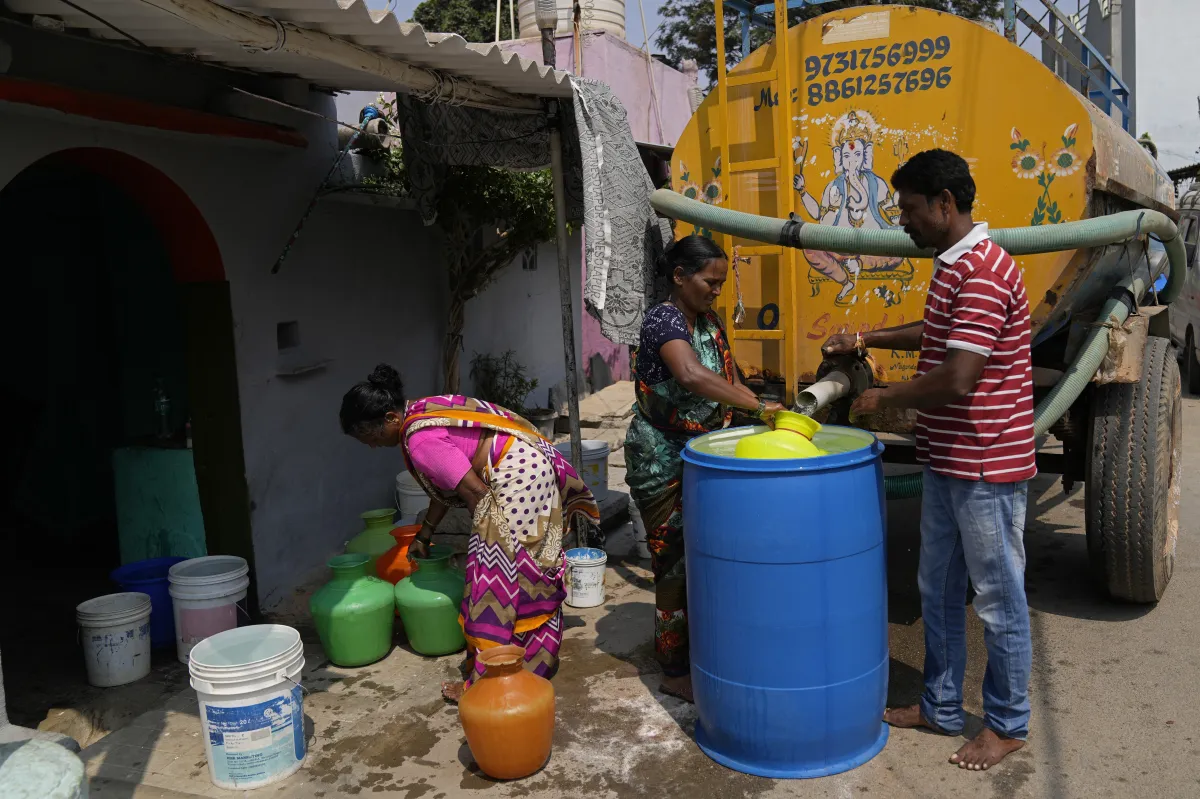
Even though the time has come for the monsoon to appear in the country anytime soon, Maharashtra is already grappling with an acute water crisis, as the State Water Resources Department data showed that only 28.09 per cent of the total water stock remains in the state’s major dams. This concern raised red flags for a potential water crisis in the state in the coming weeks.
Even as this figure is comparatively better than last year’s 23.43 per cent, the useful water stock in the state now stands at only 8,166.17 million cubic metres (MCM). This limited availability of water could prove to be not sufficiant for drinking, agriculture, and industrial consumption until the monsoon arrives fully and consistently.
Pune holds lowest water stock at just 21.52 per cent
If you take the example of some of the major cities, then you will find Pune, which is one of the state’s key urban regions, currently holds the lowest water stock among all divisions at just 21.52 per cent.
Amravati, another major place in Maharashtra, holds the highest reserve at 38.13 per cent, followed by Konkan (34.15 per cent), Nagpur (32.79 per cent), Nashik (31.35 per cent), and Chhatrapati Sambhajinagar (31.23 per cent).
However, the total water left in medium projects across the state is 38.98 per cent, while small projects hold 31.55 per cent, and large-scale state projects are down to 29.94 per cent.
Mumbai holds 19.17 per cent water stock
The water reservoirs in Mumbai that include Modak Sagar, Tansa, Vihar, Tulsi, Middle Vaitarna, Upper Vaitarna, and Bhatsa hold just 19.17 per cent of their total storage capacity. Mumbai, being the capital city of the state, severely depends on seven dams to supply around 4,000 million litres of water daily. Even as the current level is better than last year’s 13.63 per cent, it’s far from comfortable for a city of over 20 million people.
Nashik holds water stock at 28.36 per cent
The overall water storage level in Nashik is at 28.36 per cent, which is amounting to 18,624 MCF (million cubic feet). On the other hand, the Gangapur dam, which supplies water to Nashik city, holds 44.40 per cent, an improvement over last year’s 33.45 per cent.
However, several other dams in the region such as Alandi (12.62 per cent), Kashyapi (35.58 per cent), and Gautami Godavari (9 per cent), are alarmingly low. It should be noted that the Manikpunj dam has dried up and many other such dams are slowly drying up their storage levels.
