
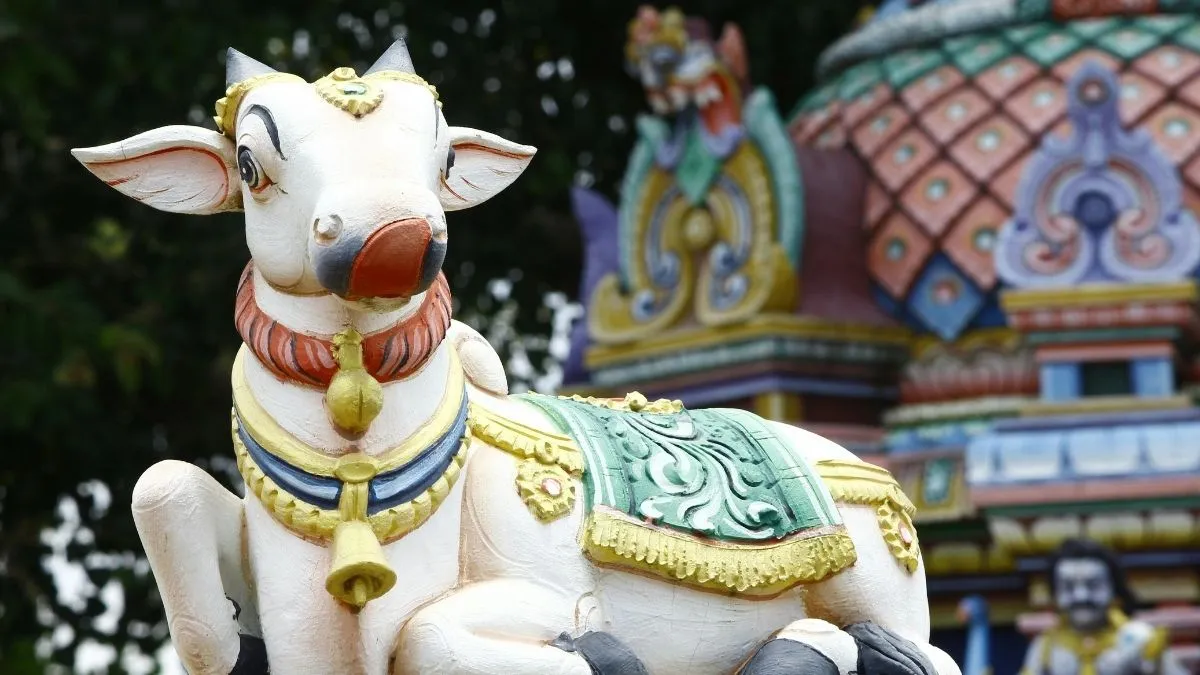
There are some places in Bengaluru where time feels slower, the air feels older, and silence holds its own sacred weight. Not many people know that Bengaluru is the home to 488-year-old temple. Tucked inside the heritage spine of South Bengaluru, surrounded by leafy chaos and tiny flower stalls, the temple is more than a religious landmark; it’s a living memory of the city before the glass towers and tech corridors arrived. This temple is also an architectural marvel.
The temple is called Basavanagudi’s Bull Temple. Whether you step inside seeking faith, culture or simply a gentle reminder of how powerful quiet can be, the Bull Temple draws you in like a story you’ve always known.
Basavanagudi’s Bull Temple: The architectural wonder
The Bull Temple, locally known as Dodda Basavana Gudi, was built in the 16th century during the rule of Kempe Gowda I, the founder of Bengaluru. It is dedicated to Nandi, the sacred bull and vehicle (vahana) of Lord Shiva.
Inside the shrine rests a single piece of monolithic granite sculpture, one of the largest Nandi idols in the world, measuring nearly 15 feet long and over 6 feet high, carved directly from a massive rock instead of being assembled block by block. Devotees believe the idol continues to “grow” over time, a mystery that has fascinated historians and spiritual seekers alike.
The legend that shaped a neighbourhood
The folklore that surrounds Basavanagudi is as enchanting as the temple itself. According to the legend, the region once had fields of groundnuts farmed by local villagers. They believed a divine bull would visit the fields at night and eat their crops. To protect their harvest and honour the sacred animal, they built a temple plus set aside a shrine for Basava, the bull Nandi.
Once the temple stood ready, the bull no longer roamed the fields - the villagers thanked him with gifts of groundnuts.
That act became the Kadalekai Parishe, the groundnut festival that still turns Basavanagudi into a lively fair each year.
Rituals and spiritual practices
Inside the temple, camphor scents the air, low voices recite prayers, and brass bells ring against cool stone walls. Each day, priests offer Nandi fresh flowers, bright turmeric, sandalwood paste, but also glowing oil lamp.
Important rituals include:
- Nitya puja takes place every morning and every evening.
- Priests pour milk, curd, honey, plus ghee over the image in a special abhishekam.
- Pradosha puja occurs at twilight - devotees believe it removes obstacles.
- During the Kadalekai Parishe festival, people pile fresh groundnuts before the statue of Nandi to thank him and to ask for prosperity.
Many visitors stop at the temple simply to pause, to think, but also to feel steady again.
Why travellers love the Bull Temple
They say the place gives a calm that is hard to find in a noisy city. The building stands beside Bugle Rock Park, good for a quiet morning walk and a few minutes from Vidyarthi Bhavan, where the dosa itself draws pilgrims.
If you want to experience Bengaluru beyond tech and traffic, the Bull Temple is a beautiful starting point.
