
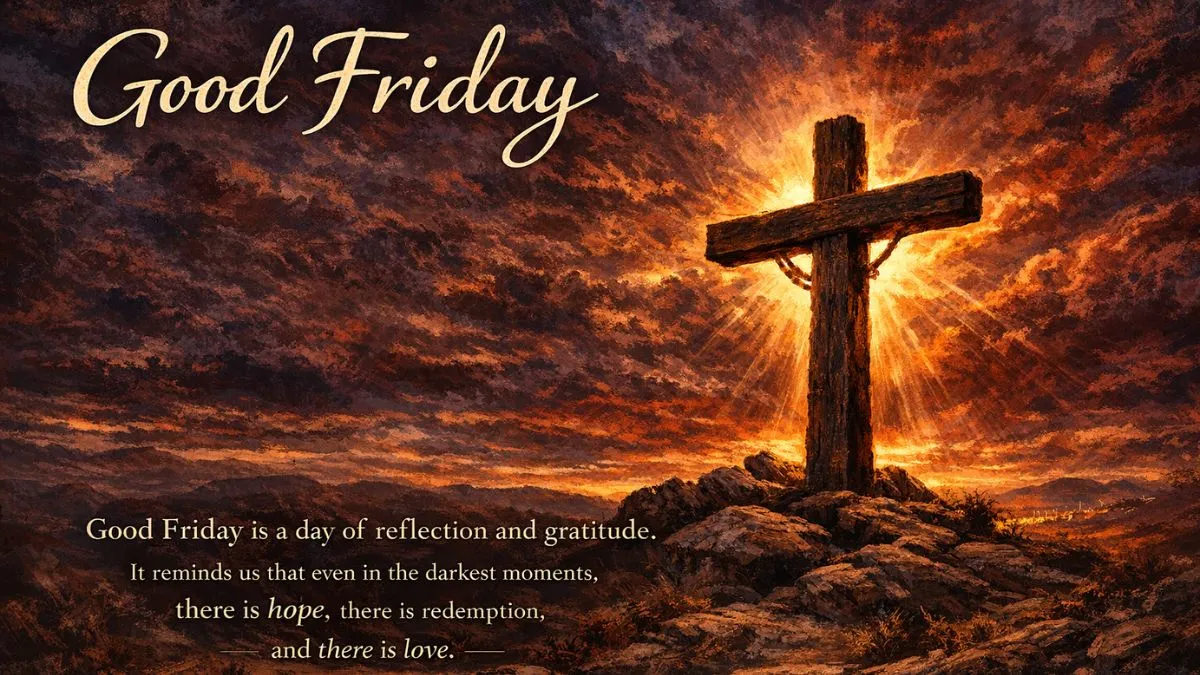
Good Friday can feel a bit confusing at first. The name sounds positive, almost celebratory. But the day itself is quiet, heavy, and rooted in grief. It marks the crucifixion of Jesus Christ, one of the most significant events in Christian belief.
So naturally, the question comes up. Why call a day like this “Good”? It does not quite match what the day represents on the surface. But once you look a little deeper, the meaning starts to shift.
What happened on Good Friday
Good Friday is observed during Holy Week, two days before Easter Sunday. It is the day Jesus Christ was arrested, tried, and crucified under the authority of the Roman governor Pontius Pilate.
The event took place at a site known as Calvary, or Golgotha. For Christians, this is not just a historical moment. It is central to their faith. The crucifixion is seen as an act of sacrifice, where Jesus gave his life for the redemption of humanity.
That is why the day is marked with prayer, fasting, and reflection rather than celebration.
Why is it called ‘Good’ Friday?
The word “Good” here does not mean happy or joyful in the usual sense.
Many scholars believe it comes from an older meaning of the word, where “good” was used to mean holy or sacred. So “Good Friday” can be understood as “Holy Friday”.
Another way to look at it is through the idea of outcome. While the day itself represents suffering and death, it is also seen as part of a larger story that leads to hope and resurrection on Easter Sunday. In that sense, something deeply painful is also seen as meaningful.
It is a contrast that sits at the heart of the name.
The deeper meaning behind Good Friday
For believers, Good Friday is about more than the event itself. It is about what that event represents.
Themes like sacrifice, forgiveness, and redemption are central. The idea that suffering can carry purpose. That something difficult can still lead to something greater.
It is also a day that invites reflection. Not just on faith, but on personal choices, compassion, and patience.
How Good Friday is observed today
The way people observe Good Friday varies across cultures, but the tone remains similar.
Church services are usually quiet and focused. Many people fast or give up certain foods. Some attend special prayers or readings that recount the final hours of Jesus’ life.
In many places, there is also a sense of stillness. Fewer celebrations, more introspection.
A day that feels different
Good Friday does not try to feel uplifting. It is meant to slow things down.
And maybe that is the point. It creates space to sit with something uncomfortable, to reflect without rushing past it.
The word “Good” might not make sense immediately. But when you look at it through the lens of faith and meaning, it begins to feel a little more fitting.
ALSO READ: Good Friday 2026 wishes, images and status videos: Messages and greetings to share
