
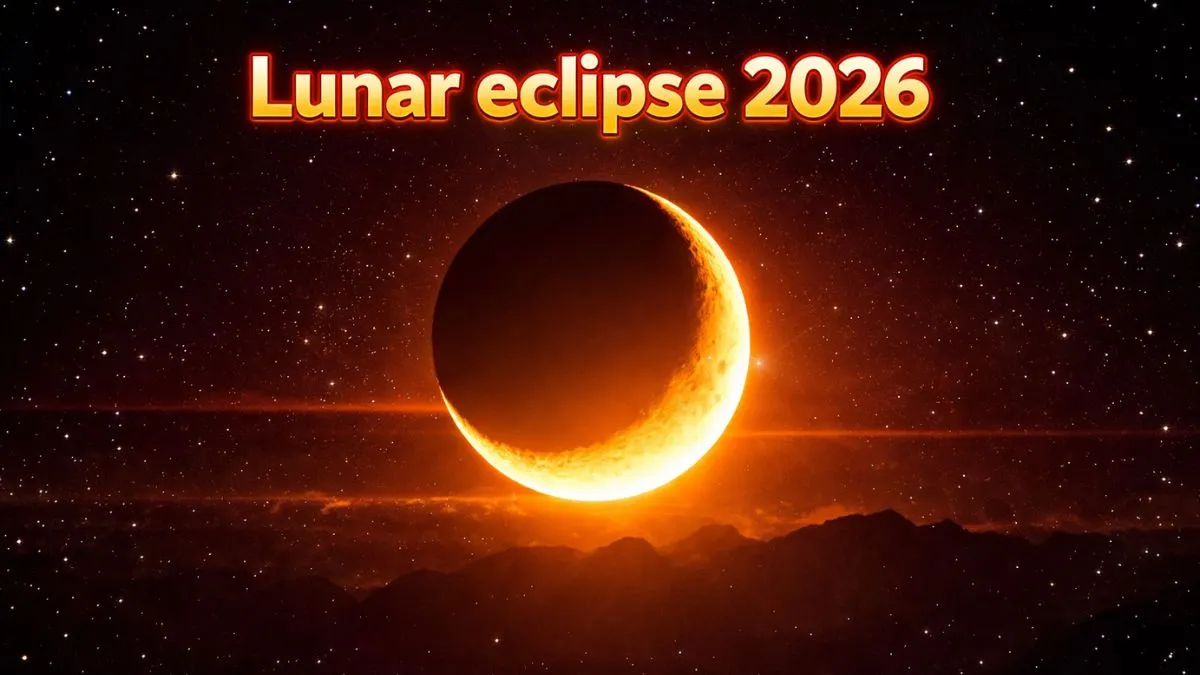
In Hinduism, both solar and lunar eclipses are considered significant. Performing auspicious and all kinds of religious ceremonies is strictly prohibited during an eclipse. The first lunar eclipse of 2026 will occur on the day of the full moon. Holika Dahan will also be celebrated on the same day.
The first lunar eclipse of 2026 will be a partial lunar eclipse, visible in some parts of India. So, let's find out when the lunar eclipse will occur on the day of the Phalguna Purnima and what the duration of the Sutak period will be.
When and at what time will the first lunar eclipse of 2026 occur?
The first lunar eclipse of the year will occur on March 3, 2026. The lunar eclipse will last from 2:16 PM to 7:53 PM. This lunar eclipse will be visible in India; therefore, the Sutak period will also be observed. The Sutak period for a lunar eclipse begins 9 hours before the eclipse. The Sutak period will begin at 9:39 AM on March 3 and end at 6:46 PM.
When and where will the lunar eclipse be visible in India?
The effect of the lunar eclipse will be visible in India from 3:21 PM. The lunar eclipse will end at 7:52 PM. The first lunar eclipse of 2026 will be visible in Arunachal Pradesh, Assam, Manipur, Mizoram, Nagaland, Aizawl, and Guwahati. A partial lunar eclipse will be visible in Jaipur, Bengaluru, Chennai, Lucknow, Delhi, and Mumbai.
Dos and don'ts for a lunar eclipse sutak period
Do not do these things during the Sutak period:
- Eat your meal before the Sutak period begins
- Chant mantras of deities during the Sutak period
- Pregnant women should not go outside during the lunar eclipse
- Do not perform any religious rituals during the Sutak period
Do these things during the Sutak period:
- Meditation, quiet prayer, mantra chanting or simple reflection are encouraged
- Cooked food is usually covered with tulsi leaves to neutralise negative effects
What to do after the lunar eclipse
Once the eclipse ends:
- Take a cleansing bath
- Resume normal activities
- Food can be freshly prepared
- Temples reopen after purification rituals
(Disclaimer: The information given here is based on religious beliefs and popular traditions. There is no scientific evidence for this. India TV does not vouch for the accuracy of any of the information.
