
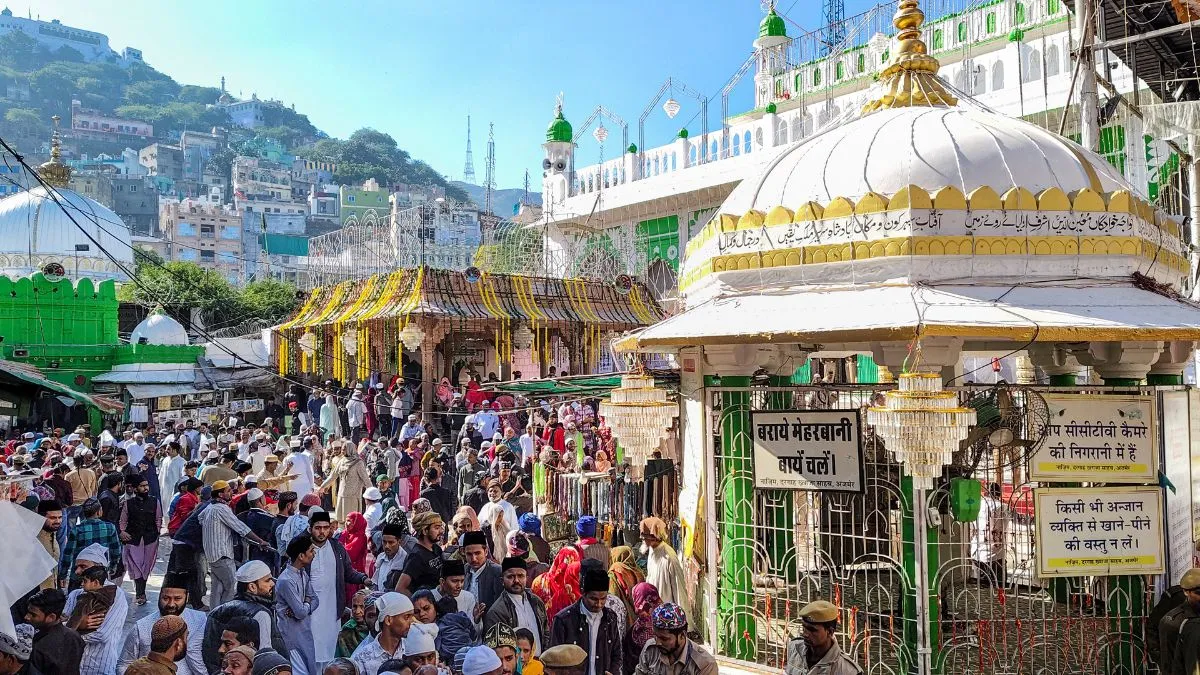
On the occasion of the ongoing 814th annual Urs at the Ajmer Sharif Dargah in Rajasthan, a ceremonial chadar was offered on behalf of Prime Minister Narendra Modi. Union Minister for Minority Affairs Kiren Rijiju arrived in Ajmer carrying the chadar sent by the Prime Minister and formally offered it at the shrine, following established religious traditions.
However, there is much more to Ajmer Sharif than any sort of ritual or offering, and it has always stood to be a special experience for its devotees. The energy of the place is unmatched, and it invites devotees from all over the world.
Who was Khwaja Moinuddin Chishti? History of Ajmer Sharif
Located deep in the heart of the Rajasthan state in India, the Ajmer Sharif Dargah houses the final resting place of Khwaja Moinuddin Chishti, a Sufi saint who preached the philosophy of love, humility, and service to mankind. For centuries, people from different religions, regions and walks of life have made their way here, not out of obligation, but out of hope. There are no barriers of belief at Ajmer Sharif, only a shared sense of love.
Timings, dress code and how to reach Ajmer Sharif Dargah
Ajmer Sharif Dargah timings: Summer and winter schedule
The Ajmer Sharif Dargah is operational every day from early mornings till late nights, with short closures in between to allow devotees to perform their prayers. Here are the timings:
- Winters: 5 AM to 9 PM
- Summers: 4 AM to 10 PM
Dress code and entry rules for Ajmer Sharif devotees
There isn’t any dress code, but it’s highly recommended that one dress modestly. Men as well as women should avoid showing their shoulders and legs. Women should also cover their heads with a dupatta or scarf before entering the inner premises of the dargah. One should wear comfortable footwear as they have to remove their shoes while entering.
How to reach Ajmer Sharif Dargah by air, train and road
Ajmer is well connected by air, train, and road transport. The nearest airport is Kishangarh Airport, roughly 25 km from Ajmer, which operates flights to major cities. Ajmer Junction is a key railway station on the Delhi–Mumbai route and is connected to most parts of India. From the station or bus stand, the dargah is easily reachable by auto-rickshaw, taxi or a short walk through the bustling markets surrounding the shrine.
What is the Urs at Ajmer Sharif and why is it celebrated
The annual Urs commemorates the saint’s union with the divine, a moment marked not by mourning but by celebration. The dargah comes alive with prayers, qawwalis, rose petals, incense and thousands of whispered wishes.
During Urs, devotees offer chadars as symbols of devotion and gratitude. Each one carries personal prayers for health, peace, forgiveness or simply strength to carry on. The atmosphere feels charged, yet calm, as if faith itself is breathing alongside the crowd.
A place where prayers feel personal
Ask anyone who has visited Ajmer Sharif, and they’ll tell you the same thing: This is not a place that overwhelms you. It softens you.
People sit quietly in corners, eyes closed, hands folded. Some cry. Some smile. Some say nothing at all. There’s no pressure to explain your faith here, only space to feel it. Ironically, even those with reservations will leave with a curious feeling of calm that they cannot quite articulate.
Qawwalis, Silence, and the Language of Bhakti
As the evening falls, the qawwalis begin to fill the air at the dargah, the music almost a prayer in itself, more rhythmic chant than performance. Hands are clapped in beat, and for a brief second, time stands still.
But then there is silence, too, and this is just as potent. The silence that follows the fading of the music, when those who have been gathered in this one space remain there, reluctant to re-enter their own world yet.
What is special about the shrine at Ajmer Sharif is that this place has never belonged exclusively to any one people. This shrine has belonged to everyone who sought solace.
