
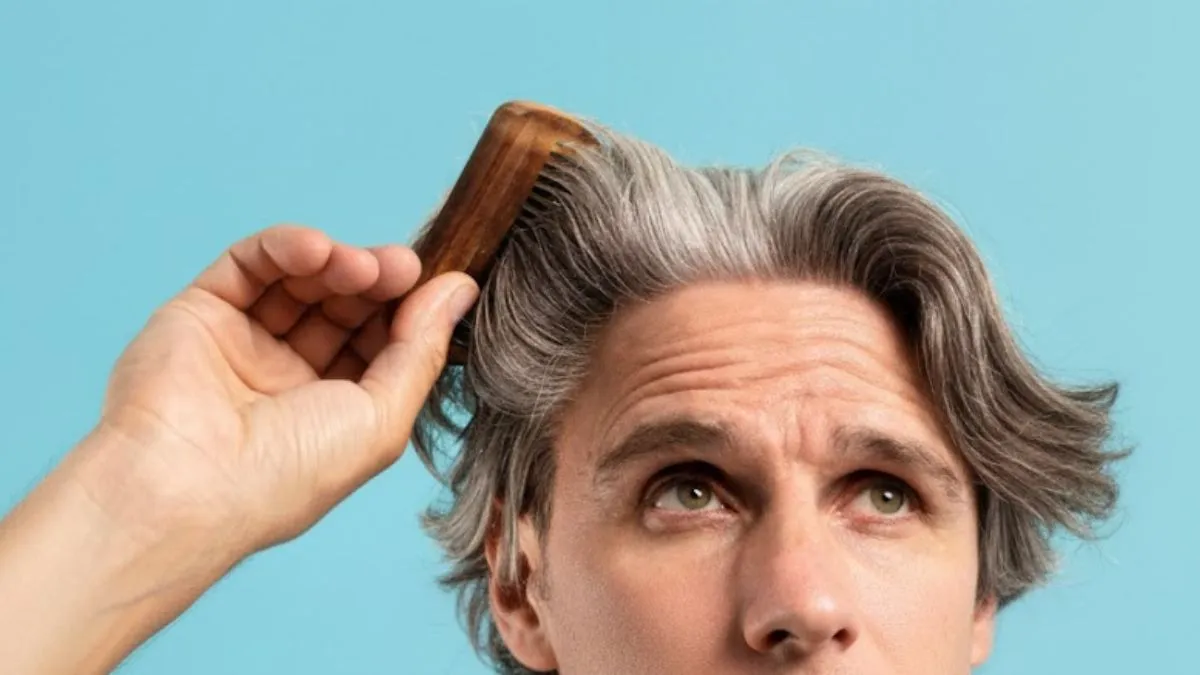
Premature greying is becoming increasingly common among young people. It is no longer unusual to see school children or teenagers with noticeable grey hair. Genetics is often blamed, but dermatologists say that the situation is far more complex.
Early greying, says Dr Jangid, a leading dermatologist based in New Delhi, has a medical term. “In medical terms, we call it canities. If hair turns grey before the age of 20, it may sometimes indicate a pathological issue,” he explains. That said, he adds that genetics plays only a limited role. “Most of the time, it is not just genetics. The exact cause is still not fully understood, but research does point towards certain contributing factors.”
Why does hair turn grey so early?
According to Dr Jangid, nutritional deficiencies are often responsible. Deficiency of essential vitamins, inadequate protein intake, along with an overall unhealthy lifestyle, can contribute to premature greying. “If one maintains a balanced diet and follows a healthy routine, early greying usually does not occur,” says Dr Jangid in an exclusive conversation with India TV.
He also draws an important distinction. “If greying starts after 20 or 21 years of age, it is usually considered non-pathological. That is closer to natural ageing, even though it may still feel early to many people.”
Can grey hair turn black again?
Interestingly, not all cases of early greying are permanent. “Around 20 to 30 per cent of people who experience early greying may see their hair regain its natural colour later,” says Dr Jangid. This is particularly possible when lifestyle and nutritional concerns are addressed in time.
However, expectations need to be realistic. “Treatment does not truly reverse greying. It helps stabilise the condition and slows down the rate at which hair turns grey,” he explains.
Old hair turning grey versus new grey hair
Dr Jangid highlights a distinction that many people are unaware of. “There is a difference between existing hair turning grey and new hair growing out already grey.” In younger individuals, greying often begins at the root. “The tip of the hair may remain black, but the root grows out grey, and over time the white portion increases.”
When should youngsters start getting worried?
Concern is warranted if greys appear well before the age of 20 and progress rapidly. According to Dr Jangid, certain deficiencies may be linked to this, particularly calcium pantothenate. Early consultation, appropriate blood tests and lifestyle correction can help slow the process and, in some cases, lead to partial improvement in hair colour. Dealing with premature greying often becomes easier once the underlying cause is identified.
Below, watch the full interview:
ALSO READ: Laser hair growth comb to derma roller; here are some of the best tools for hair growth
