
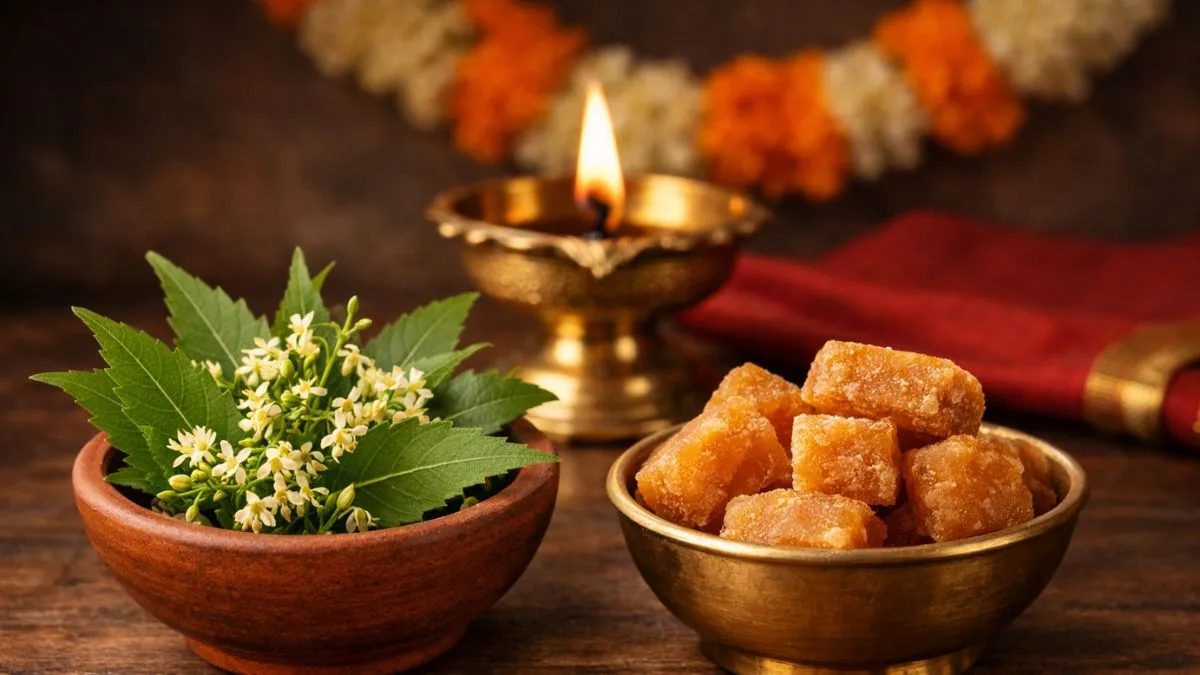
As the Hindu New Year commences today, in most homes in India, the occasion is being celebrated in a small but significant way by consuming a mixture of neem and jaggery. While the celebration is mostly related to Ugadi and Gudi Padwa, the occasion is being marked in a low-key manner.
At first glance, it may seem symbolic. But this juxtaposition of bitter and sweet is really a manifestation of something more profound, a relationship between seasonal change, nutrition, and tradition.
More than tradition, it’s seasonal intelligence
The timing of this ritual is not accidental. The Hindu New Year coincides with a seasonal shift, when the body begins transitioning from winter to warmer months.
“Seasonal eating practices reflect an understanding of how the body’s nutritional needs change with time,” says Ms Veena V, Chief Clinical Dietician and HOD, Department of Clinical Nutrition and Dietetics, Aster Whitefield Hospital.
This is the time when changes in digestion, immunity, and energy levels may occur, and the body needs support in subtle ways.
Why neem is part of the ritual
The bitterness of neem may not be easy to relish, but it is necessary nonetheless.
Neem is a storehouse of bioactive compounds and possesses antimicrobial and anti-inflammatory properties, which may help the body adjust to the changing season.
“Neem is beneficial in the digestive process and is helpful in the recovery of the liver after a spell of heavy and festive meals,” Veena V. informs us.
It is a reset button for the body.
The role of jaggery in balancing the body
It is a natural source of iron and helps boost hemoglobin levels, while also aiding digestion by stimulating digestive enzymes.
“Jaggery helps restore energy levels and supports overall digestive health,” notes Veena V.
Together, the two create a balance the body can respond to.
Why this combination works
The pairing of neem and jaggery is both practical and thoughtful.
“Neem helps with cleansing, while jaggery provides nourishment, making the combination suitable for seasonal transition,” says Ms Ayesha Javed Mulani, Consultant Dietician, Rainbow Children’s Hospital, Sarjapur Road.
This combination of bitter and sweet may also play a role in the regulation of taste preferences, as well as the development of more mindful eating habits.
A ritual based on health and meaning
In addition to the health-related aspects, the ritual also has a philosophical side. The combination of flavors may be seen as a reminder of the occurrence of both good and bad experiences.
At the same time, it reflects a broader idea, that traditional practices often evolved alongside the body’s needs.
“Such customs show how cultural habits align with both physical health and emotional awareness,” Mulani adds.
What begins as a small ritual on the first day of the Hindu New Year is, in many ways, a thoughtful seasonal practice.
Neem and jaggery together offer a quiet balance, one that supports the body while also carrying meaning.
