
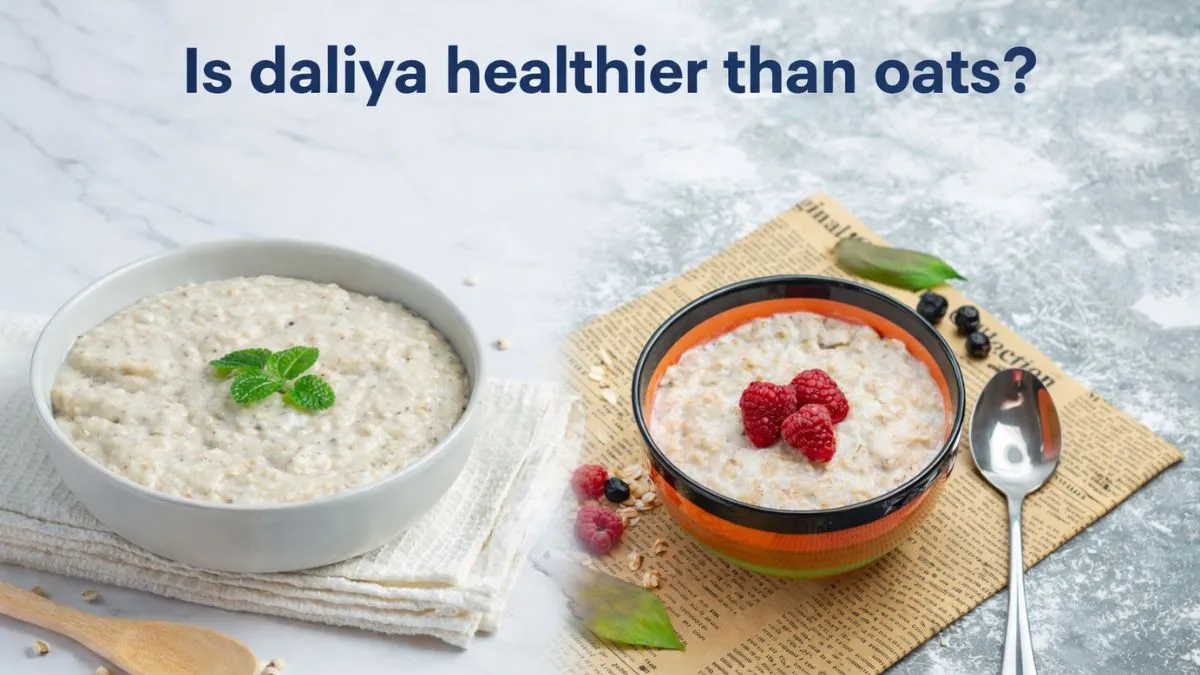
Oats have long been crowned the poster child of “healthy breakfast” on social media. Smoothie bowls, overnight jars, protein porridge, the oat glow-up has been real. But now, diet expert and nutritionist Saloni has stirred the pot by claiming that humble daliya (broken wheat) may actually be the smarter, and cheaper, choice.
In a recent Instagram video, she compared the two side by side, and her numbers have sparked debate. Let's talk about who is the real winner for a healthy breakfast, daliya or oats?
What the numbers say: Oats vs. daliya
In her video, Saloni shared a nutritional comparison per 100 grams:
Protein
- Oats: 13g
- Daliya: 12g
“Almost the same,” she noted. No dramatic difference here.
Fibre
- Oats: 10g
- Daliya: 10–12g
Again, largely equal, and fibre is key for digestion and blood sugar stability.
Fat content
- Oats: 7g
- Daliya: 1–2g
This is where Daliya clearly pulls ahead. It’s significantly lower in fat.
Calories
- Oats: 380
- Daliya: 350
Slightly lighter, according to her breakdown.
The price gap that raised eyebrows
Saloni also compared cost per kilogram:
- Oats: Rs 150–200
- Daliya: Rs 70–80
Her takeaway? Nutritionally similar, yet oats cost more than double. “This is marketing, not science,” she argued, suggesting that the wellness industry has glamorised imported grains while sidelining traditional Indian staples.
Are we over-romanticising oats?
Oats are undeniably nutritious. They contain beta-glucan fibre, which supports heart health and cholesterol management. They’re convenient and versatile. But daliya, a staple in many Indian households, is also a whole grain, rich in complex carbohydrates, fibre and plant protein. It’s minimally processed and culturally familiar.
Saloni pointed out that previous generations ate daliya regularly and maintained robust health. “The problem isn’t Indian food,” she said. “It’s portion control, refined oils, sugar and a sedentary lifestyle.” That’s a sharp reminder: no single grain determines your health. Patterns do.
So, which one should you choose?
The answer may be less dramatic than Instagram debates suggest. If you prefer oats, they remain a perfectly healthy option. If you enjoy daliya, there’s no reason to swap it for a pricier alternative. Both can be part of a balanced diet when paired with protein, healthy fats and seasonal produce.
The real differentiator lies in:
- Portion sizes
- Overall diet quality
- Activity levels
- Ultra-processed food intake
Not in one breakfast bowl.
The bigger conversation about “superfoods”
The viral comparison taps into a larger issue: our tendency to label foods as superior or inferior.
Imported grains often get a wellness halo, while traditional staples are dismissed as basic. Yet nutrition science consistently shows that whole, minimally processed foods, regardless of geography, form the foundation of good health. Daliya isn’t a trend. It’s just quietly reliable. And sometimes, reliability wins.
Saloni’s comparison doesn’t mean oats are “bad” or daliya is magically superior. It highlights something simpler: we may not need to look beyond our own kitchens for balanced, affordable nutrition. Before swapping your breakfast because of a viral reel, remember, sustainable health is less about the grain you choose and more about the habits you build around it.
