
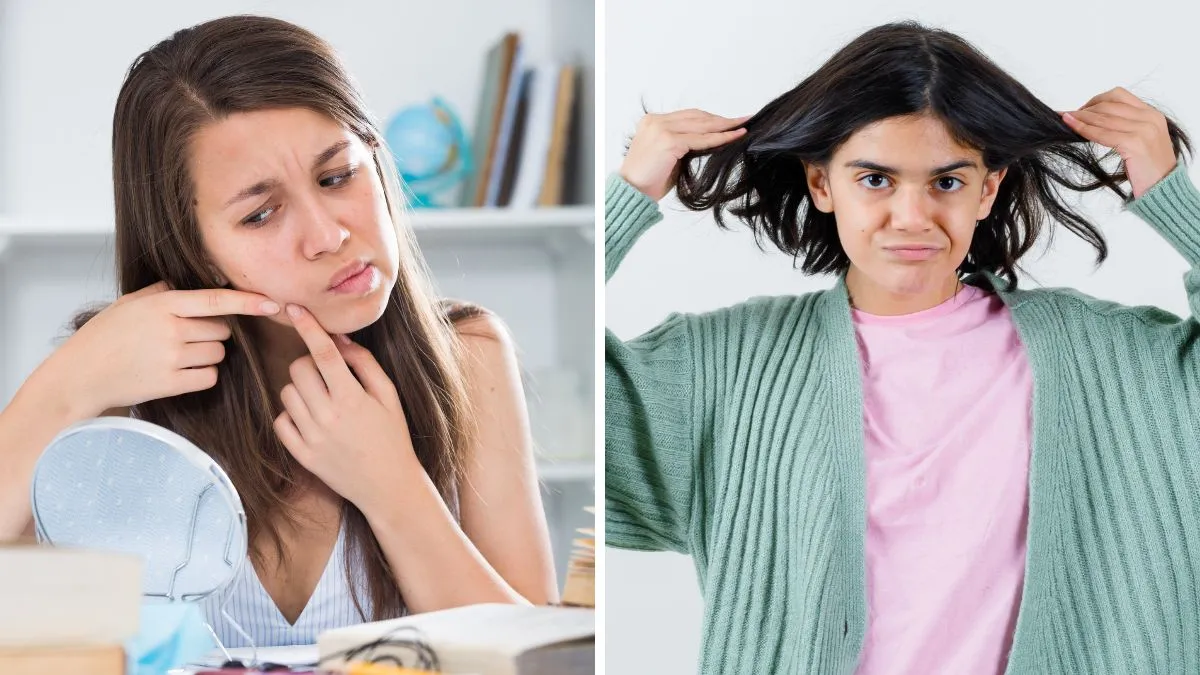
For many parents, the first sign that something is changing isn’t a growth spurt or a voice shift — it’s skin and hair. A few unexpected pimples, oily hair that suddenly needs washing more often, or a new body odour can come as a surprise, especially when a child is still in primary school.
According to Dr Ridhima Arora, MBBS, MD (Dermatology & VD), Malik Radix Healthcare Pvt. Ltd., early puberty is being seen more frequently in children between 8 and 11 years, particularly girls. Factors like rising childhood obesity, higher stress levels and early exposure to certain chemicals are believed to play a role. “Skin and hair are often the first places where hormonal changes show up,” she explains, which is why these shifts can feel sudden and confusing for both children and parents.
When skin suddenly turns oily
One of the earliest and most noticeable changes is oiliness. As hormones fluctuate, oil glands become more active. This can lead to pimples on the forehead, cheeks, chest or back — areas where oil production is naturally higher.
Unlike the occasional teenage pimple, these breakouts may appear earlier and linger longer. Some children may also develop dandruff or a greasy scalp. In certain cases, redness and flaking around the scalp, eyebrows or sides of the nose can occur, a condition commonly linked to excess oil activity.
Hair growth and body odour changes
There are hair developments that can be observed in early puberty. Underarm hair might grow, or even facial hair might appear in some individuals. With all this, body odor becomes stronger due to active sweat glands and bacteria in the skin.
These developments occur naturally, but they may overwhelm children if they do not mentally prepare themselves to handle the changes. Conversations will aid children in becoming comfortable in their own skin.
A gentle care routine works best
When it comes to managing early skin and hair changes, less is more. Dr Arora advises sticking to simple, non-aggressive routines:
- Cleanse the face once or twice daily with a gentle, fragrance-free cleanser
- Use a lightweight, non-comedogenic moisturiser
- Avoid harsh scrubs, strong actives or adult anti-ageing products
- For dandruff or oily scalp, a mild anti-dandruff shampoo once or twice a week is enough
Prescription treatments like adapalene or benzoyl peroxide should only be used if recommended by a dermatologist.
When it’s time to see a dermatologist
If acne becomes painful, widespread or begins to affect a child’s confidence, it’s best not to wait. Early guidance helps prevent scarring and ensures treatments are safe for young, sensitive skin. “A timely consultation allows us to address both the skin concern and the emotional impact it may be having,” Dr Arora notes.
Early puberty can feel unexpected, but skin and hair changes are often a natural part of the process.
Also read: The winter breakout problem: How cold air and smog are triggering more teen acne
