
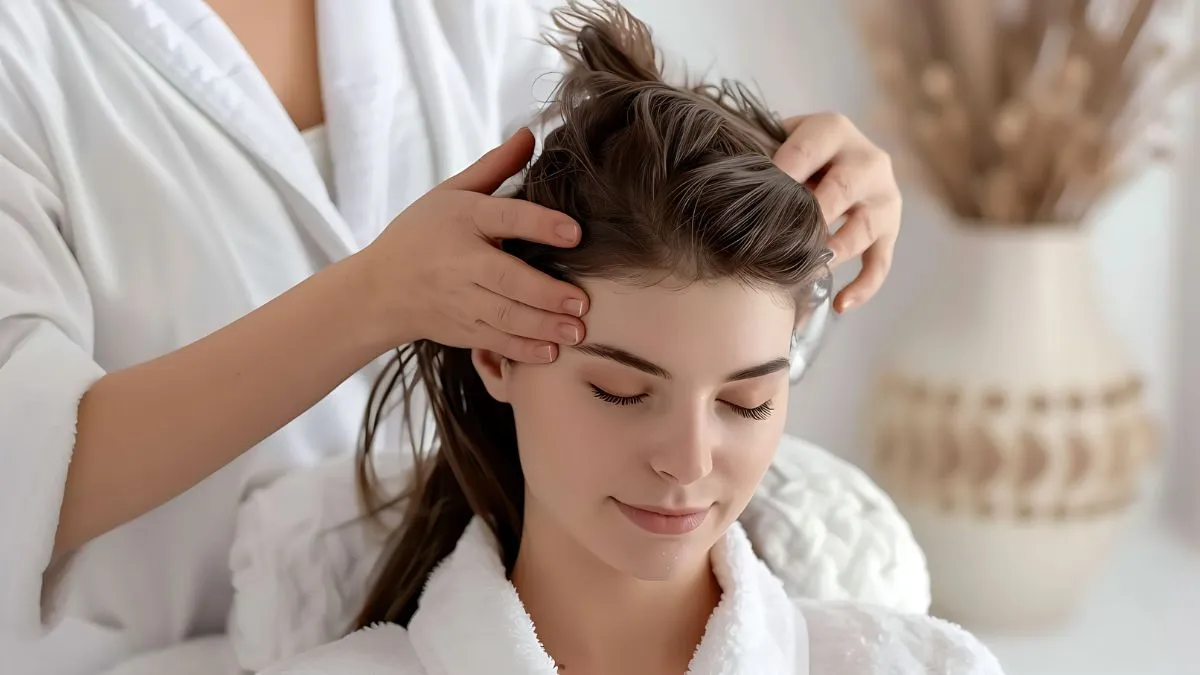
If your Instagram feed is suddenly full of slow oil massages, calming background music and people promising thicker hair after a two-hour scalp massage, you’re not imagining it. What started as a niche self-care ritual has become one of social media’s biggest hair trends, with creators swearing by its ability to reduce hair fall, boost growth and improve scalp health.
But does spending hours massaging your scalp really deliver results? Or is this another wellness trend that looks better on Reels than in real life? According to Dr Shankar Sawant, Consultant Dermatologist at S.L. Raheja Hospital, Mumbai (Fortis Associate), the truth sits somewhere between science and social media exaggeration.
Why scalp care is suddenly having a moment
For years, hair care focused almost entirely on shampoos, conditioners and styling products. But dermatologists have long pointed out that hair health begins at the scalp, much like skin health begins with the face. “The scalp is skin too, yet it’s often ignored,” says Dr Sawant. “When the scalp isn’t clean or balanced, issues like dandruff, itching, oiliness and even hair thinning become more common.”
This shift in understanding has pushed scalp care into the spotlight. Exfoliators, scalp serums, massage tools and microbiome-friendly treatments are now part of mainstream hair routines, setting the stage for trends like extended scalp massages.
What’s behind the 2-hour scalp massage trend?
The viral trend usually involves oiling the scalp and massaging it slowly for an extended period, sometimes up to two hours, using fingers or scalp tools. Many claim it improves blood circulation, relaxes the nervous system and leads to fuller, shinier hair.
From a dermatological perspective, scalp massage does have benefits, but the duration is where expectations need recalibration. “Massage improves blood flow and helps relax the scalp muscles,” explains Dr Sawant. “It can support scalp health and reduce stress, which indirectly benefits hair. But longer doesn’t automatically mean better.”
Can long scalp massages really boost hair growth?
Increased blood circulation can help deliver oxygen and nutrients to hair follicles, which is beneficial. Massage can also help distribute natural oils and reduce tension-related scalp tightness. However, there is no medical evidence that massaging the scalp for hours can directly trigger new hair growth or reverse genetic hair loss.
“Hair growth depends on multiple factors, genetics, hormones, nutrition and overall scalp condition,” Dr Sawant notes. “Massage can support the environment, but it’s not a standalone solution.”
When scalp massage can actually backfire
Overdoing scalp massage, especially with heavy oils, can sometimes cause more harm than good.
Prolonged oiling may:
- Clog hair follicles
- Worsen dandruff or fungal overgrowth
- Increase scalp irritation in sensitive individuals
People with conditions such as seborrheic dermatitis, psoriasis or active scalp infections should be particularly cautious.
Home rituals vs professional scalp treatments
Social media routines often blur the line between relaxation and treatment. While home scalp massages can be calming and enjoyable, they are not a replacement for dermatologist-led scalp therapies. Professionals use targeted treatments and medicated formulations to address chronic concerns like excessive oiliness, flaking, dermatitis or hair thinning, something home remedies cannot do alone.
“The key is understanding what your scalp actually needs,” says Dr Sawant. “Not every trend suits every scalp.”
So, is the 2-hour scalp massage worth trying?
If done occasionally and gently, scalp massage can be a stress-relieving self-care practice. But expecting a dramatic hair transformation from hours of daily massage is unrealistic. The takeaway? Healthy hair isn’t built on viral hacks, it’s built on consistent, informed care.
Also read: Dermatologist warns: 8 everyday winter habits that harm skin and hair health
