
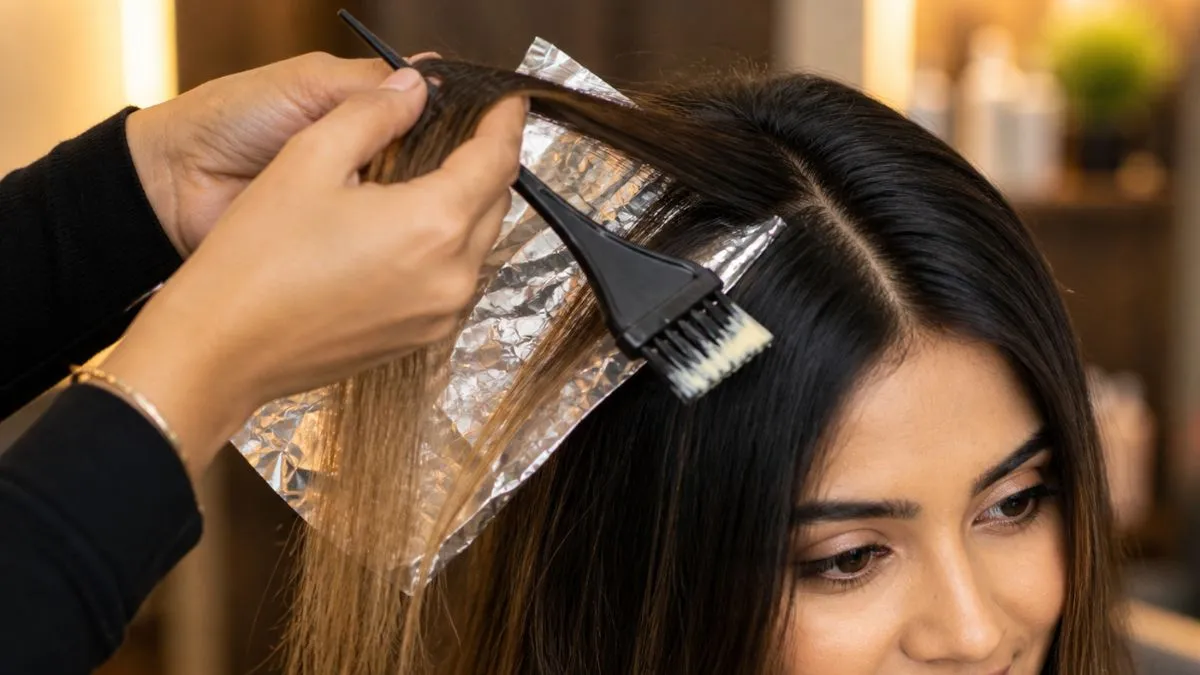
Hair colouring has evolved into an essential aspect of our day-to-day grooming routine, from simple highlights to radical changes. However, what we rarely consider is what goes on underneath our hair when we colour it.
There is typically a chemical process behind most hair-colouring methods that alters the hair's natural properties. Even though the effects may be dramatic, their long-term consequences on the hair's health should be considered before going through with your next session.
What occurs when your hair is bleached
Permanent hair colouring requires hair to be bleached before achieving the desired colour. This method involves the use of chemicals such as hydrogen peroxide and ammonia to remove the hair's natural pigmentation. The effect is achieved by first opening up the hair's cuticles before depositing artificial pigmentation.
As Dr Harinder K. Arya explains, this process weakens protein bonds and removes moisture, making hair more prone to dryness and breakage.
Why peroxide and ammonia can damage hair
Hydrogen peroxide plays a key role in lightening hair, but it also breaks down the natural melanin that gives your hair its colour. At the same time, ammonia swells the hair shaft, making it easier for colour to penetrate.
But the bad news is that this mixture will:
- Make your hair brittle inside out
- Remove moisture from your hair
- Cause frizzy hair
- Cause rough hair
It is not just hair; your scalp is affected too
Hair dyeing is not only confined to the hair, but the scalp too bears the brunt of the chemicals. Strong chemicals might give rise to irritation, drying, and sensitivity to the scalp. It could adversely affect the scalp’s natural barrier function, leading to poor hair growth and conditions.
Why ingredient knowledge is essential
A common mistake among many people is that they only pay attention to the end colour, not the ingredients required for their achievement. However, the benefits of label knowledge are substantial.
Avoiding certain ingredients, such as hydrogen peroxide, ammonia, and PPD, may come in handy. Selecting formulas that are easier for the hair and scalp becomes more relevant due to increased awareness.
Trend toward safer hair colouring
One could notice that there is a tendency in the industry towards hair colouring products that care about the health of the hair and not just its colour.
Hair colours that do not contain harsh bleach and use organic or herbal ingredients are becoming popular. An example of such a product would be hair colours offered by Indus Valley, which are gel-based and free of hydrogen peroxide, ammonia, and PPD.
Long-term care should take precedence over immediate benefits. If the correct decisions are made, it is quite possible to have colour on your hair without affecting its health. Hair colouring is as much a matter of care as it is of fashion. What you choose today can affect the health of your hair in the long run.
Also read: Why your eyebrows matter more than you think as you age
