
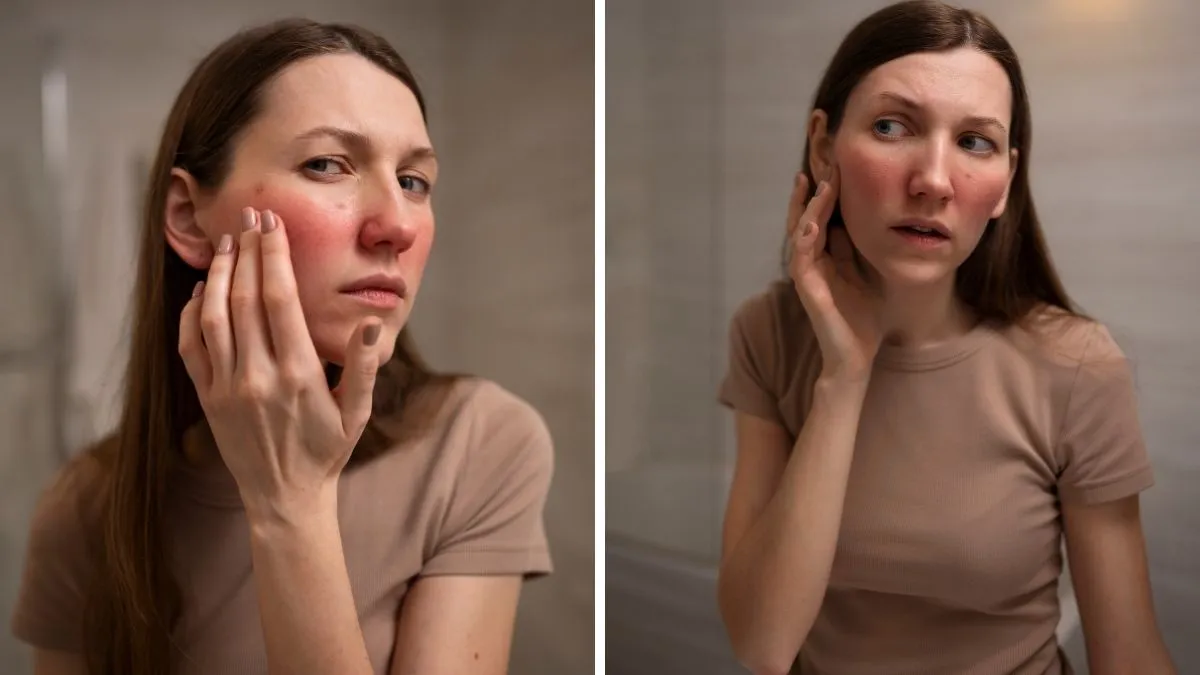
As winter sets in, the air gets colder, and your moisturiser suddenly feels useless. But sometimes what we brush off as “seasonal dryness” might actually be an early sign of something deeper, like eczema or dermatitis.
According to Dr Soma Sarkar, MBBS, MD (Dermatology) and Co-Founder of Skin Beyond Borders (SkinBB), “The difference between dry and eczematic skin is that eczematic skin stays dry throughout the year without any specific reason. It’s not just about moisture loss; it’s an inflammatory condition, often linked to your immune system and stress.”
When dry skin is more than dryness
Dry skin can feel tight or flaky, especially in cold weather, but eczema tends to look and behave differently. “People with eczema often experience severe itching that leads to red patches which may ooze or crust,” says Dr Sarkar. These patches are often seen behind the knees, inside the elbows, on the neck, or even on the cheeks.
The difference? Dry skin simply lacks oil and hydration. Eczema, on the other hand, is your immune system reacting — it’s irritation that’s gone a few steps too far.
Common triggers you might be missing
Eczema doesn’t appear out of nowhere. “Weather, stress, and irritating agents like perfumes, chemical-based lotions, or coloured face washes can all make it worse,” explains Dr Sarkar. Even preservatives and artificial scents in skincare products can cause flare-ups.
While dry skin gets worse in winter and improves with regular moisturising, eczema tends to persist and react sharply to triggers. If your “dryness” burns, oozes, or turns red — it’s time to see a dermatologist.
How to care for your skin the right way
For mild dryness, a rich, fragrance-free moisturiser and gentle cleanser can restore your skin barrier. But for eczema-prone skin, you’ll need to be extra careful. Avoid hot showers, skip perfumed products, and use medical emollients or steroid creams as prescribed.
Equally important is stress management. “Even when your skincare is perfect, high stress levels can trigger eczema flare-ups,” adds Dr Sarkar. A few breathing exercises, proper hydration, and regular sleep go a long way to maintain skin calm.
When to seek medical help
If your dryness turns itchy, flaky, or develops silver scales, don’t self-diagnose. Eczema and dermatitis can worsen quickly if left untreated. A dermatologist can confirm the cause through a physical exam or patch test and recommend appropriate medication or treatment.
Also read: Feeling itchy this winter? Here’s how to fix dry skin the right way
