
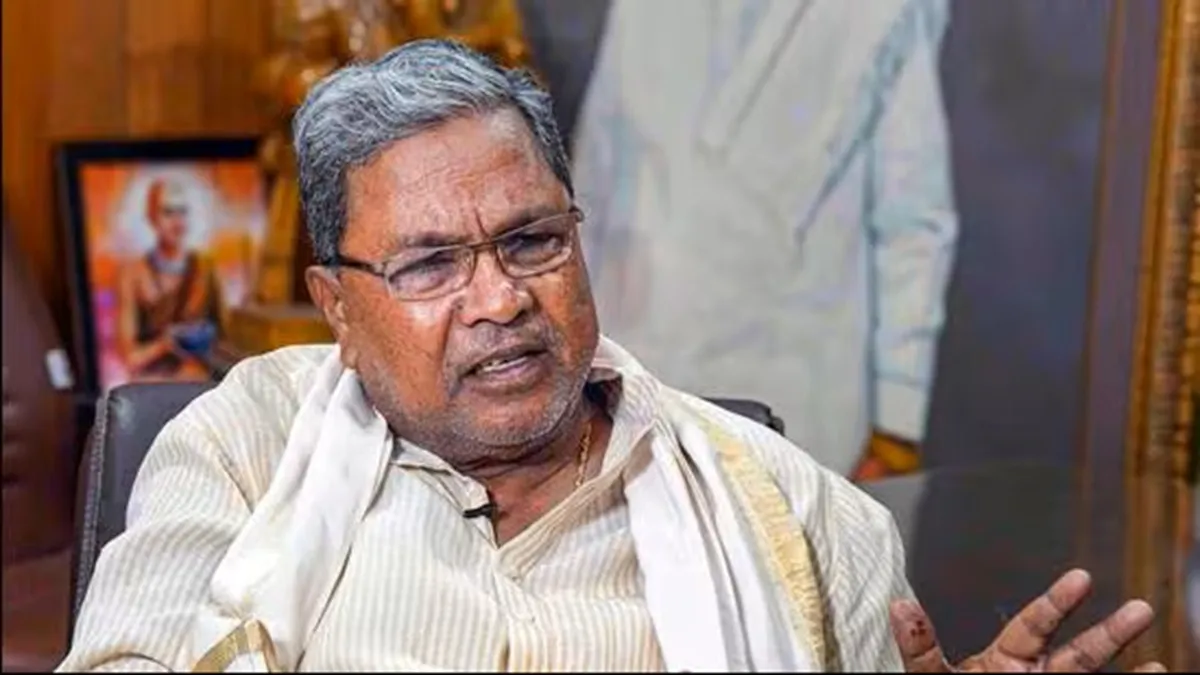
The Supreme Court on Monday sought a response from Karnataka Chief Minister Siddaramaiah on a petition challenging his election from the Varuna assembly constituency in the 2023 state elections. The plea alleges that the Congress party's poll promises, particularly its "five guarantees", amounted to corrupt practices under the Representation of the People Act, 1951. A bench of Justices Vikram Nath and Sandeep Mehta issued notice to Siddaramaiah on the petition filed by K Shankara, who claims to be a voter from the Varuna constituency. "Issue notice," the bench said while agreeing to hear the challenge against an April 22 Karnataka High Court order that had dismissed the election petition.
Court questions link between manifesto and corruption
During the hearing, the bench posed a key question to the petitioner's counsel, asking, "How would declaration of a manifesto amount to corrupt practice?" The counsel argued that another bench of the apex court has already agreed to hear a similar plea and pointed to the Supreme Court's 2013 ruling on election freebies.
Reference to 2013 Supreme Court verdict
The counsel cited the judgment which had observed, "Although the law is obvious that the promises in the election manifesto cannot be construed as 'corrupt practice' under section 123 of RP Act, the reality cannot be ruled out that distribution of freebies of any kind, undoubtedly, influences all people." The verdict had also clarified that promises made in a manifesto cannot be read into Section 123 to declare them corrupt practices. Section 123 of the Representation of the People Act deals specifically with corrupt practices. The petitioner informed the court that a larger bench of three judges is currently reconsidering the 2013 judgment.
Allegations raised by petitioner
Before the high court, Shankara had argued that the guarantees mentioned in the Congress manifesto amounted to "gratification to the electorate" aimed at directly influencing voters. He further claimed that such freebies were a drain on public funds and could harm India's goal of becoming economically self-reliant.
Siddaramaiah's defence and HC view
Siddaramaiah had countered these claims in the high court, stating that the petitioner failed to produce any material facts or concrete instances to support allegations of corrupt practice. He maintained that manifesto promises do not fall within the scope of corrupt practices under the law. Accepting this argument, the Karnataka High Court held that the guarantees offered in the manifesto could not be considered corrupt practices under Section 123 of the RP Act, in light of the Supreme Court's 2013 verdict. The apex court will now examine whether the high court's view warrants reconsideration.
ALSO READ: Shivakumar will become CM when Congress...': Siddaramaiah ends speculation amid power tussle
