
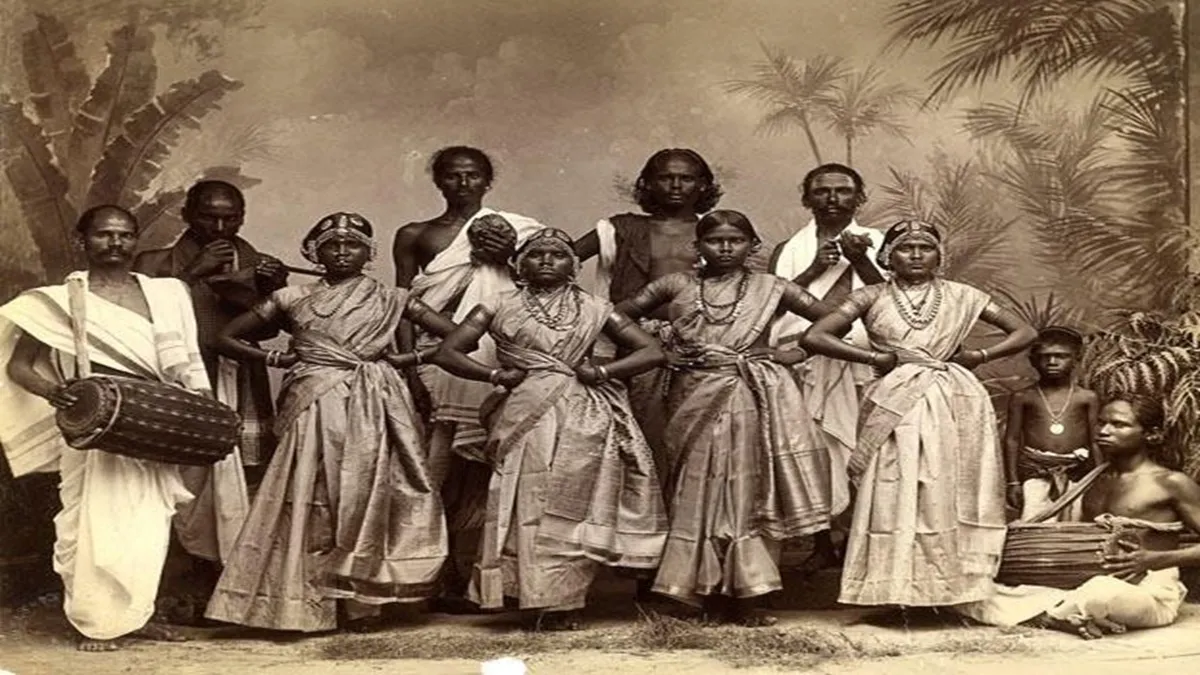
The Devadasi system refers to the traditional practice where young girls are dedicated, often from birth or early childhood, to a Hindu deity or temple. The term "Devadasi" literally means "female servant of god." These girls were ceremonially “married” to the deity and were entrusted with temple duties such as performing rituals, caretaking, and classical dance performances like Bharatanatyam.
Traditionally, Devadasis held a respected status as custodians of temple arts and played an important cultural role in society. This system has been historically prevalent in southern Indian states like Karnataka, Andhra Pradesh, and Maharashtra.
Historical origins and cultural role
The practice dates back to at least the 6th century CE, gaining prominence between the 7th and 12th centuries, especially in southern India. Initially, Devadasis were respected women dedicated to temple service and treated as consorts of the deity, symbolising autonomy and auspiciousness. They practiced spiritual duties, including temple rituals and classical dance, which were integral to temple worship. Patronage from royalty and local elites ensured their economic security and social status. However, over time, particularly during the medieval sultanate, Mughal, and eventually British colonial periods, the system started to decline with the destruction of temples and loss of royal patronage.
Decline and transition to exploitation
With the fall of temple economies, many Devadasis lost their traditional roles and dignity. The system morphed into a form of institutionalised exploitation and prostitution, as Devadasis became mistresses to wealthy patrons and elites. Though some retained rights like property ownership or income management, many faced severe social marginalisation. The children born from these unions were often dedicated to temples, perpetuating the system across generations. British colonial laws such as the Bombay Devadasi Protection Act of 1934 aimed to abolish the practice, but enforcement remained inconsistent.
Why does the Devadasi system still persist in Karnataka?
Despite being legally banned and condemned, the Devadasi system persists in certain pockets of Karnataka due to a complex mix of social, religious, economic, and cultural factors-
- Religious beliefs: Many families believe dedicating a daughter to a deity brings divine blessings and protects family honour. This spiritual motivation deeply influences the continuation of the tradition.
- Social status: Historically, Devadasis were accorded higher social respect for their role in religious rites and arts. Some economically disadvantaged families still perceive this as a pathway to elevate their social standing.
- Economic vulnerability: Poverty and lack of education force families into dedicating daughters, as they have little bargaining power or alternatives.
- Weak enforcement: Although Karnataka passed laws banning dedication (e.g., Karnataka Devadasis (Prohibition of Dedication) Act), implementation is uneven, and some local authorities turn a blind eye.
- Superstition and cultural inertia: Deep-rooted superstitions and social customs make it difficult to eradicate the system quickly. Some communities see it as a rightful legacy or divine calling.
Contemporary efforts and challenges
The Karnataka government has launched welfare and rehabilitation schemes aimed at supporting Devadasis, including housing programs and skill development initiatives. NGOs and activists also work to educate affected communities, pushing for social integration and legal enforcement. However, challenges remain severe due to stigma, lack of awareness, and entrenched patriarchal norms. The intersection of caste, gender inequality, and economic deprivation complicates eradication efforts.
Legal status and Supreme Court intervention
The practice of dedicating girls as Devadasis has been declared illegal by the Supreme Court of India. Various state legislations, including Karnataka’s, prohibit the dedication of girls to temples. The court and government repeatedly stress that the system amounts to exploitation and violates child rights. Nevertheless, the persistence of the practice indicates gaps in law enforcement, social attitudes, and outreach programs.
The Devadasi system, once a respected religious institution and artistic tradition, has degenerated into a form of exploitation and abuse, particularly in marginalised communities of Karnataka. While legal prohibitions exist and welfare measures are underway, the system’s survival stems from a tangled web of poverty, culture, superstition, and weak governance. A holistic approach combining strict enforcement, education, socio-economic upliftment, and community sensitisation is essential to fully eradicate this practice from Karnataka.
