
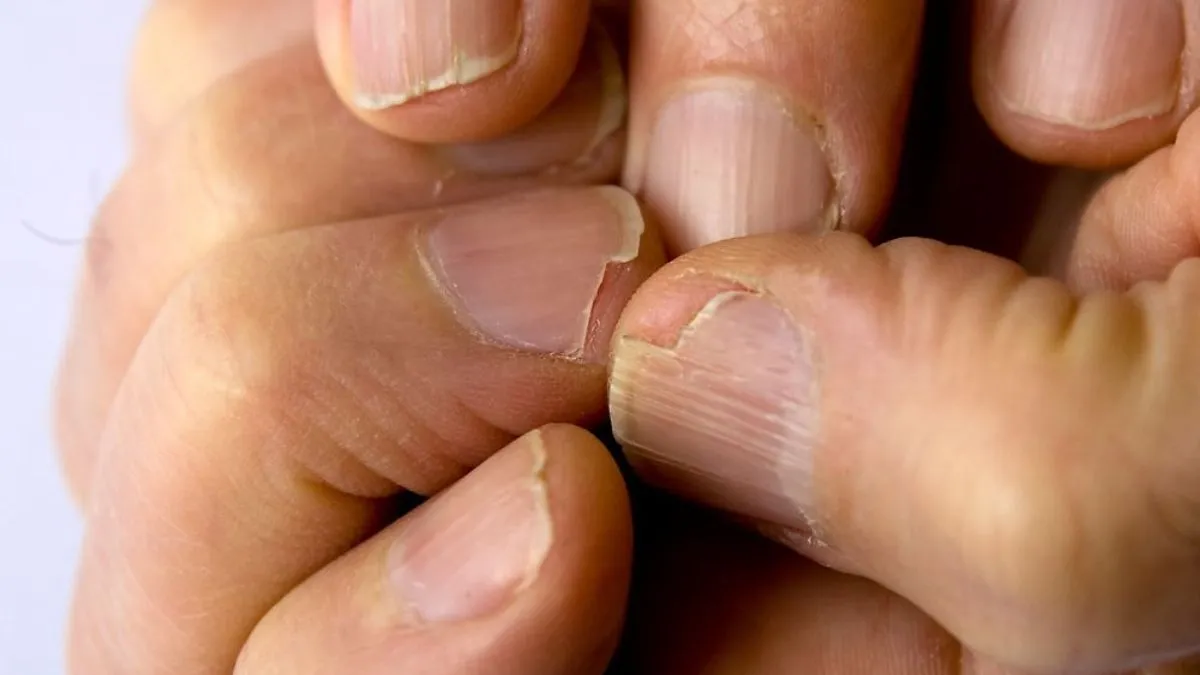
A lot of times, it so happens that certain parts of your body give you signals before the major hit. This could be a slight pain in your ear or a change of colour in your nail. Your nails have the potential to give you strong indications about your general health, which might then serve as a window to many systemic disorders.
Dermatologists and health specialists help to identify some of these nail abnormalities that can reflect underlying conditions. Dr Ruben Bhasin Passi, Consultant, Dermatology at CK Birla Hospital Gurugram shares some of the key changes in nails and what could be its possible health implications.
Key Nail Changes and Their Possible Health Implications
Colour Changes
- White or Pale Nails: Pale or white nails can indicate anaemia, liver disease (e.g., cirrhosis) or congestive heart failure. For instance, “Terry's nails,” in which the majority of the nail is white with a thin pink band at the distal tip, is commonly linked to liver disease or congestive heart failure.
- Yellow Nails: Yellowing due to fungal infection is very common. It can also happen due to more severe causes such as yellow nail syndrome, secondary to lung disease or lymphedema. Yellow nails can also be a sign of psoriasis or thyroid disease.
- Blue Nails (Cyanosis): Blue discolouration, particularly of the nail beds, can be an indication of low blood oxygen levels, likely due to respiratory disorders like COPD or heart disease.
- Dark Streaks or Spots: A dark spot or streak below the nail may be an indication of melanoma which is a dangerous form of skin cancer. This is especially problematic if the streak is new, irregular or spreading, especially among people with darker skin where acral lentiginous melanoma is also more prevalent.
Texture and Shape Changes
- Splitting or Brittle Nails: Brittle nails that split or crack with ease can be a sign of thyroid disease, especially hypothyroidism or of deficiencies in low iron, biotin or zinc. Repeated exposure to chemicals or water can also lead to this.
- Spoon-Shaped Nails (Koilonychia): Spoon-shaped nails that curve upward can be a sign of iron-deficiency anemia, haemochromatosis (iron excess) or heart disease.
- Clubbed Nails: Clubbing, wherein the nails and fingertips become enlarged and curve toward the palms, is usually linked to chronic respiratory conditions (e.g., lung cancer, pulmonary fibrosis) or coronary disease resulting from low oxygen levels. It can also be seen in inflammatory bowel disease.
- Pitting: Small depressions or pits on the surface of the nails are normally found in psoriasis or psoriatic arthritis. They can also be seen in alopecia areata or eczema.
READ MORE: Boost your nail growth and overall health with these six biotin-rich foods
Nail Growth Abnormalities
- Beau’s Lines: Ridges or grooves in a horizontal direction along the nails can develop when there is an interruption in nail growth because of serious illness, malnutrition, diabetes or chemotherapy. They can also occur following high fevers or extreme stress.
- Nail Separation (Onycholysis): When the nail separates from the nail bed, it could be due to psoriasis, thyroid disease, fungal infections or trauma. Repeated separation requires medical assessment.
- Slowed or Stopped Nail Growth: This may be seen with systemic disease, malnourishment, or following severe infections such as COVID-19, which has been reported to lead to Beau’s lines in some instances.
Other Signs
- White Spots: Small white spots are generally benign and frequently develop from minor trauma or manicuring. Persistent or profuse spots might indicate zinc deficiency or other pathology.
- Red or Brown Lines (Splinter Haemorrhages): These red lines underneath the nails can be due to trauma but could also be a sign of endocarditis (a heart infection) or inflammation of the blood vessels.
- Thickened Nails: Thick nails are due to fungal infections, psoriasis, or repeated trauma (e.g., from poorly fitting shoes). They could, in occasional instances, be a sign of circulation issues.
When to See a Doctor
Dermatologists say that although some changes in the nails are harmless (e.g., whitish spots due to trauma), others need immediate attention. You should see a healthcare provider if you observe:
- Ongoing color, shape, or texture changes in the nail.
- Dark streaks or spots, particularly if they increase or change.
- Infection signs (redness, swelling, pain) near the nail.
- Nail changes with systemic symptoms such as fatigue, weight loss or difficulty breathing.
