
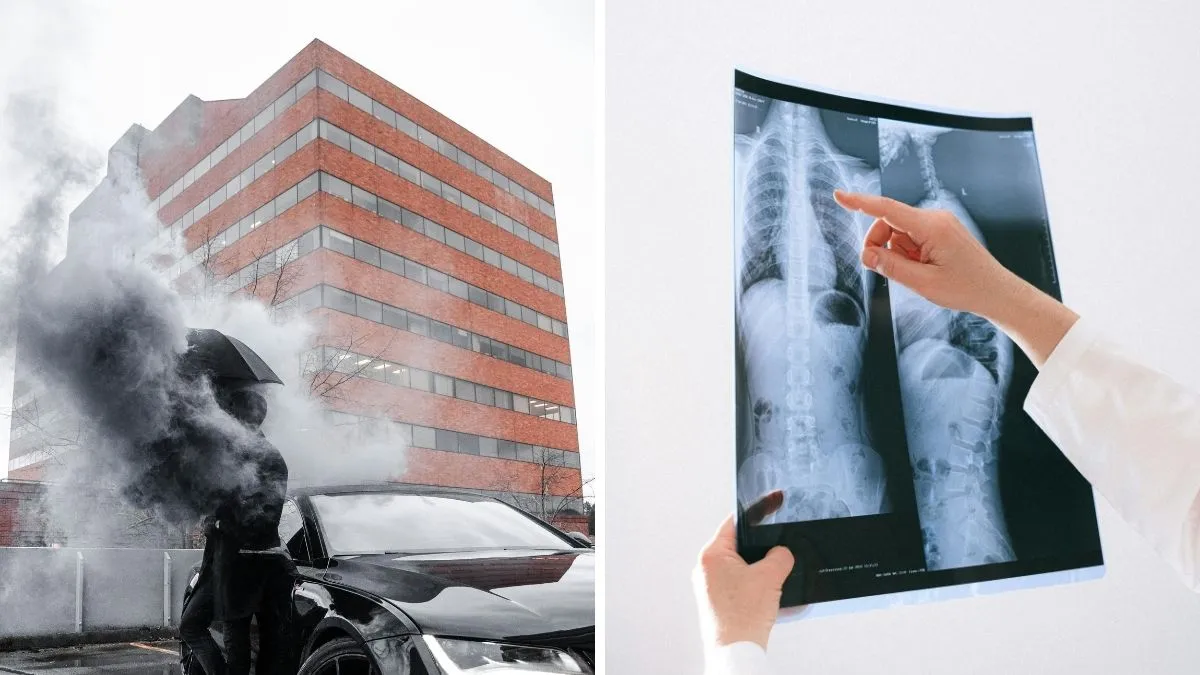
When we think of lung damage, cigarettes take the blame, and rightly so. But even if you’ve never touched a cigarette, your lungs are quietly absorbing stress from things you encounter every single day: the city air you breathe, the fumes from your stove, the dust in your office, even that scented candle flickering by your bedside.
Modern life, it turns out, is full of invisible irritants. Recent research shows that non-smokers are developing lung diseases once thought to affect only smokers, and the causes lie all around us. Here’s what the science says about these hidden culprits.
Every day, things are damaging your lungs that aren’t smoking
1. Air pollution
A study published in JAMA (National Heart, Lung and Blood Institute, 2019) found that long-term exposure to air pollution can damage the lungs as much as smoking a pack of cigarettes a day. Researchers tracked over 7,000 adults for 18 years and found that those living in high-pollution cities had emphysema-like changes visible on lung scans — even if they had never smoked.
The takeaway: Fine-particle pollution (PM2.5) and ground-level ozone trigger chronic inflammation that ages your lungs prematurely.
2. Household cooking fumes
In many homes, the real smoke problem begins in the kitchen. A large meta-analysis in Environmental Health Perspectives (2024) showed that cooking oil fumes, especially from deep-frying, release aldehydes and ultrafine particles that can damage airway cells and increase lung-cancer risk in non-smokers. The risk was higher in poorly ventilated urban kitchens.
The takeaway: Use exhaust fans, reduce frying, and keep windows open. The difference in air quality is measurable within minutes.
3. Indoor air and incense
A 2023 study in the International Journal of Environmental Research and Public Health linked frequent incense or candle use to elevated indoor benzene and formaldehyde levels, correlating with impaired lung function. Participants who burned incense daily had a 12 per cent reduction in lung capacity compared to those who didn’t.
The takeaway: Fragrance isn’t always freshness. Choose natural ventilation and avoid burning incense or candles in closed rooms.
4. Second-hand smoke
Even brief exposure to other people’s smoke is risky. Research published in Nature Medicine (2024) found that second-hand smoke exposure raises lung-cancer risk in never-smokers by about eight per cent and significantly increases oxidative stress markers in the blood.
The takeaway: There is no safe level of exposure. Keeping your living and work spaces smoke-free protects your lungs and your heart.
5. Dust, mould and office air
Indoor air is not all smoke and scent. In 2022, the European Respiratory Society found that mould spores, printer toner dust, and settled dust in air-conditioning ducts were strongly correlated with chronic cough and asthma-like symptoms among office workers.
The key takeaway: Regular HVAC upkeep and cleaning soft furnishings decrease indoor particulate load and enhance respiratory comfort.
6. Traffic exposure and brake-dust nanoparticles
Commuters are not safe either. A study by Cardiothoracic Systems and Respiratory Medicine (2023) discovered that metallic nanoparticles of brake and tyre wear induce DNA damage in lung tissue samples to replicate the pattern of oxidative stress observed in smokers. Heavy commuters for an extended period of time had quantifiable reductions in lung elasticity.
The takeaway: If you're stuck in traffic for hours, close car windows in traffic and operate air-recirculation mode.
7. Cleaning sprays and disinfectants
A 2021 Harvard study published in the American Journal of Respiratory and Critical Care Medicine found that daily use of household cleaning sprays increased the risk of developing chronic obstructive pulmonary disease (COPD) by up to 32 per cent among women who never smoked. Ammonia and bleach vapours were the main culprits.
The takeaway: Use natural cleaning alternatives, ventilate well, and never mix chemical cleaners.
8. Construction dust and city redevelopment
Urban renovation projects release silica dust and fine cement particles that are easily inhaled. A Lancet Planetary Health paper (2022) showed that construction-related dust exposure correlated with a 27 per cent rise in chronic bronchitis cases among non-smoking residents in nearby high-density zones.
The takeaway: Close windows during local construction, use air purifiers, and wear masks in high-dust areas.
The lungs are extraordinary organs: soft, silent, and relentlessly hardworking. But the world we live in constantly tests them. Smoking may be the obvious enemy, but air pollution, fumes, dust, and even your own stress can chip away at lung health every day.
The good news? Most of these factors can be managed with awareness, ventilation, and a bit of prevention. The next deep breath you take is more precious than you think, and it deserves protection.
Also read: Delhi Air Pollution 2025: Why kidney patients need to be extra cautious
