
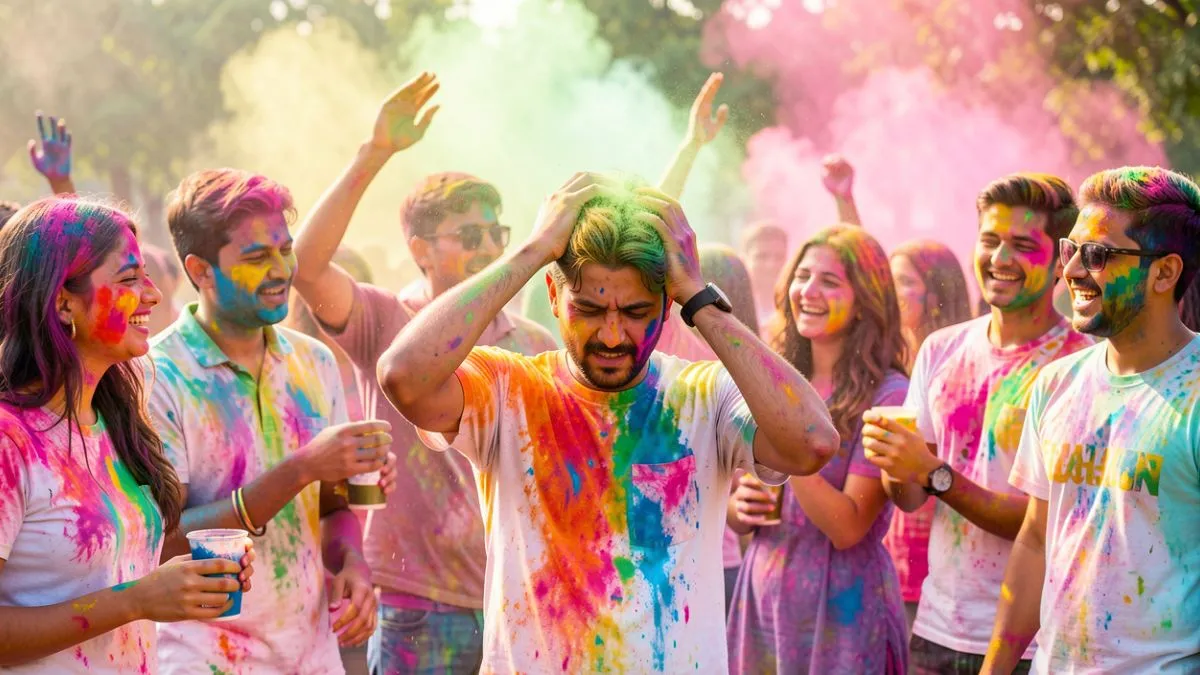
Holi is a celebration of colour, music, laughter and long hours spent outdoors with friends and family. But for people living with migraines, the same festive atmosphere can quickly become overwhelming. What appears to be harmless fun often brings together multiple biological triggers at once, increasing the risk of severe headaches.
According to Dr Nitin Bhakal, Senior Consultant, Neurosurgery at Narayana Hospital, Jaipur, migraine is far more complex than a routine headache. “Migraine is a neurological condition where the brain becomes unusually sensitive to sensory input such as light, sound, smell and physical stress. During Holi, many of these triggers occur simultaneously,” he explains.
Why migraine brains react differently during festivals
Migraines affect millions worldwide and are often accompanied by throbbing pain on one side of the head, nausea, vomiting, and sensitivity to light or sound. Some individuals also experience visual disturbances known as aura before the headache begins. Experts say the migraine brain processes sensory information differently. When multiple triggers appear together, the pain threshold drops quickly.
Festivals like Holi, filled with intense stimulation, can therefore act as a perfect storm.
Strong smells: The invisible Holi trigger
Fragrances and chemical additives in synthetic colours are among the most underestimated triggers. The gulal powders may be laced with artificial fragrances, aerosol sprays are commonly used during social gatherings, and the smell of bonfires or perfumes may increase the level of exposure. The olfactory center is directly linked to the pain centers of the brain. Even brief exposure to strong odours may stimulate nerve centres that initiate headaches that may manifest after hours in people prone to migraines, according to experts. Using natural or odorless colors may minimize the risks considerably.
Loud music and noise sensitivity
Holi celebrations often involve music systems, DJs, and drums, which are played loudly. Prolonged exposure to loud noises overstimulates the brainstem, an area of the brain that is highly sensitive during migraine attacks. The pain may not manifest immediately, but exposure may lead to tiredness, irritability, or mental fogginess before the headache manifests. Taking breaks in quieter spaces allows the nervous system to recover.
Sun exposure and bright light overload
Most Holi celebrations happen under direct sunlight. UV rays stimulate light-sensitive mechanisms that are linked to headache centers in the brain. In addition, reflections from colored water, white clothing, and other brightly colored objects also contribute to glare. Heat also comes in as a contributing factor to this problem, as it causes the dilation of blood vessels as well as dehydration. Solutions to this problem include wearing sunglasses and hats, as well as seeking shade from time to time.
Dehydration: The Most Overlooked Migraine Trigger
In the midst of dancing and other celebrations outdoors, it seems that no one remembers to take enough water. Soda or caffeinated beverages have taken the place of water in most celebrations, thus exacerbating dehydration.
Even mild dehydration causes a reduction in blood volume, which affects circulation to the brain, thus making nerve pathways more sensitive.
It is recommended that you take water before you go out to celebrate.
Irregular meals and sleep disruption also matter
As a result, a disruption in the normal routine is inevitable. Late nights, early mornings, skipping meals, and fluctuations in sugar levels may trigger migraines. Lack of sleep also increases the level of stress hormones and makes the nervous system more sensitive. Migraine is a condition that thrives on uncertainty. A sudden change in the normal routine is likely to trigger a migraine.
Excitement is also a trigger for migraines
While celebrations are an integral part of festivals, they also carry a level of stress. A gathering of people also triggers the release of hormones such as adrenaline and cortisol. It is interesting to note that migraines are also triggered on the days following a celebration. These are called "let-down migraines."
How to avoid migraines during Holi
Doctors advise that one should plan ahead and not wait until they start feeling migraines. Some precautions that can be taken are:
- Drink plenty of water before and during celebrations
- Wear sunglasses or hats while stepping outside
- Select natural and fragrance-free colour options
- Avoid standing near loudspeakers for too long
- Eat regular meals so that blood sugar levels are normal
- Sleep well before the start of the celebrations
Have a safe, healthy and happy celebration on Holi!
Disclaimer: Tips and suggestions mentioned in the article are for general information purposes only and should not be construed as professional medical advice. Always consult your doctor or a dietician before starting any fitness programme or making any changes to your diet.
Also read: Holi 2026 skin care guide: Prevent skin damage from colours naturally
