
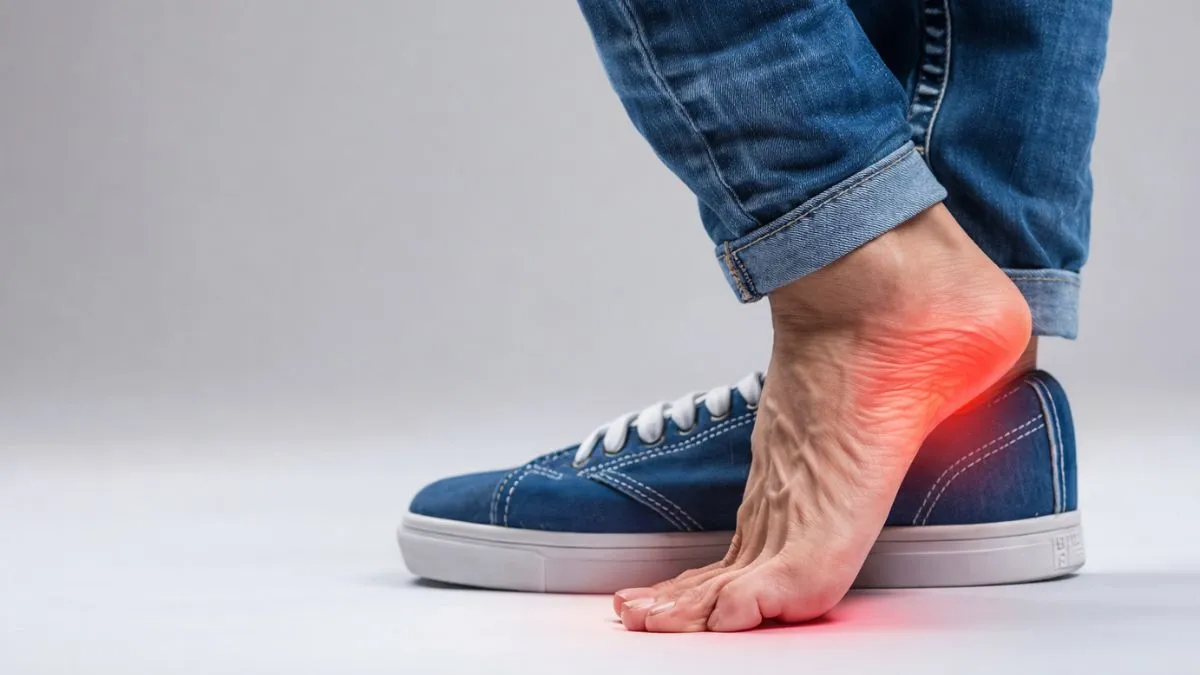
Most people spend more time choosing the colour or brand of their shoes than checking whether they actually support their feet. Comfort often becomes an afterthought, until persistent knee aches, heel pain or lower back discomfort begin to interfere with daily life.
Orthopaedic specialists say footwear is one of the most underestimated factors influencing joint health. What sits between your feet and the ground every day quietly shapes posture, balance and how stress travels through the body.
Why the wrong shoes can affect more than just your feet
According to orthopaedic surgeon Dr Dhammapal Bhamare from Sainath Hospital, Pune, footwear directly affects how force moves through the body during routine activities such as walking or standing. “When shoes lack proper support, the way the foot strikes the ground changes,” he explains. That subtle shift can increase pressure on the ankles and knees while forcing the lower back to compensate for poor alignment. Over time, even normal movement patterns may begin to feel uncomfortable.
The effects are rarely immediate. Instead, discomfort tends to build gradually, which is why many people fail to connect joint pain with footwear choices.
Shock absorption: The feature most people overlook
Cushioning is often marketed as a comfort feature, but doctors say it plays a far more important medical role. Shoes without adequate shock absorption transfer repeated impact directly to the joints. Each step adds stress to the knees and spine, particularly for people who stand for long hours or walk frequently during the day.
Over weeks or months, this repeated strain can contribute to stiffness or chronic pain, especially in the lower back.
Common injuries linked to improper footwear
Poorly fitted footwear does more than cause blisters. Sprains and fractures are common injuries that doctors see, which are caused by unstable soles or poor grip. Foot conditions can also arise if shoes do not support the natural movement of the foot.
These include bunions, which are painful lumps that develop near the big toe, as well as hammertoes and claw toes, which develop as a result of muscle imbalance that eventually alters toe alignment.
How to select shoes that support joint health
According to experts, prevention is often achieved through simple and easy-to-follow steps. Arches in shoes should be designed to support an individual’s foot, and not be a one-size-fits-all approach. Cushioning is a must for shock absorption, and a hard heel counter is necessary for balance and posture.
Fit is also more important than one might think. Once soles lose cushioning or structural support, they stop protecting the joints effectively. Joint pain is often blamed on ageing, weight gain or long working hours. But sometimes the cause sits much closer to the ground.
Paying attention to footwear, not just how it looks, but how it supports movement, can go a long way in protecting long-term mobility. As doctors point out, prevention rarely begins in the clinic. Often, it starts with everyday habits.
Also read: Can weather changes cause back pain flare-ups? Orthopaedic expert explains
Disclaimer: Tips and suggestions mentioned in the article are for general information purposes only and should not be construed as professional medical advice. Always consult your doctor or a dietician before starting any fitness programme or making any changes to your diet.
