
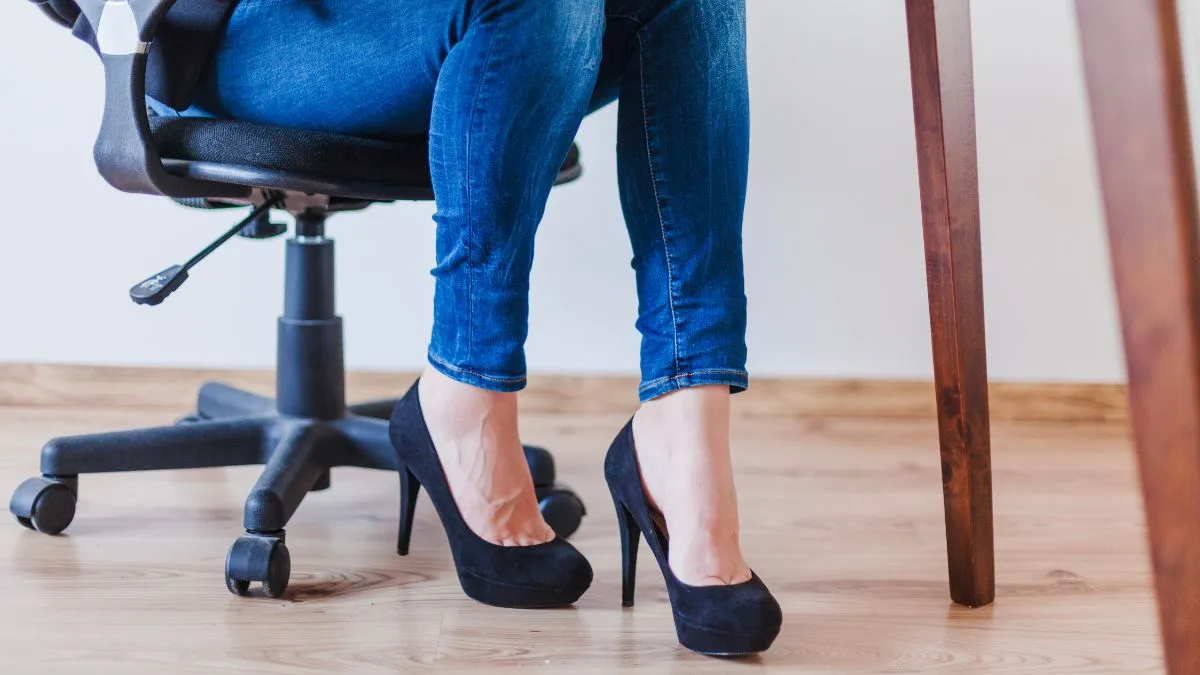
High heels may elevate an outfit, but what they quietly do to your spine is rarely part of the conversation. Orthopaedic research now shows that when heels are paired with long desk hours and low daily movement, a common reality for urban working women, they can subtly but steadily strain the spine, knees and hips over time.
According to Dr Simon Thomas, Senior Director Robotics & Orthopaedics, Max Hospital Shalimar Bagh, "It’s not heels alone that cause damage, but the combination of altered posture, prolonged sitting and weak supporting muscles that places the musculoskeletal system under chronic stress, often years before pain becomes impossible to ignore ."
How high heels actually change your posture
Wearing high heels shifts the body’s centre of gravity forward. To stay balanced, the spine increases its inward curve (lumbar lordosis), while the hips and knees compensate with altered alignment.
Recent Indian research on young women shows that frequent heel use increases strain on the lower back, tightens calf muscles, and places excess load on the knees and forefoot. Over time, these micro-adjustments accumulate, showing up as back stiffness, knee pain and foot discomfort that many women mistakenly normalise as “part of the job” .
Why desk jobs make the damage worse
Long hours of sitting intensify the problem. Desk-based work shortens hip flexors and weakens the glutes and core muscles essential for stabilising the pelvis and spine.
Workplace studies in India have consistently linked prolonged sitting and poor ergonomics with rising rates of neck, lower back and knee pain, particularly among computer professionals. When weak core muscles meet heel-altered posture, the spine absorbs forces it was never designed to handle daily.
The hidden bone health angle many women miss
Bone loss doesn’t announce itself early. India faces an early-onset bone health crisis, with fractures occurring nearly a decade earlier than in Western populations. Vitamin D deficiency, low calcium intake and insufficient weight-bearing exercise are key contributors.
When high heels alter loading patterns and sedentary habits limit bone stimulation, the result is a perfect storm, especially for women already biologically predisposed to lower bone density after their 30s.
What doctors actually recommend (without banning heels)
The goal isn’t to swear off heels forever; it’s to use them strategically.
Dr Simon advises:
- Reserving high heels for short durations, not full workdays
- Alternating with low-heeled, cushioned footwear
- Standing up and moving every 30–60 minutes during desk work
- Strengthening the glutes, hips and core two to three times a week
- Including weight-bearing exercise like brisk walking or stair climbing
- Ensuring adequate calcium and vitamin D intake
Small changes, done consistently, significantly reduce joint stress and long-term damage.
High heels aren’t villains, but paired with sedentary work and weak muscles, they can quietly undermine spinal and joint health. The good news? This trajectory is reversible. Thoughtful footwear choices, regular movement and basic strength training can protect your spine today and your bones for decades to come.
Disclaimer: Tips and suggestions mentioned in the article are for general information purposes only and should not be construed as professional medical advice. Always consult your doctor or a dietician before starting any fitness programme or making any changes to your diet
Also read: Think knee pain is just ageing? Doctors say your weight may be the real culprit
