
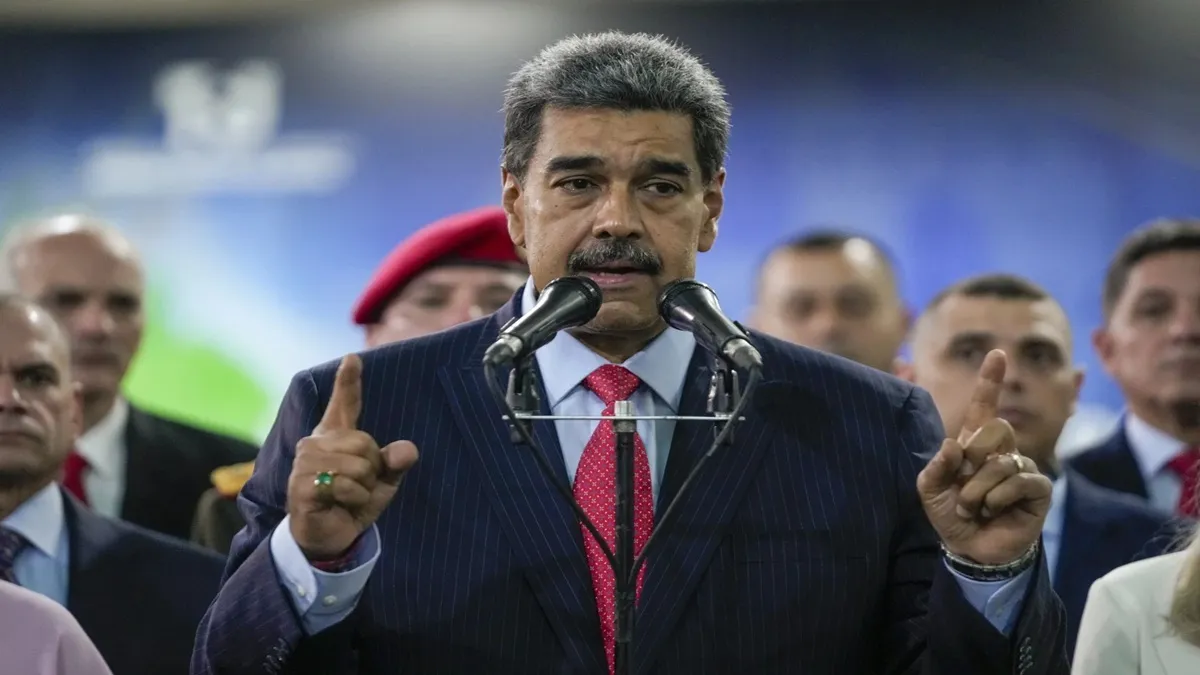
The world teeters on the edge of another confrontation as Venezuela and the United States square off, echoing the Ukraine-Russia war. Why does US President Donald Trump despise Venezuelan leader Nicolas Maduro? Is it mere ideology or do oil riches, drug trafficking and illegal migrants stoke the fire? In an exclusive interview with India TV, foreign affairs expert Robinder Nath Sachdev unpacks the deep-rooted geopolitical grudge match layer by layer.
Ideological clash and anti-US stance
Sachdev pins the core rift on stark differences- Maduro's leftist socialism clashes with Trump's right-wing conservatism. Venezuela's governments under Hugo Chávez (1999–2013) and Maduro have long branded the US as imperialists, refusing to bow. They have expelled American companies, though Chevron still operates in oil. "Latin America is America's backyard," Sachdev notes, "and they won't tolerate leftist regimes or Chinese influence- especially under Trump."
The oil factor: World's largest reserves at stake
Venezuela holds the globe's biggest oil reserves- surpassing Russia, Saudi Arabia, and the US- but struggles with production. America covets control, pushing for a friendly regime to exploit these assets. Even as Saudi Arabia diversifies, oil remains vital for US dominance. Sachdev highlights America's history: the 1953 Iran coup to install the Shah, Iraq's 2003 invasion under WMD pretexts (really oil), support for Saudi royalty, and Gaddafi's ouster in Libya after nuclear deals soured.
Drugs, gangs and illegal immigration accusations
Trump accuses Maduro of enabling drug cartels smuggling fentanyl and cocaine into the US, though Sachdev clarifies Venezuelan gangs handle only about 10 per cent of the flow. Illegal migrants from Venezuela allegedly bring criminal gangs, worsening US crime. America demands crackdowns, but Maduro resists, framing it as sovereignty defense.
Potential war: Why open a new front amid Ukraine?
With Russia-Ukraine raging for nearly four years, why risk the Caribbean? Sachdev warns a Venezuela conflict would tense the region, targeting anti-US holdouts like Cuba, which relies on Venezuelan oil. US aims for regime change in both, pressuring Cuba's economy amid supply woes.
Maduro's allies in a hypothetical war: Limited support
If fighting erupts, Maduro fights largely alone. Russia might offer diplomatic statements or weapons but no troops or subs. China, a key partner, would provide economic backing without military commitment. No meaningful military alliance exists- Cuba sympathises but lacks capacity. "Venezuela would battle solo," Sachdev asserts.
A brief history of better days
Relations weren't always hostile. Sachdev recalls a thaw from the 1980s to around 2000, before Chávez's 1998 rise revolutionized anti-US policy. Maduro, his successor since 2013, upholds that legacy. This feud blends ideology, resources, and security fears, with oil as the prize. As Trump eyes Latin America, escalation risks ripple globally- but Maduro's isolation could deter full war.
(With inputs from Vinay Trivedi)
