
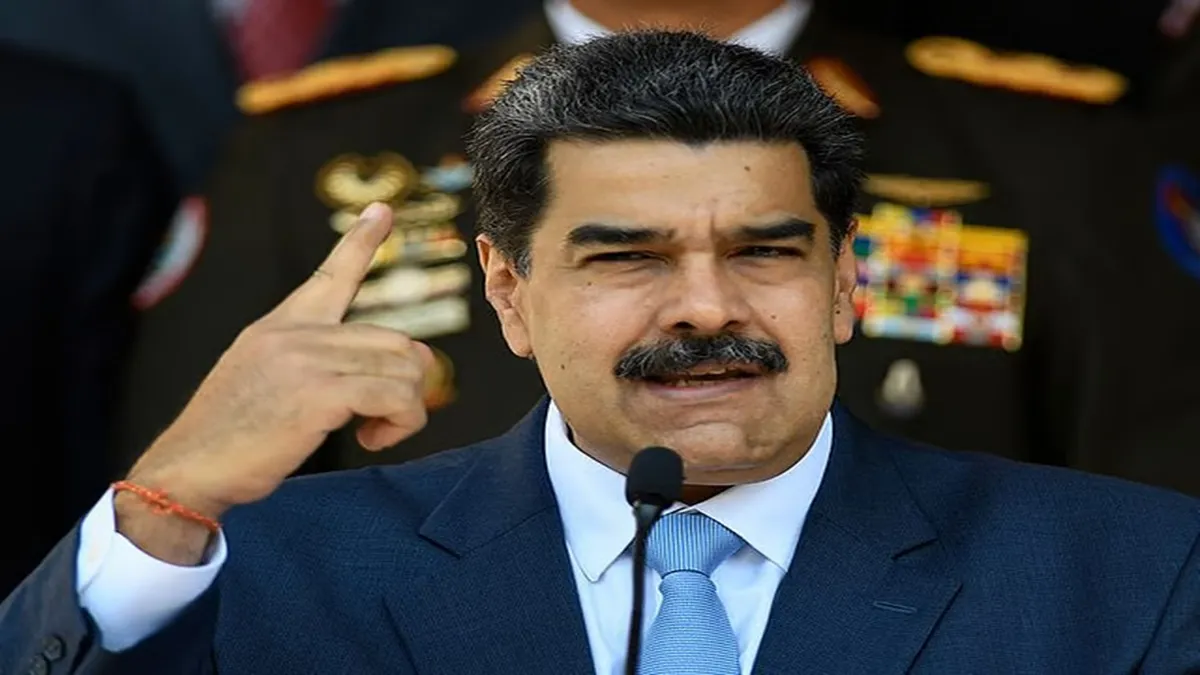
Deposed Venezuelan leader Nicolas Maduro's first court appearance in the United States turned into a high-voltage spectacle after he declared in open court that he remains the president of Venezuela. His indictment, along with that of his wife Cilia Flores, marked the start of a long and complex legal process that could keep him behind bars for years or possibly the rest of his life. Both were charged with drug trafficking offences just days after US forces seized them from their home in Caracas during a midnight raid. They pleaded not guilty to all charges.
The Trump administration defended the extraction as a "surgical law enforcement operation" based on charges filed six years ago, as per The Associated Press (AP). Maduro, in turn, described the US action as a kidnapping and insisted he is a "prisoner of war." While Venezuela grapples with the geopolitical shockwaves, Maduro and Flores remain in custody in New York City. Their next hearing is scheduled for March 17.
Here's what's likely to happen next in their legal case:
Bail request a long shot
Maduro (63) and Flores (69) have the option to request bail, although neither made the move during their first appearance. Their legal teams suggested they may apply later. Judge Alvin Hellerstein said he would accept "whenever and as often you think it appropriate" but approval is unlikely given the gravity of the charges. Both face offences that could lead to life sentences. Prosecutors are expected to argue they pose a flight risk. Maduro is accused of narco terrorism conspiracy while he and Flores are charged with conspiring to import cocaine into the US and possessing machine guns.
In similar cases, bail is almost never granted. Manuel Noriega, removed from power in Panama in 1989, was denied bail. Former Honduran President Juan Orlando Hernandez and drug lord Joaquin "El Chapo" Guzman also faced trial in the US without being granted release.
Flores and Maduro seek medical attention
Flores' lawyer Mark Donnelly told the court she suffered "significant injuries" during her capture and requires X-rays to check for fractures or severe rib bruising. She entered court bandaged on her forehead and around her eye. Maduro's lawyer Barry Pollack also mentioned that Maduro has "health and medical issues that will require attention", without offering details. The judge directed lawyers and prosecutors to ensure both defendants receive necessary medical care. The Metropolitan Detention Centre, where they are held, has basic medical facilities but has faced criticism in the past for poor treatment and missed diagnoses.
Consular access may be complicated
As foreign nationals in US custody, Maduro and Flores are entitled to a consular visit. Speaking through an interpreter, Maduro said they would like such access. However, this could be difficult because Maduro ordered the closure of Venezuela's embassy and consulates in the US in 2019.
Consular meetings may also be needed to address legal fee payments, as US sanctions prevent any American from receiving money from Maduro or Flores without Treasury Department approval. Judge Hellerstein instructed both sides to ensure the defence is able to "represent their clients zealously and fully." Maduro has also expanded his legal team by adding constitutional scholar Bruce Fein.
Legal challenges ahead
Pollack indicated the defence plans to file "substantial" challenges to the indictment. He argued that Maduro, as the head of a sovereign state, is entitled to privileges and immunities. He also questioned the legality of his capture. A similar argument failed after Noriega's 1989 removal because he was never formally recognised as Panama's President. Maduro claims to have won three elections, but the US does not recognise him as Venezuela's legitimate leader. The debate over sovereign immunity and the legality of the arrest could lead to prolonged court battles and possibly reach higher appellate courts.
ALSO READ: Venezuela-US tensions: 40 killed in US attack on Venezuela, says report; Trump warns Colombia
