
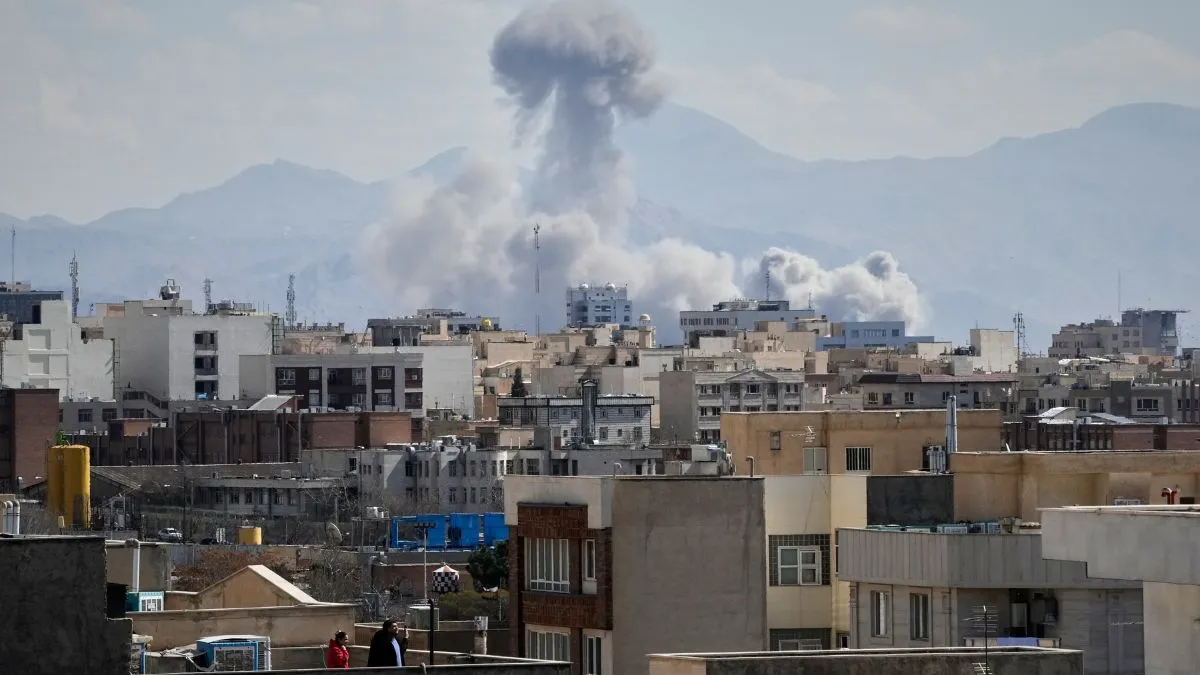
Israel and the United States launched a major attack on Iran on Saturday, assassinating the country's Supreme Leader, Ayatollah Ali Khamenei. Several other prominent Iranian figures were also killed in the joint strike. Following the attack, Iran retaliated and began targeting multiple neighboring countries. These include Israel, Bahrain, Qatar, Cyprus, the UAE, Saudi Arabia, Kuwait, Jordan, and Iraq. The conflict, which initially appeared limited, has now expanded across the region.
The key question is: if the United States and Israel carried out the strike, why is Iran attacking other countries? What strategy is driving these moves?
Iran has targeted nine countries
Iran, currently engaged in conflict with the United States and Israel, has launched missile and drone strikes targeting military bases in nine countries:
- UAE (especially Dubai)
- Qatar
- Bahrain
- Saudi Arabia
- Kuwait
- Jordan
- Iraq
- Cyprus
These attacks are not random. They are part of a calculated strategy designed to apply pressure through economic, military, and geographical channels.
Why did Iran target Dubai?
The UAE, particularly Dubai, is not primarily a military target. It is the financial and commercial hub of the Gulf region, known for trade, aviation, tourism, and global capital flows.
Iran’s objective is not territorial control, but economic disruption. Even minor instability in Dubai can trigger market reactions, raise insurance costs, halt shipping activity, and disrupt trade. By targeting such a key economic center, Iran can inflict financial damage without deploying ground forces.
A direct message to the US through Qatar
Iran has also fired missiles and drones toward the Al Udeid Air Base in Qata,— America’s most important military hub in the Middle East.
While Qatar has stated that several Iranian missiles were intercepted mid-air, Iran continues attempts to strike US-linked military infrastructure in the region. The US maintains that it has not suffered significant damage.
Bahrain and the Strait of Hormuz factor
Bahrain hosts the US Fifth Fleet base, a key naval installation responsible for safeguarding maritime trade routes, particularly through the Strait of Hormuz.
A substantial portion of the world’s oil supply passes through this route. Even speculation about instability in this corridor can drive up global oil prices. By targeting Bahrain, Iran appears to be applying maritime pressure while challenging US naval presence in the Gulf.
Three-pronged pressure strategy
Iran’s actions suggest a three-pronged approach:
- Economic pressure through Dubai
- Air and military pressure through Qatar
- Maritime pressure through Bahrain
In addition, Iran has escalated tensions by striking Saudi Arabia, Kuwait, Jordan, and Iraq.
Saudi Arabia and Kuwait are among the world’s major oil and gas suppliers, with critical energy infrastructure. Attacks in these countries could affect oil production and global energy markets.
Jordan and Iraq serve as buffer zones in the region. Pressure in these areas allows Iran to influence the broader strategic landscape.
Cyprus: A strategic signal beyond the Gulf
Cyprus has also been targeted, with missiles reportedly fired at British-controlled military bases used for operations in the Eastern Mediterranean.
The strike on Cyprus signals that the conflict is expanding beyond the Gulf. It indicates that Iran’s message is not limited to neighboring countries, but also extends to Europe and Western powers. This move is being viewed as a significant strategic escalation.
Iran’s official explanation
Ali Larijani, Secretary of Iran's Supreme National Security Council (SNSC), addressed Arab countries and stated that Iran does not intend to target them directly.
He said Iran is not at war with those nations. However, he warned that when military bases located on their soil are used for operations against Iran, they become legitimate targets. According to Larijani, if the US uses these bases to launch actions against Iran, Iran reserves the right to strike them. He also emphasised that such bases are considered part of the host country.
Conflict expands across the region
What began as a direct confrontation between Iran, the United States, and Israel has now widened significantly. With missile and drone strikes spreading across nine countries, the situation reflects a broader regional escalation driven by strategic pressure across economic, military, and maritime fronts.
ALSO READ: Israel-Iran war: PM Modi to chair CCS meet today to discuss Middle East conflict - sources